 WeeklySA_Admin
MEMORY: Herman Mashaba’s attack on Josina Machel raises a troubling question: where does enforcing immigration laws end and hostility towards fellow Africans begin?
By Themba Khumalo
There is a precise brand of political cynicism that requires a person to stand on the shoulders of giants, look down, and complain that the view is being blocked by foreigners. Herman Mashaba has once again proven himself the undisputed champion of this posture.
On 19 October 2026, the 40th anniversary of the tragedy at Mbuzini, in Mpumalanga, Josina Machel stood near the spot where her father, President Samora Machel, died alongside 34 others, including Cuban doctors and the ambassadors of Zambia and Zaire.
Speaking on the importance of preserving his memory, she recalled the core ethos that drove her father and his contemporaries during the liberation struggle: “Until South Africa is free, none of us as Africans are free.”
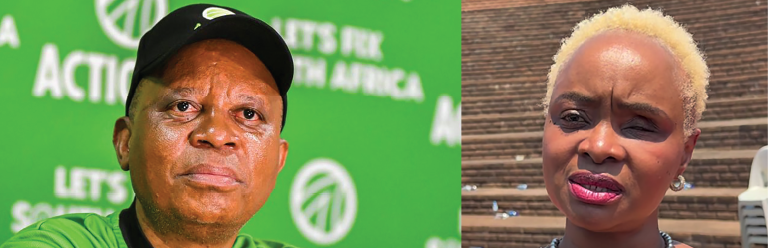
Rather than reflecting on that profound historical commitment to continental solidarity, ActionSA leader Herman Mashaba took to X (formerly Twitter) to launch a direct, toxic jab at Josina Machel’s emotional appeal. He wrote:
“Africa’s sense of entitlement to South Africa is UNBELIEVABLE! Samora Machel was the President of Mozambique, NOT South Africa. Honour his sacrifices in his own country, but do not hold South Africa at gunpoint and demand that we honour him.”
With those words, Mashaba did not just shoot himself in the foot. He performed a deliberate, public execution of historical literacy and basic human decency.
Forgotten Debts and Selective Memory
To dismiss Samora Machel’s sacrifice as an inconvenient foreign burden reveals a terrifying, wilful amnesia.
President Machel died on South African soil at Mbuzini on 19 October 1986 while returning from a summit in Lusaka, a high-stakes gathering explicitly convened to coordinate regional strategy against the apartheid regime and secure the liberation of the oppressed people of South Africa.
Machel paid for that solidarity with his life. It was to honour that shared frontline struggle and continental unity that former President Nelson Mandela unveiled the Samora Machel Memorial at Mbuzini in 1999.
For Mashaba to frame this historical debt as “entitlement” is an insult not only to Josina Machel and the Mozambican people, but to every South African whose freedom was bought with frontline blood.
The memorial itself stands as a reminder that the struggle against apartheid was never confined to South Africa’s borders. The sacrifices made by neighbouring countries were not acts of charity for which South Africans should now feel indebted in perpetuity; they were part of a shared struggle for freedom, dignity and self-determination.
Mashaba’s response reduces that history to a crude question of national ownership. His insistence that Machel should be honoured only in his own country ignores the fact that he died here, on the soil of the country whose liberation he had worked to advance. It is a narrow, isolationist nationalism that treats Africa’s contribution to South Africa’s freedom as an inconvenience rather than an integral part of our history.
A Pattern of Scapegoating
This is far from an isolated misstep. Mashaba’s political trademark has long relied on pointing fingers across our borders whenever complex national crises demand real solutions. But his attack on Josina Machel raises a more troubling question: where does concern about illegal immigration end and hostility towards African foreign nationals begin?
There is a fundamental difference between insisting that immigration laws be enforced and cultivating resentment towards African foreign nationals as a category of people. The former is a legitimate responsibility of the government; the latter turns nationality into a proxy for blame. When a political leader responds to a call to honour an African liberation icon by accusing the continent of entitlement, the issue extends beyond border enforcement. His words invite scrutiny of the attitudes underpinning his stance.
Since his tenure as Mayor of Johannesburg, when he famously led municipal raids on hijacked inner-city buildings while conflating undocumented residency with absolute criminality, Mashaba has cultivated a political identity around the enforcement of immigration controls. Yet the language of his attack on Josina Machel raises a question that cannot be answered by invoking the rule of law alone: is his stance genuinely about addressing illegal immigration, or has opposition to African migrants become a political posture in its own right?
The strategy operates on three levels:
Deflect accountability: Blame African foreign nationals for collapsed municipal infrastructure and failing public services rather than addressing decades of administrative failure and state corruption.Flatten complex problems: Reduce intricate regional migration, border administration and economic integration to simplistic, police-first demands for mass deportations.
Weaponise frustration: Harness the genuine socioeconomic pain of unemployed South Africans by handing them a convenient target for their rage, particularly African migrants who can be cast as competitors for scarce jobs, housing and public services.
The political appeal is obvious. It is easier to point at an African foreign national than to explain why municipalities fail, why jobs remain scarce or why public services deteriorate despite years of political promises. But identifying a convenient target is not the same as solving a problem. This is a low-effort, high-harm strategy designed for political mobilisation and social media engagement rather than actual governance.
The danger is that the distinction between holding the government accountable and blaming African foreign nationals becomes deliberately blurred. Legitimate public frustration is redirected towards people who can be portrayed as outsiders, while the failures of institutions and those responsible for them escape the same sustained scrutiny.
When the focus shifts from enforcing the law to treating African migrants as a category of people to be resented, the question is no longer just about immigration controls. It is about the hostility being cultivated towards people from the very continent whose solidarity helped secure South Africa’s freedom.
The Cost of Political Vitriol
Enforcing border controls through lawful, humane and efficient administrative processes is the legitimate duty of any sovereign government. But Mashaba’s stance, as expressed in his attack on Josina Machel, raises questions that cannot be settled by invoking border enforcement alone.
When political figures sanitise hostility towards African foreign nationals under the guise of the “rule of law”, they help normalise resentment towards people because of their nationality. The language used by political leaders does not exist in a vacuum. It enters a society already strained by unemployment, poverty, failing services and competition for scarce resources, where African migrants can become targets for grievances they did not create and cannot resolve.
South Africa’s recurring outbreaks of xenophobic violence should make politicians acutely aware of the consequences of rhetoric that casts African foreign nationals as threats to the country. Such violence has complex causes, and no single statement explains it. But political leaders cannot claim the authority to mobilise public anger against African migrants while pretending that the language they use has no wider social consequences.
Mashaba eventually deleted his post, no doubt realising that erasing a tweet is easier than defending moral bankruptcy. But deleting a post does not erase the mindset that generated it, nor does it resolve the contradiction between the solidarity South Africa once depended on and the suspicion of African migrants that his rhetoric encourages.
South Africa does not exist in a vacuum carved out of the continent. Our liberation is irrevocably bound to Africa’s history, and our economic future depends on regional cooperation, diplomatic maturity and mutual respect. The countries and people who stood with South Africans against apartheid cannot be written out of that history whenever it becomes politically convenient to portray African migrants as the source of our problems.
Politicians who preach that South Africa owes nothing to its neighbours are selling a dangerous delusion. Mashaba’s attack on Josina Machel brought that delusion into sharp focus: a stance that demands recognition for South African sovereignty while showing contempt for the solidarity that helped make that sovereignty possible. It is a betrayal of history, and it is time we called it out for what it truly is.