 WeeklySA_Admin
SCREENING: A rare documentary offering one of the only filmed portraits of legendary South African photographer Santu Mofokeng gives audiences a unique opportunity to hear the acclaimed visual storyteller reflect on his craft…
By Jacob Mawela
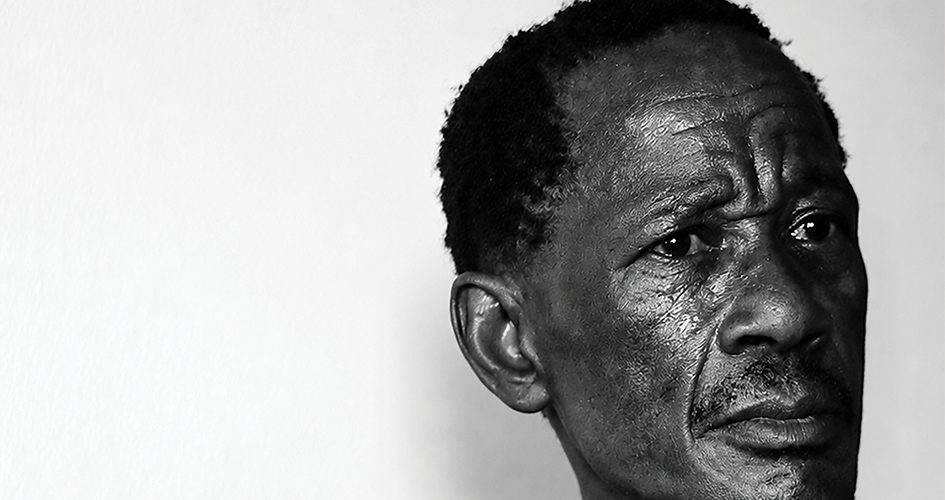
The enduring legacy of internationally acclaimed South African photographer Santu Mofokeng is being celebrated through a special screening of a rare documentary at the Standard Bank Art Lab in Sandton, bringing audiences closer to one of Africa’s most influential visual chroniclers.
Produced in 1996 by award-winning filmmaker Minky Schlesinger, the documentary is regarded as the only known filmed portrait of Mofokeng. More than three decades after it was made, the film continues to offer invaluable insight into the photographer’s creative philosophy, his relationship with the camera and the meticulous process behind some of his most important work.
The documentary was originally created as part of Schlesinger’s exploration of street photographers working in Johannesburg’s city centre. After learning that Mofokeng himself had once earned a living as a street photographer, she decided to include him in the project, titled Street Shots, which was first broadcast on the SABC’s NNTV channel programme The Works in 1996.
Years later, the documentary travelled beyond South Africa as part of a major exhibition showcased in Belgium, France, Norway and Switzerland. It has now found a new audience through its inclusion in Rumours/2026, an exhibition co-curated by Lunetta Bartz and currently on display at the Standard Bank Art Lab. Bartz approached Schlesinger to present the film alongside the exhibition, ensuring that Mofokeng’s voice remains central to discussions about his artistic legacy. Schlesinger describes the work as “footage” rather than a finished film, noting that her intention was to allow Mofokeng to speak as openly and unfiltered as possible. The result is an intimate interview that places the photographer at the centre of his own story.
Much of the documentary focuses on Mofokeng’s acclaimed project The Black Photo Album/Look at Me: 1890–1950, a body of work that has become one of the most important visual archives of black South African family history. The project forms part of the current Rumours/2026 exhibition.
Filmed in Mofokeng’s darkroom and office at his home, the documentary captures him explaining how he painstakingly assembled the collection while working as a researcher at the African Studies Institute at the University of the Witwatersrand. The project involved locating and preserving family photographs commissioned by working- and middle-class black families during a period when their stories were largely absent from official archives. Mofokeng takes viewers through every stage of the process, from discovering forgotten photographs in family boxes to creating negatives and digitising captions. The work was often challenging because many of the photographs existed outside formal archival systems, making it difficult to trace the identities of the people depicted or their descendants.
The documentary also touches on Mofokeng’s celebrated Chasing Shadows series, which explored spirituality and sacred spaces, including the Motouleng caves near Clarens in the Free State. Through these reflections, viewers gain a deeper understanding of a photographer whose work consistently examined memory, faith, identity and belonging. One of the film’s most memorable moments comes when Mofokeng reflects on the nature of photography itself.
Describing photography as an act of “taking someone’s spirit”, he challenges assumptions about the medium’s objectivity, remarking that photographs do not necessarily tell the truth because they can be shaped and manipulated through captions and context.
Speaking at the screening, which was attended by members of Mofokeng’s family, Schlesinger expressed a desire to continue sharing the photographer’s voice with new generations. She revealed that she hopes to eventually screen additional footage she recorded in 2013, despite finding it difficult to watch because Mofokeng had become visibly frail by then. Her motivation, she said, is to ensure that “Santu can continue his conversation” with audiences.
Mofokeng’s influence on photography extends far beyond his individual projects. A member of the renowned Afrapix collective during the turbulent 1980s, he helped redefine documentary photography in South Africa. Rather than focusing solely on dramatic news imagery, he developed a research-driven approach that offered intimate and nuanced portrayals of ordinary lives and communities.
A former student of celebrated photographer David Goldblatt, Mofokeng worked as a photographic researcher and briefly as a photojournalist for the New Nation newspaper before establishing himself as one of the continent’s foremost visual thinkers. His work earned international acclaim and numerous honours, including the Ernest Cole Scholarship in 1991, the Mother Jones Award for Africa in 1992, the Prince Claus Award in 2009 and the International Photography Prize in 2016.
Mofokeng died in January 2020 after suffering from progressive supranuclear palsy, but his influence continues to shape contemporary photography and visual culture.
Through Schlesinger’s rare documentary and the ongoing exhibition of his work, audiences are once again reminded why his images remain vital records of South Africa’s history, memory and humanity.