 WeeklySA_Admin
TRAIL: Nine women found dead across Ekurhuleni, east of Johannesburg, in two months as detectives race to establish whether one predator—or several killers—is hunting women…
By Weekly SA Mirror Reporter
A trail of women’s bodies stretching across Ekurhuleni has plunged communities into fear and confronted police with an urgent question: is a serial killer hunting women on the East Rand?
Nine women were found dead between July 15 and September 17 in locations including Kempton Park, Pomona, Clayville, Olifantsfontein, KwaThema and Dawn Park. Several were naked or partially clothed, while others showed signs of violence and appeared to have been dumped beside roads or in secluded areas.
The victims were predominantly women in their 20s and 30s. Three have been publicly identified as Itumeleng Kekana (32), Elizabeth “Tsontso” Moselakgomo (38), and Dineo Evelyn Motapane (38).
Six families may still be waiting for news of missing daughters, mothers, sisters or partners.
Police have assembled a multidisciplinary team of detectives, forensic specialists, crime-intelligence officers, tracking teams and K9 units. Additional officers have been deployed and patrols intensified under Operation Shanela.
But police have cautioned that it has not been established whether the nine deaths are connected. Investigators are considering whether the women were killed by one person, several unrelated offenders or even copycat criminals.
Gauteng police commissioner Lieutenant-General Fred Kekana has warned against declaring the cases the work of a serial killer before forensic evidence establishes a connection. Nevertheless, police acknowledge that the proximity of the discoveries and similarities between some of the cases are sufficiently concerning to warrant investigation as a possible series.
A chilling timeline
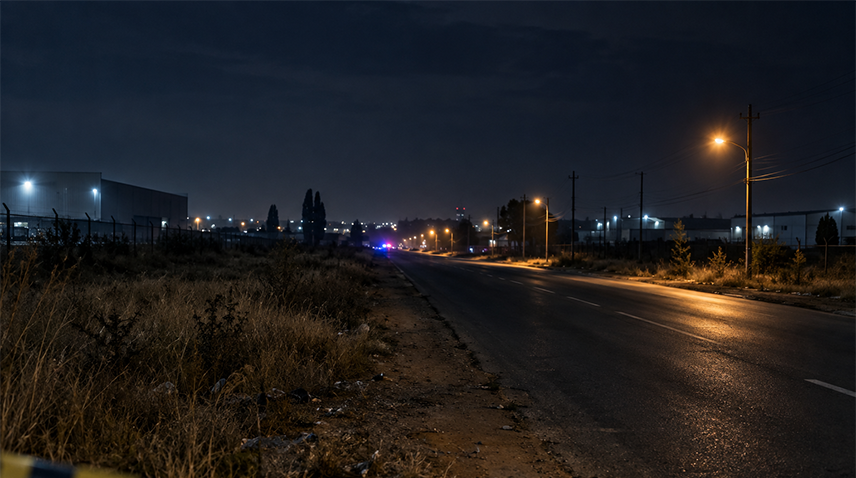
The first body was found on July 15 in an open field near the R21 in Kempton Park. The 37-year-old woman was reportedly naked and restrained with cable ties.
A man was arrested two days later and remains in custody in connection with that killing. Police are still investigating his identity, nationality and background, as well as whether he may be linked to any of the other deaths. No such connection has yet been established.
On August 3, the body of Itumeleng Kekana was discovered near Great North Road in Pomona. She had disappeared from Kempton Park on July 17, leaving her family to search hospitals, police stations and mortuaries for more than two weeks.
Kekana, who sold beauty products and was described by her family as humble and devoted to her loved ones, left behind a 14-year-old daughter.
Another 32-year-old woman was found partially clothed near the R21 on August 24. Her identity has not been publicly disclosed.
On September 7, police recovered the body of a woman believed to be in her late 20s from a river in Clayville, near the Mall of Thembisa. She was reportedly wearing only underwear.
Three days later, the naked and badly decomposed body of another woman was discovered near the R21 and Voortrekker Road in Kempton Park.
Then came the killing that galvanised public anger.
Moselakgomo disappeared after leaving her Rhodesfield home for a run on September 9. Her eight-year-old daughter raised the alarm when she failed to return.
Her body was found behind a hotel near the R21 on September 12. Her family formally identified her two days later. Her death prompted vigils, memorial runs and an outpouring of anguish from runners and residents.
On September 14, a passer-by found a partially naked woman with bruising beside a road in Olifantsfontein. Police are investigating whether she had been murdered elsewhere and transported to the scene.
Motapane’s body was found beside a road in KwaThema, Springs, on September 15. Her family had last seen her two days earlier and had not yet reported her missing. She left behind a two-year-old daughter.
The ninth woman was found partially naked and reportedly wrapped in a sheet near a construction site in Dawn Park on September 17. Preliminary indications were that her body had been dumped there.
Her death was added to the widening investigation. SAPS has confirmed that the multidisciplinary team is examining all nine cases.
What the pattern could mean
Any attempt to construct an offender profile at this stage must be treated as a working hypothesis—not a description of an identified suspect.
The most important facts remain unknown: the precise causes of death, whether sexual assault occurred in each case, DNA results, toxicology findings, the times and places at which the women were last seen, and whether the same injuries, restraints or other forensic signatures appear across the scenes.
If forensic evidence eventually confirms that several killings are connected, the available information suggests an offender who may be familiar with Ekurhuleni’s road network, isolated spaces and places where a body can be abandoned without immediately attracting attention.
The concentration of discoveries around major roads—particularly the R21 corridor—and the apparent dumping of some victims suggest access to transport. It may also indicate that at least some women were killed at another location before their bodies were moved.
Such an offender could live or work in the region, travel through it regularly, or have occupational knowledge of its roads, hotels, industrial areas, construction sites and open land. That is a geographical inference, however, and not proof of where the killer lives.
The abandonment of partially clothed or naked victims could point to a sexual element, an attempt to destroy or remove evidence, humiliation of the victims, or efforts to make identification more difficult. Clothing removal alone cannot establish motive.
The victims’ similar age range may suggest a preference for adult women, but investigators will need to determine whether they shared anything more specific: occupation, social venues, transport routes, dating applications, exercise routines or contact with a particular person.
The comparatively rapid succession of discoveries during September could indicate escalation by one increasingly confident offender. Equally, it could reflect unrelated murders being grouped together because they occurred during a period of heightened scrutiny.
It is also possible that the body discoveries do not correspond closely with the dates of the killings. Decomposition and delayed recovery can distort the apparent sequence.
One killer—or several?
The differences are as important as the similarities.
One woman was bound with cable ties; another was recovered from a river; others were found beside roads or near open ground. One suspect has already been arrested in connection with the first case. The discoveries also span a wide area—from Kempton Park and Olifantsfontein to Springs and Dawn Park.
These variations could mean separate perpetrators using broadly similar disposal environments. Ekurhuleni’s high levels of violence against women and extensive network of highways, industrial zones and open spaces make coincidental similarities possible.
Investigators will therefore be looking for stronger connecting evidence: matching DNA, identical injuries or restraints, common fibres, recurring contact numbers, vehicle movements, cellphone-location data, CCTV footage and links between the victims’ final movements.
Until those tests are completed, “possible serial killer” is a legitimate line of inquiry—but not an established fact. International reporting similarly notes that police are examining a single offender, multiple offenders and copycat crimes as competing possibilities. Reuters
Fear grips communities
The uncertainty has done little to reassure women who walk to work, use public transport, exercise outdoors or travel alone.
Some have changed their routines, stopped running alone or asked relatives to accompany them. But activists warn that responsibility cannot once again be shifted onto women, who should not have to surrender their freedom because the state cannot guarantee their safety.
President Cyril Ramaphosa has promised that no stone will be left unturned, while police have appealed for information and offered a verified reward of R400 000 for information leading to the identification and arrest of those responsible. The claimed total of R900 000 is applicable once the source and conditions of the additional R500 000 have been confirmed.
For nine women and the families left behind, promises will not be enough. Ekurhuleni needs answers—and it needs them before another woman becomes the tenth body beside a road.
THE NINE VICTIMS
1. Kempton Park – July 15
A 37-year-old woman was found naked and bound with cable ties in an open field near the R21. A suspect was arrested two days later and remains in custody. The victim has not been publicly identified.
2. Pomona – August 3
Itumeleng Kekana, 32, was found near Great North Road after disappearing from Kempton Park on July 17. Her family had searched for her for more than two weeks. She left behind a 14-year-old daughter.
3. Kempton Park – August 24
An unidentified 32-year-old woman was found partially clothed near the R21. Police have not disclosed further details about her death.
4. Clayville – September 7
The body of a woman believed to be in her late 20s was recovered from a river near the Mall of Thembisa. She was reportedly wearing only underwear and remains publicly unidentified.
5. Kempton Park – September 10
An unidentified woman was found naked and in an advanced state of decomposition near the R21 and Voortrekker Road. Forensic examinations are being used to establish her identity.
6. Rhodesfield – September 12
Elizabeth “Tsontso” Moselakgomo, 38, was found behind a hotel near the R21, three days after she disappeared while running. Her death prompted vigils and memorial runs. She left behind an eight-year-old daughter.
7. Olifantsfontein – September 14
A passer-by discovered a partially naked woman with bruising beside a road. Police are investigating whether she was killed elsewhere and dumped at the scene. Her identity has not been released.
8. KwaThema – September 15
Dineo Evelyn Motapane, 38, was found beside a road in KwaThema, Springs. She had last been seen two days earlier and was identified by her family at the Springs Mortuary. She left behind a two-year-old daughter.
9. Dawn Park – September 17
The ninth woman was found partially naked beside a road near a construction site. Reports indicated that she had been wrapped in a sheet and dumped there. Her name and age have not been released.
AT A GLANCE
- Nine women found dead between July 15 and September 17
- Three publicly identified: Itumeleng Kekana, Elizabeth Moselakgomo and Dineo Motapane
- Six victims publicly unidentified
- One suspect in custody in connection with the first killing
- No confirmed link between all nine cases
- R400,000 SAPS reward offered for information leading to arrests
- Crime Stop: 08600 10111 or anonymous tip-offs through the MySAPS app