 WeeklySA_Admin
MEASURES: South Africa has launched the rollout of the twice-yearly HIV prevention injection lenacapavir, marking a turning point in the country’s fight against HIV. But health activists warn that the selected rollout risks repeating old inequalities and falls far short of what is needed to end the epidemic…
By WSAM Reporter
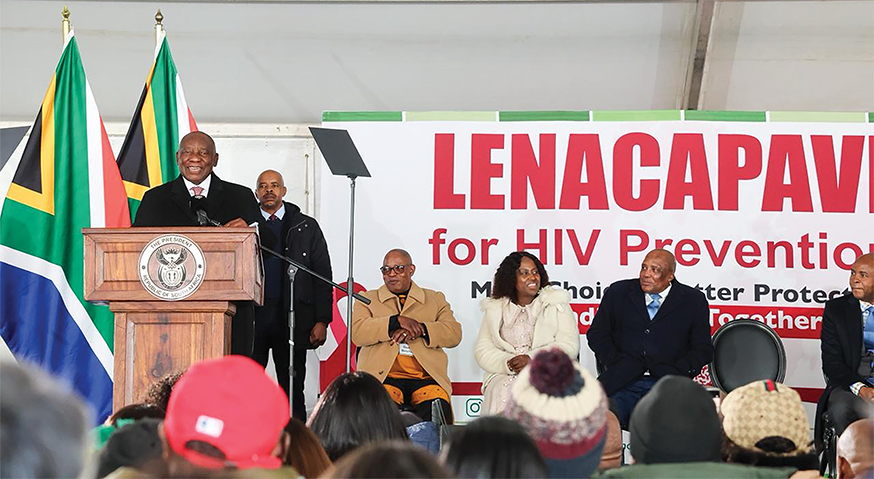
President Cyril Ramaphosa today launched South Africa’s rollout of lenacapavir, a groundbreaking HIV prevention injection that scientists have hailed as one of the most significant advances in HIV prevention since the introduction of antiretroviral treatment.
Speaking at the launch in Secunda, Mpumalanga, Ramaphosa described the twice-yearly injection as a symbol of hope and a major milestone in South Africa’s decades-long battle against HIV and AIDS.
“Today is a day of hope,” said the President. “Lenacapavir is not just a medicine. It represents the triumph of science over despair. It represents hope for families and communities that have lived through decades of loss.”
Ramaphosa said the drug offered an unprecedented opportunity to strengthen HIV prevention efforts, particularly among young women, who continue to bear a disproportionate burden of new infections.
The President announced that 360 public health facilities across six provinces and 24 high-burden districts are ready to provide the new intervention.
But civil society organisations have heavily criticised the initially limited rollout of the twice-yearly HIV prevention drug Lenacapavir. Activists argue that the Government’s phased programme targets too few people and that it is not geared at ending HIV.
Government aims to reach nearly one million people by the end of 2027 and three million people over the next three years. “Every HIV infection prevented is a life protected, a family preserved and a future secured,” he said.
The rollout is being supported through a R1.3 billion partnership involving the South African government, the Global Fund and the Children’s Investment Fund Foundation.
Ramaphosa also used the occasion to renew calls for affordable medicines, technology transfer and local pharmaceutical manufacturing, arguing that health security and economic development can no longer be separated.
Yet, even as the government celebrated the launch, criticism emerged from some of South Africa’s leading HIV activists, who argue that the programme’s limited scope risks undermining its potential impact.
In an opinion piece released to coincide with the launch, health justice advocates Tian Johnson and Fatima Hassan welcomed lenacapavir as a scientific breakthrough, but questioned whether the current rollout strategy matches the scale of South Africa’s HIV epidemic.
They argue that limiting access to selected clinics and districts effectively turns the rollout into what they describe as a “controlled experiment” rather than a truly national prevention programme.
According to the activists, restricting access based on geography risks leaving millions of vulnerable South Africans without access to what is widely regarded as one of the most effective HIV prevention tools ever developed. They contend that the country should be pursuing universal access rather than accommodating supply constraints.
The activists also raise concerns about global pharmaceutical supply limitations and what they describe as insufficient efforts to challenge those constraints. They argue that South Africa’s HIV burden requires prevention programmes operating at a far larger scale if the country hopes to substantially reduce new infections.
While the government sees the programme as a major step towards ending new HIV infections, critics maintain that the current rollout is better suited to managing risk than ending transmission altogether. They warn that unless access expands rapidly, the benefits of the scientific breakthrough may be felt by only a fraction of those who need it most.
Ramaphosa acknowledged that lenacapavir is not a “silver bullet” and stressed that it must complement existing prevention measures such as HIV testing, oral PrEP, condom use, treatment as prevention and voluntary medical male circumcision.
“Together, we can end new HIV infections. Together, we can end AIDS as a public health threat,” he said.
The debate emerging around today’s launch reflects a broader question facing South Africa’s HIV response: whether the country is witnessing the beginning of the end of the epidemic, or the start of another struggle to ensure that a medical breakthrough reaches everyone who needs it.
For now, the government and activists agree on one point. Lenacapavir has the potential to transform HIV prevention. Where they differ is whether the current rollout is ambitious enough to fulfil that promise.
MIRROR Briefs
FORMER RAF BOSS TO FACE THE MUSIC
The parliament’s Standing Committee on Public Accounts (Scopa) has voted to lay a criminal charge against former Road Accident Fund (RAF) chief executive Collins Letsoalo.
The move was decided by a vote of eight in favour and three against to request the Secretary to Parliament to lay a criminal charge against Letsoalo for failing to appear before the committee.
Scopa summoned Letsoalo to answer questions about his management decisions on 25 and 26 November 2025, but on the first day, he did not appear. Instead, his legal team, Sithi & Thabela Attorneys, issued a formal demand to the Scopa chairperson (Songezo Zibi) to “cease and desist from the unlawful ‘oversight inquiry’”.
They argued that Scopa’s mandate was restricted to financial accountability, while operational and governance oversight of the RAF fell exclusively under the parliamentary transport committee.
The attorneys argued that proceeding would violate the audi alteram partem rule (the right to be heard) and declared that Letsoalo had “not received any summons or formal notice”.
Zibi explicitly reminded Letsoalo’s attorneys that “in terms of section 17 of the Powers Act, it is a criminal offence for a person who has been duly summoned not to appear without sufficient cause”.
Letsoalo’s primary defence for non-appearance hinges on his assertion that Scopa lacked jurisdiction. – Lehlohonolo Lehana.
TOP COP FIRED FOR MISCONDUCT
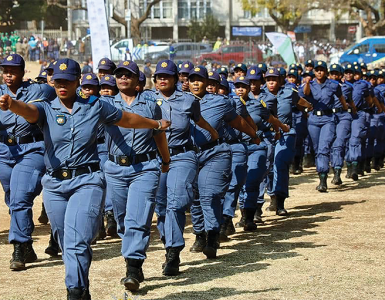
The South African Police Service (SAPS) has confirmed the dismissal of Major General Richard Shibiri, the former Component Head for Organised Crime, following the conclusion of internal disciplinary processes.
“The disciplinary proceedings were conducted in accordance with applicable SAPS prescripts and principles of procedural fairness,” the police said in a statement. Shibiri was found guilty of misconduct relating to conduct that brought the organisation into disrepute, including associating himself with a known criminal.
In January, it was announced that 14 high-ranking South African Police Service and Ekurhuleni Metropolitan Municipality (EMM) officials were referred for investigation after being identified as possible wrongdoers by the Madlanga Commission.
This was according to a statement released by the Presidency on the interim report of the Madlanga Commission. The Commission submitted its interim report and recommendations to President Cyril Ramaphosa in December last year, which he studied and accepted.
The Presidency explained at the time that the Commission made referrals for investigation where it found prima facie evidence of wrongdoing and that the investigations were to be carried out by the SAPS, Independent Police Investigative Directorate (IPID) and EMM.- SAnews
CONCERN OVER JOBURG’S ECONOMIC OUTLOOK
South African business leaders have warned that Johannesburg’s deepening fiscal and governance crisis risked undermining the country’s improving economic outlook, calling for urgent action to rebuild the nation’s commercial capital.
The city’s decline has become a national emergency because it accounted for about 16% of gross domestic product and ws central to domestic and foreign investment decisions, Business Leadership South Africa (BLSA) said in a statement.
Its deterioration risked weakening investor confidence just as South Africa’s economic-recovery story gained traction, the lobby group said.
“The situation is urgent and critical,” BLSA said.
The warning comes after Finance Minister, Enoch Godongwana in April, threatened to cut crucial state funding to Johannesburg unless the city addressed 1.4 billion US dollars of wasteful spending and cancel plans to raise municipal wages by more than 600 million dollars by next year.
State power utility Eskom Holdings has also signalled it may suspend power supplies to the city over unpaid debt.
The crisis in Johannesburg reflected years of accumulated failures across successive administrations, BLSA said.
Capital expenditure had fallen to 6% of the city’s budget, maintenance spending was about 0.5% of asset value, while rates and services charges have more than doubled in real terms over the past 15 years, even as property values have fallen and service quality has deteriorated. – SAnews
FAMILIES DISPLACED BY HEAVY RAINS
Western Cape provincial government has confirmed that 93 people from De Rust and Welgeluk were evacuated as a precaution after persistent rainfall raised concerns about flooding and community safety. The residents were currently being housed at the Toekomsrus Community Hall, where support services remained in place.
The evacuations came as the region grappled with one of the most significant weather events of the year, following an Orange level 8 warning for disruptive rainfall issued by the South African Weather Service. (SAWS)
According to a statement from the Western Cape Government, the SAWS reported rainfall totals of between 50 mm and 100 mm across the Central Karoo, while some areas in the eastern Garden Route have received up to 200 mm of rain since Wednesday.
The provincial government said the N1 highway was closed at Leeu Gamka in the Central Karoo due to flooding, and several other roads across the province were also closed or affected by flooding, weather-related damage and rockfalls.
In the Garden Route district, dozens of low-lying bridges and river crossings were flooded, resulting in additional road closures and hazardous travel conditions. Parts of the province were also experiencing electricity outages, with the national utility company and municipal teams working to restore supply to affected communities.- Lehlohonolo Lehana