 WeeklySA_Admin
COOPERATION: More than 50 000 Malawians and 10 000 Mozambicans have returned home in recent weeks, as escalating illegal migration tensions in South Africa force migrants to abandon jobs, families and livelihoods, triggering a humanitarian and economic crisis across the region…
By Own Correspondents
The growing wave of illegal migration tensions in South Africa is triggering an unprecedented reverse migration across Southern Africa, with tens of thousands of Malawians and Mozambicans returning home after losing jobs, property and, in many cases, the lives they painstakingly built over decades.
As governments scramble to respond, the humanitarian toll is becoming increasingly apparent, with many returnees arriving sick, traumatised, destitute and uncertain of how they will rebuild their futures.
South Africa’s International Relations Minister Ronald Lamola and his Malawian counterpart George Chaponda yesterday signed the agreement at Malawi’s capital Lilongwe where the Southern African Development Community (SADC) Ministerial Committee of the Organ meeting has been taking place.
“The new agreement will assist us in dealing with the issue of irregular migration because the problem that we have is that there are many people who are living in South Africa without papers. The problem there is that there is no problem if one in South Africa has papers, resident permits or whatever valid visas, but the problem is those people who are staying in the country irregularly,” says Chaponda.
The problem there is that there is no problem if one in South Africa has papers, resident permits or whatever valid visas, but the problem is those
people who are staying in the country irregularly…
– Malawi Foreign Affairs George Chaponda.
Malawi has already begun rethinking its migration policy after repatriating more than 41 000 citizens from South Africa at a cost of about K7 billion (roughly R66 million). The country’s Parliamentary Committee on International Relations has now proposed a temporary ban on undocumented Malawians travelling to South Africa to seek informal employment, arguing that the measure is intended to reduce repeated repatriation costs rather than restrict legitimate travel.
The committee says the proposed restrictions would apply only to citizens seeking work without valid travel documents, while also calling for tighter border controls to prevent undocumented migration.
Presenting the committee’s report on the floor of Malawi’s Parliament yesterday, Parliamentary Committee on International Relations vice-chairperson Frank Mwenifumbo said the proposed restriction is targeted, not sweeping, and would apply specifically to undocumented travellers.
“This ban is not a blanket ban; it is a ban for those who are going to South Africa to seek informal employment while undocumented, meaning they have not been issued a passport for them to legally enter, exit and enter South Africa. Those are the ones that I mentioned that there must be a ban on.” he said.
Mwenifumbo said the recommendation was informed partly by the Immigration Department’s admitted difficulty in monitoring citizens who leave the country through undocumented channels.
To address the problem, the committee has directed immigration and transport officials to conduct background checks on passengers boarding buses destined for Malawi to confirm they are genuine Malawian citizens.
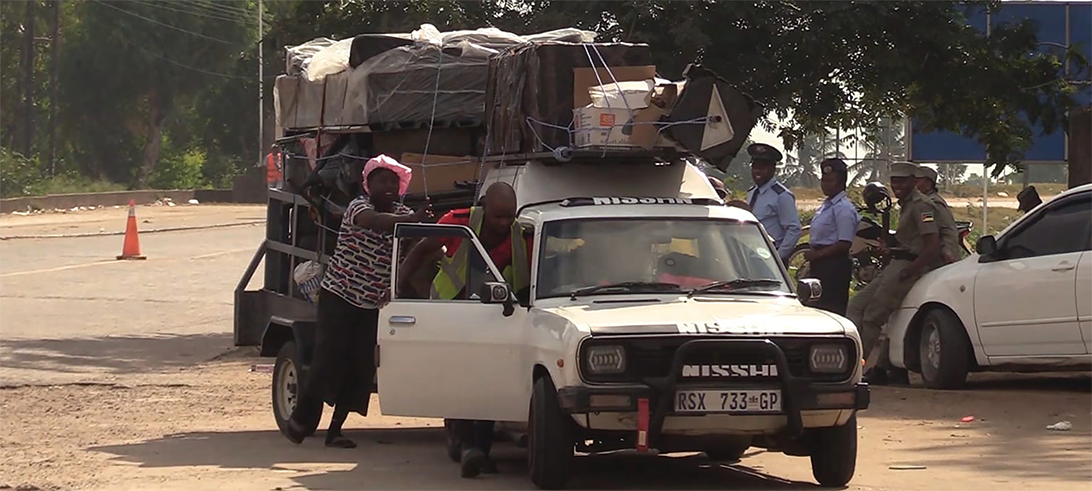
Meanwhile, neighbouring Mozambique is witnessing a similar influx. In Gaza Province, transport operators say more than 10 000 Mozambicans have returned from South Africa during the past two weeks alone, many arriving with little more than the clothes they are wearing.
Although the Provincial Migration Directorate says it has no official figures because migration movements are monitored mainly at the Ressano Garcia and Ponta do Ouro border posts, the Gaza Transporters Association (ASTROGAZA) says the humanitarian situation is worsening by the day.
According to the association, many returnees arrive exhausted, hungry, ill and without money, while some have been abandoned after reaching Mozambican territory.
Transport operators report that dozens of people arrive each week suffering from illness, exposure to winter conditions and severe hardship.
Among them is Alberto, who returned to Mozambique after spending 26 years in South Africa.
Forced to leave with almost nothing, he abandoned not only his possessions but also his South African wife, children and the life he believed he had built permanently.
His experience reflects that of countless others who are returning home without jobs, assets or immediate prospects for reintegration.
The surge in returnees is exposing significant gaps in official data collection and humanitarian support. While authorities acknowledge increasing movement across the borders, transporters and aid groups say the scale of the crisis is far greater than government statistics suggest.
The developments underscore the far-reaching regional consequences of illegal migration tensions in South Africa.
Beyond the immediate human suffering, neighbouring countries now face mounting pressure to provide housing, healthcare, employment and social support for thousands of citizens who have returned with virtually nothing.
For many families, crossing back into their home countries has not marked the end of hardship—but the beginning of another struggle to rebuild lives shattered by violence and displacement. – Additional reporting by O Pais and Malawi News Agency