WeeklySA_Admin
DEVELOPMENT: President Cyril Ramaphosa says the region has the resources, markets and human talent to transform itself — but regional leaders must turn declarations into factories, infrastructure, jobs and measurable improvements in people’s lives…
By WSAM Correspondent
President Cyril Ramaphosa has offered an ambitious blueprint for Southern Africa’s economic renewal, arguing that the region must reduce its dependence on distant markets, dismantle barriers to internal trade and use its natural resources to drive its own industrial revolution.
Delivering a public lecture at the University of KwaZulu-Natal’s Westville Campus on the eve of the 46th SADC Summit, Ramaphosa said the Southern African Development Community’s Vision 2050 could not be allowed to remain merely an aspirational document.
“Vision 2050 must be more than a statement of intent. It must become a programme of action,” he said.
Its promises, he added, must influence government budgets, infrastructure investment, industrial development, skills training and institutional reform. Most importantly, the vision must produce results that ordinary people can see and experience.
Access to a distant market, however valuable, is a borrowed advantage.
A regional market is an advantage that we ourselves own…
Ramaphosa framed the region’s future through the words of Pixley ka Isaka Seme, who delivered his celebrated The Regeneration of Africa address at Columbia University 120 years ago. Seme imagined an Africa freed from colonial bondage, with productive farms, thriving cities and centres of science and learning.
That vision, Ramaphosa said, lives on in SADC’s ambition to create a peaceful, inclusive, competitive and industrialised region.
But achieving it requires confronting the the economic geography inherited from colonialism. Southern Africa’s transport networks were designed largely to move minerals and other raw materials to overseas markets, not to connect the region’s economies.
“Our railways were built to run to the sea rather than to each other,” Ramaphosa observed.
This pattern continues in the way Southern Africa trades with the world. The region exports minerals in their raw form and imports higher-value manufactured products made from the same resources.
Ramaphosa captured the contradiction bluntly: “We export the ore and we import the battery.”
This is particularly significant as the world accelerates its transition towards cleaner energy. Southern Africa holds substantial deposits of the critical minerals required for batteries, electric vehicles and renewable-energy technologies. Yet the industries, jobs and technological capabilities associated with processing these minerals are still largely created elsewhere.
Unless this model changes, the region will continue supplying the raw materials for an industrial revolution taking place beyond its borders while buying back the finished products at prices determined by others.
Ramaphosa’s central argument was that no SADC member state can achieve economic transformation alone. Individual markets are often too small, infrastructure requirements too costly and industrial projects too complex for countries to pursue separately.
Together, however, SADC countries have considerable energy resources, minerals, agricultural capacity, financial institutions, skills and a market large enough to support regional value chains.
Despite this potential, trade among SADC countries accounts for less than a quarter of the region’s total trade. The region continues to look abroad for goods and services that could be produced within Southern Africa.
This dependence has become more dangerous amid global conflict, disrupted shipping routes, rising oil prices and growing uncertainty about international trade arrangements.
“Access to a distant market, however valuable, is a borrowed advantage,” Ramaphosa warned. “A regional market is an advantage that we ourselves own.”
Building such a market will require more than removing tariffs. Ramaphosa called for an end to regulatory obstacles that delay trade, including lengthy licensing processes, duplicated border inspections and inconsistent product standards.
He also called for greater investment in electricity generation and transmission, cross-border water schemes, roads, railways and ports.
Transport corridors such as the Maputo, North-South, Trans-Kalahari, Beira and Lobito routes should become integrated arteries carrying goods, electricity, data and people.
The proposed SADC Regional Development Fund will be critical to mobilising capital, sharing risk and reducing the cost of financing major infrastructure. At the same time, regional governments must tackle the loss of money through transfer mispricing, under-declared exports, smuggling and other illicit financial flows.
Ramaphosa’s industrialisation vision extends beyond mining. He identified pharmaceuticals, automotive manufacturing, agro-processing, paper and pulp, furniture, digital innovation and semiconductor value chains as potential engines of regional growth.
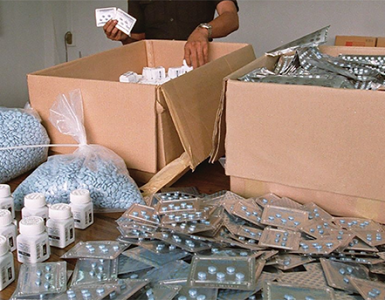
The case for pharmaceutical production is especially urgent. Southern Africa cannot claim economic sovereignty while remaining dependent on imports for most of the medicines and health products its people need.
A regional pooled procurement system could give local manufacturers the certainty that comes with a large and dependable market. It could simultaneously strengthen access to medicine, create employment and cultivate scientific and manufacturing expertise.
“A region that supplies the world with the minerals of the future should not have to wait upon the world for its medicines,” Ramaphosa said.
He issued a similar warning about the digital economy, saying Southern Africa risks reproducing old patterns of exploitation in a new form.
“Already, we are exporting data and importing intelligence,” he said.
Information generated by the region’s farms, clinics, banks, mines and citizens is often processed using foreign-owned computing infrastructure before being sold back as digital services.
Southern Africa therefore needs its own connectivity, computing capacity and technical skills if it is to retain more of the value created from its data.
Yet, Ramaphosa acknowledged that industrial development will mean little if it excludes the majority.
Around 40 percent of the region’s population lives below the poverty line, with women and young people carrying much of the burden. Women still face barriers to owning productive assets, obtaining finance, entering markets and accessing procurement opportunities.
More than half of SADC’s people are under 30. While this young population could become the engine of future growth, Ramaphosa cautioned that a demographic dividend is not produced by numbers alone.
It must be earned through investment in maternal health, early childhood nutrition, education, vocational training, digital literacy and employment.
Too many young Southern Africans, he said, had completed their education and gained qualifications only to remain at home without work. Youth unemployment had become “one of the gravest threats” to the region’s stability, cohesion and progress.
The President also placed human dignity at the centre of integration, condemning the discrimination and mistreatment of migrants in South Africa and elsewhere.
“We cannot preach integration at summits and practise exclusion in our streets,” he said.
That admission is important. SADC’s credibility cannot be measured only by declarations, trade protocols or summit communiqués. It must also be judged by how citizens of neighbouring countries are treated in communities, workplaces and public institutions.
Peace and climate resilience are equally indispensable. Conflict in the eastern Democratic Republic of Congo, political instability and increasingly destructive droughts, floods and cyclones threaten every aspect of the region’s development programme.
Ramaphosa’s address ultimately presented Vision 2050 as a test of implementation. A brighter Southern Africa, he argued, must mean “a refinery and not only a shaft”, a canning plant and not only a farm, and electricity generated in one country lighting homes in another.
The speech sets an expansive agenda. Its credibility will now depend on whether SADC governments attach budgets, responsibilities, deadlines and public accountability to their commitments.
As Ramaphosa concluded, Africa’s renewal is no longer simply an ideal to be defended. It is a programme of work.