 WeeklySA_Admin
OVERSIGHT: From abandoned housing projects to stalled hospitals and collapsing roads, South Africa’s infrastructure crisis is increasingly being blamed on weak planning, poor governance and the absence of professional accountability…
By WSAM Reporter
South Africa’s worsening infrastructure failures are no longer isolated mishaps but the result of systemic breakdowns in planning, governance and oversight, according to industry expert Arthur Qhuphe and political stakeholders.
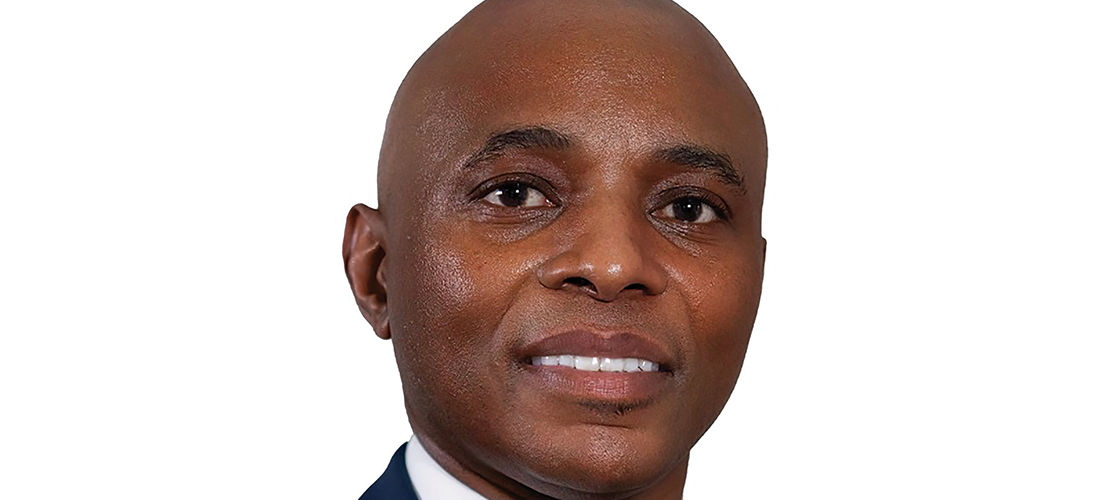
Quphe, president of the South African Council for the Quantity Surveying Profession (SACQSP) and chief executive of Dhahabu Consulting, says many major construction projects are doomed long before ground is broken, launched on unrealistic timelines, inadequate feasibility studies and what he terms “optimism bias”.
He says the rising failure rate of major developments is a sobering reality that requires urgent intervention. He argues that the absence of early and continuous involvement by professional quantity surveyors has allowed budgets to spiral unchecked, while early warning signs — from missed milestones to cash-flow stress — are routinely ignored until projects collapse.
“These are not unforeseeable crises,” Quphe said, describing abandoned sites and multibillion-rand overruns as symptoms of a sector failing at its most basic management principles.
The Anatomy of Failure
Quphe contends that the collapse of major projects marked by abandoned sites and multi-billion rand budget overruns is rarely the result of “black swan” events.
Instead, these are symptoms of a sector struggling with core project management principles. Among other factors, he highlighted three critical drivers of project failure:
• Erosion of cost control: Without the early and continuous involvement of Professional Quantity Surveyors (PrQS), budgets frequently spiral until they reach terminal financial distress;
• Ignored early warning signs: Manageable issues in milestones or cash flow are often overlooked, allowing small discrepancies to escalate into project-ending crises; and
• A governance deficit: There is an urgent need to mandate registered experts on every major project to ensure absolute accountability and transparency.
Addressing these challenges is not merely a matter of regulatory compliance; it is a critical economic necessity, says Quphe. He stressed that stronger governance and rigorous cost control are essential to protect thousands of jobs, safeguard public and private investments, and ensure that infrastructure delivers its promised value to South African communities.
As a leader in the sector, Qhuphe says his focus remains proving that professional accountability is the only reliable path to success.
“Firms that prioritise skilled oversight and robust management frameworks are the ones capable of navigating the current landscape, avoiding costly pitfalls, and ensuring sustainable growth for the nation.”
The industry warning aligns with growing political criticism in Gauteng, where ActionSA last year said billions allocated for infrastructure have delivered little improvement in people’s daily lives.
Between 2021 and 2024, the province allocated R35.3 billion to infrastructure — largely for housing, health, education and transport — yet conditions have deteriorated, with projects stalled or abandoned and services under strain.
.At the time, ActionSA pointed to the Montrose Mega Project in Rand West City, where R11 billion was budgeted but only R467 million spent before work ground to a halt, leaving thousands without housing amid a backlog exceeding 1.3 million units.
Oversight and accountability
Healthcare infrastructure has also suffered. Repairs to Charlotte Maxeke Johannesburg Academic Hospital, damaged by fire in 2021 and scheduled for completion by December 2023, remain unfinished, while recent fire damage at Tembisa Hospital has added pressure to an already overstretched system
Across the province, overcrowded schools, crumbling roads and dysfunctional traffic lights have become symbols of what critics describe as hollow promises, poor contractor management and a lack of consequences for failure.
Both industry and political voices agree that funding alone will not solve the crisis. Stronger governance, mandatory professional oversight and clear accountability, they argue, are essential to protect jobs, safeguard public funds and restore confidence in the state’s ability to deliver infrastructure that works.
Billions are being spent — but without planning, oversight and accountability, South Africa’s infrastructure keeps falling apart.
MIRROR Briefs
DOUBLE BLOW FOR ZUMA
The Supreme Court of Appeal (SCA) has dismissed MK Party leader Jacob Zuma’s bid to get lead prosecutor Advocate Billy Downer removed from his arms deal corruption trial.
Zuma has tried through various means to have Downer removed. First, he challenged his title to prosecute, using section 106 of the Criminal Procedure Act. Then he went for a more personal attack, choosing to privately prosecute Downer and journalist Karyn Maughan, alleging Downer leaked medical records to Maughan.
Zuma argued that Downer’s conduct has fallen short of the expected standards of the fair prosecution. Interestingly, Zuma added that Downer is conflicted because himself has chosen to privately prosecute him for leaking his medical records to Maughan.
In a concise one-page order, the judges dismissed the application with costs, effectively reinforcing earlier findings that the private prosecution was a tactical move to delay justice rather than a pursuit of legal merit.
Zuma is accused, alongside arms manufacturer Thales, of corruption relating to the 1999 arms purchase by the government. Earlier in the week, the Pietermaritzburg High Court dismissed Zuma and Thales’ appeal for a stay of prosecution, paving the way for the long-awaited trial to proceed.
Zuma and Thales applied to summarily be acquitted of the arms deal corruption and racketeering charges on the basis that unreasonable delays had resulted in the deaths of crucial witnesses, Thales representative Alain Thétard and Pierre Moynot. – Lehlohonolo Lehana
PRETORIA ACADEMIC HONOURED BY UN
Government has congratulated Professor Vukosi Marivate on the recommendation by the United Nations Secretary-General to appoint him as a member of the Independent International Scientific Panel on Artificial Intelligence.
In a statement, government said Professor Marivate of the University of Pretoria was recommended alongside 40 leading experts from across the world, drawn from diverse disciplines and recognised for their significant expertise in artificial intelligence and related fields.
“The panel will be the first global, fully independent scientific body dedicated to closing the AI knowledge gap and assessing the real-world impacts of artificial intelligence across economies and societies,” said the Government Communication and Information System (GCIS).
It added that the panel will play a critical role in helping the global community distinguish fact from fiction, and science from misinformation, by providing an authoritative, unbiased reference point.
According to the United Nations, the Independent International Scientific Panel on AI serves as the first global scientific body on Artificial Intelligence (AI), bringing together leading experts to assess how AI is transforming lives.
“The 40 nominees recommended by the Secretary-General were identified from among applicants to an open call that resulted in over 2,600 applications from more than 140 countries, ensuring world-class expertise,” said the United Nations.-SAnews.
TYCOON LINKED TO CRIME BOSS
The North West businessman Suleiman Carrim, who was expected to testify before the Madlanga Commission of Inquiry, is now expected to testify on March 9 and 10, following his application for a postponement.
Carrim was due to testify in the Commission on Friday after the High Court dismissed his bid to block his subpoena. But his lawyers argued that they had not had sufficient time to peruse the documents from the commission.
Carrim has been accused of accepting R2.5-million for helping criminally accused Vusimuzi “Cat” Matlala obtain payments related to his R360-million SAPS contract, which was later cancelled.
Beyond his relationship with Matlala, Carrim is also expected to testify about his alleged ties with suspended police minister, Senzo Mchunu and the Crime Intelligence counter-intelligence and security head, Feroz Khan.
The commission has, since September 2025, been hearing evidence of criminality, political interference and corruption within South Africa’s law enforcement agencies.
Appearing before the commission on Friday, Carrim’s counsel, Advocate Kameel Premhid, argued that his client had been prejudiced by the late provision of key documents relevant to his testimony.
Premhid told the commission that while Carrim had previously received document bundles running into 2,000 and 4,000 pages, the 77 pages directly linked to the questions he is expected to face were only furnished on Thursday last week. – Lehlohonolo Lehana
NSFAS PAYS R3,6 BILLION TO VARSITIES
The National Student Financial Aid Scheme (NSFAS) says a total of R3.6 billion has been successfully disbursed to universities for allowance payments whilst R679 million was disbursed to Technical and Vocational Education and Training (TVET) colleges for tuition payments.
“Upfront payments were made on 2 February , 2026, with allowance disbursements to TVET college students scheduled for 13 February 2026, followed by a second disbursement on 27 February 2026, due to extended registration periods,” NSFAS Acting CEO Wassem Carrim said.
Giving an update of NSFAS’s appeals process for the 2026 application cycle, Carrim reported that 91 937 appeals had been lodged for the 2026 cycle. To date, 10 445 appeals had been approved; 27 893 were in process; 3 209 were awaiting documents; 5 407 had been rejected and 44 983 had been closed, deleted, finalised or withdrawn.
The NSFAS Appeals process provides applicants and current beneficiaries with the opportunity to request a review of their application outcome should they feel that their circumstances have not been fully considered, or if additional information has become available that may affect their eligibility.
“NSFAS remains committed to processing all appeals fairly, transparently, and efficiently. We encourage all applicants to ensure that their contact information and supporting documentation are up to date, and to monitor communication from NSFAS regarding the status of their appeal.” – SAnews