 WeeklySA_Admin
DRY TAPS: Scores of pupils at secondary school in Botshabelo lose nearly a year of schooling as water shortages cripple basic sanitation and halt the school nutrition programme…
By Molefi Sompane
For nearly nine months, learning at Kgorathuto Secondary School in Botshabelo, Free State, has been reduced to little more than a morning roll call.
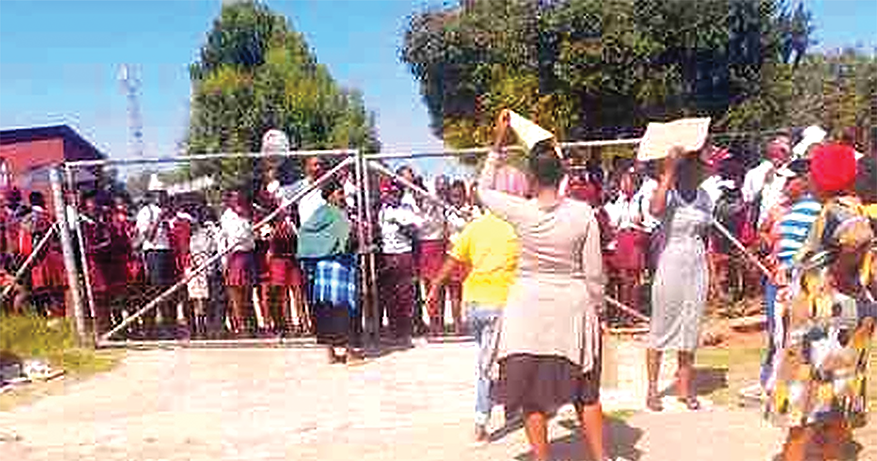
Since May 2025, persistent water shortages have rendered the school’s toilets unusable and forced the suspension of key services, including the government’s school nutrition programme. In many instances, learners arrive for assembly and register, only to be told to go home.
Parents say the situation has effectively robbed pupils of an education for most of the academic year.
“We cannot accept that our children are not being taught,” said parent Mpho Tseisi. “Teachers are being paid, yet after morning prayers the children are simply sent home. This has been happening for months and it must stop.”
Following repeated protests by parents and community members, Mangaung Metropolitan Municipality last week installed a temporary 10,000-litre JoJo tank at the school.
Learners have now returned to classes, but parents and teachers say the conditions remain precarious and far from sustainable.
Community member Meager Moshodi says schooling cannot continue under such circumstances.
“It is impossible to expect proper teaching and learning without basic services,” he said. “The school management team must take responsibility. What is happening here is unacceptable.”
Activist Isly Makhanya believes the school should have been shut down months ago.
“Standard operating procedures are clear — a school cannot operate without basic services,” he said. “The Department of Labour should intervene and close the school until conditions are safe.”
Municipal officials say they are investigating the cause of the water shortages affecting the area.
Vusi Sogaqa, a member of the mayoral committee responsible for infrastructure, said technical teams are conducting a fact-finding mission to determine why Section D of Botshabelo is experiencing low water pressure.
“We could not approach parents without answers,” he said. “Our teams have attended to the situation at Kgorathuto High School and the surrounding community.
We have repaired leaking toilets through the Masupatsela War on Leaks project, installed a JoJo tank and stationed a water tanker at the school while investigations continue.”
But teachers insist the problem goes far beyond the school itself.
David Malope, a teacher at Kgorathuto Secondary, says the entire Section D community has been struggling with water shortages for months.
“The ward councillor lives here,” he said. “Why were water tankers not sent earlier for the schools and the clinic? We are led by people who simply do not care.”
The crisis has also hit nearby schools.
At Mpolokeng Primary School, members of the school governing body say they have been forced to spend their own money to keep the school functioning.
“We hire a bakkie every week to fetch water,” said Joyce Seecoi from the SGB. “It costs us around R2,000 each week just to fill our 5 000-litre tank so we can cook and flush toilets. We keep begging the children to use the water sparingly.”
The Free State Department of Education says it first alerted the municipality to the problem in May last year.
Department spokesperson Howard Ndaba acknowledged the disruption caused to teaching and learning.
“We informed the municipality in May 2025 and we are concerned about the time that has been lost,” he said. “The MEC is committed to ensuring that all schools have functioning sanitation facilities and that the school nutrition programme operates without interruption.”
The water crisis has already forced the suspension of meal preparation at Kgorathuto Secondary — a blow to many learners who depend on the programme for their daily nutrition.
“The shortage of water makes our lives a living hell,” said 18-year-old learner Moeketsi Maibi. “Some learners come to school hoping to get their only meal of the day. But we cannot even cook because there is no water.”
For many parents in Botshabelo, the question is no longer just about water.
It is about whether the state can still guarantee something as fundamental as a child’s right to education. – Health-e News
Schools Hit by Service Delivery Failures
Across South Africa, water shortages and sanitation failures have increasingly disrupted schooling, forcing closures, early dismissals and unsafe learning conditions.
Bonwelong Primary School – Ivory Park, Gauteng
Intermittent water supply has repeatedly disrupted teaching and sanitation facilities, with teachers warning that the situation threatens learners’ health and the ability to maintain normal school operations.
Umqhele Secondary School – Ivory Park, Gauteng
Also affected by the same water supply problems in Ivory Park, the school has faced ongoing interruptions to normal teaching as unreliable municipal water services make sanitation difficult to maintain.
Schools across Mpumalanga rural districts
Communities in areas such as Bushbuckridge, Nkomazi, Mkhondo and Dr JS Moroka report schools still dependent on pit toilets and struggling with water shortages that delay sanitation upgrades and compromise learner safety.
National scenario
A recent water-testing campaign found that 43% of water samples taken at South African schools were unsafe for human consumption, highlighting the scale of the infrastructure crisis affecting education.
Experts warn that when schools lack reliable water supply, the consequences go beyond sanitation — learners may fall ill, girls miss school during menstruation, and nutrition programmes cannot operate effectively. – WSAM Reporter