 WeeklySA_Admin
PARADOX: South Africans rank among the world’s most forgiving, but new research suggests inequality and hardship may be weakening its power to heal.
By Own Correspondent
South Africans are among the most forgiving people in the world — a reflection of a nation shaped by reconciliation, resilience and survival.
But a major global study has revealed a striking contradiction: while forgiveness is widespread in South Africa, its benefits on well-being appear weaker than in many other countries.
The findings revive long-standing debates about the legacy of South Africa’s reconciliation process. While the Truth and Reconciliation Commission helped the country avoid civil conflict, critics have argued that it prioritised forgiveness over justice — leaving many wounds unresolved.
Forgiveness is widespread in South Africa — but its power to heal is
being weakened by the realities people live in…
Nearly three decades later, that tension may still be playing out in everyday life.
The limits of forgiveness in South Africa may also lie in what followed the Truth and Reconciliation Commission. As scholar Kylie Thomas notes in her recent report published in Justice Info.net recently, the failure to investigate and prosecute apartheid-era crimes has amounted to a “deep betrayal” of those who participated in the TRC process in good faith.
She has argued that the continued suppression of these cases has not only denied justice to victims, but has also undermined the very foundation of South Africa’s transition — turning forgiveness into an incomplete process rather than a pathway to closure.
The TRC was never intended to grant blanket impunity. Yet, according to Thomas, the failure to pursue unresolved cases has allowed perpetrators to evade justice, adding “insult to the suffering endured by victims” and prolonging their trauma
Thomas further points to years of political interference and obstruction within the criminal justice system, which stalled investigations into more than 300 apartheid-era cases that remained unresolved after the TRC.
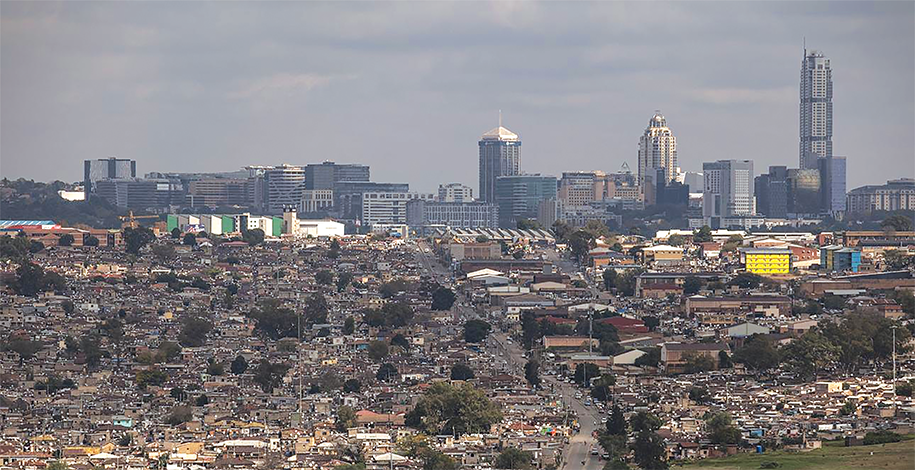
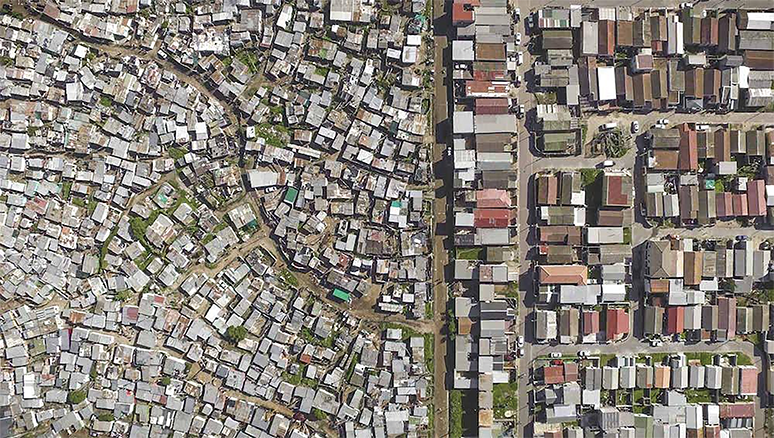
Meanwhile, the study adds that, in communities burdened by crime, inequality and poverty, forgiveness often coexists with hardship — raising questions about whether it functions as healing, or simply as survival.
The researchers found that while forgiveness is generally linked to improved mental health and pro-social behaviour, this relationship is less pronounced in South Africa. Researchers suggest that extreme local conditions may be overriding the psychological benefits typically associated with forgiveness.
Conducted across 22 countries by researchers from Harvard’s Human Flourishing Program, the study tracked more than 200 000 participants through annual surveys measuring forgiveness practices and 56 indicators of well-being over time.
Published in npj Mental Health Research and the Harvard Gazette, the findings build on earlier work examining global patterns of forgiveness across societies representing up to 60% of the world’s population.
The results confirm that people who regularly practise forgiveness tend to report stronger psychological well-being, including higher levels of happiness and lower levels of depression. They also show gains in character development, including gratitude and pro-social behaviour.
Research leader Richard Cowden said forgiveness plays a broader role than often understood.
“We did find evidence of psychological effects, like happiness, and mental-health–related outcomes such as depression,” he said.
“But we also found stronger associations with character and pro-social behaviour, like gratitude and an orientation to promote good. Forgiveness is a pathway to building character and other aspects of one’s life.”
The study assessed forgiveness not as a single act, but as a habit — asking participants how often they forgive those who have hurt them.
Cowden described this as “dispositional forgivingness” — a tendency to forgive across time and situations, rather than a once-off response.
“It’s capturing more of a disposition than a state-like quality,” he said.
Researchers are continuing to track participants, with five annual survey waves planned to better understand how forgiveness shapes well-being over time.
Culture and context
The study found that forgiveness is often shaped by culture. Countries such as South Africa showed consistently high levels, while others, including Japan and Turkey, reported lower levels.
But higher forgiveness did not always translate into stronger well-being outcomes.
In South Africa’s case, the link was weaker — a finding researchers attribute to social realities such as poverty, crime and inequality, which may blunt the benefits of forgiveness.
In societies where forgiveness is culturally expected, its psychological impact may also be less pronounced.
“You find more consistent evidence of associations in some countries than others,” Cowden said. “Part of the beauty of the study is that it considers culture and context.”
While the overall link between forgiveness and well-being is modest, researchers say it remains meaningful — particularly at a population level.
For South Africa, however, the findings point to a deeper truth. Forgiveness may be abundant, but it is not enough. In a society still grappling with structural inequality and unresolved trauma, forgiveness alone cannot carry the weight of healing.
The question is no longer whether South Africans can forgive. It is whether the conditions exist for that forgiveness to truly make a difference.
. – Additional reporting by Science X