 WeeklySA_Admin
TRAGEDY: By challenging the Constitutional Court ruling instead of stepping aside, President Cyril Ramaphosa risks turning a damaging scandal into a full-blown crisis of credibility, writes the columnist…
By Sekola Sello
It is often said those whom the gods wish to destroy they first make mad.
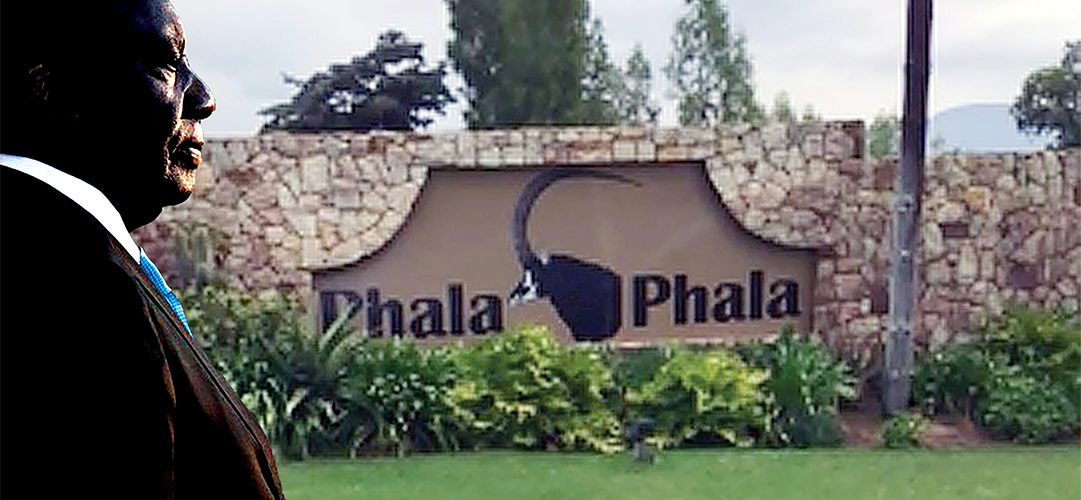
According to Greek mythology, before a great downfall of an individual, the gods make one lose his judgement. This thought raced through my mind when I tried to make sense of the decision by President Cyril Ramaphosa to challenge the Constitutional Court ruling over the Phala Phala scandal.
I think the decision by Ramaphosa not to resign as President of the country borders on madness. My view is that, we as South Africans and the rest of the world, are watching a Greek tragedy unfolding before our eyes in real time.
Instead of resigning as was expected in many quarters, Ramaphosa has instead decided to take the findings of the Constitutional Court for review. To me this decision defies common sense and logic.
Firstly, an independent panel headed by retired Constitutional Court Chief Justice Sandile Ngcobo assisted by a retired judge and a senior counsel, ruled in 2022 that there was a prima facie case for Ramaphosa to answer. On May 8, this year the ConCourt also ruled against Ramaphosa.
The findings of retired judges, former Chief Justice Sandile Ngcobo and Judge Ntombi Masipa, with Advocate Mahlape Sello SC, may not carry the same weight as that made on May 8. Common sense and logic tells us, ordinary citizens, that – indeed – our President has a case to answer.
One does not need a background in law to know that the reasons given by Ramaphosa about the presence of United States dollars at his Phala Phala game farm in Bela Bela, Limpopo, would shame a wannabe Walter Mitty.
One version is that the dollars were taken out of a safe in the farmhouse and stashed in sofas to safeguard them from being stolen. Really! Tell that to the birds. We are told that the money was the proceeds of buffaloes that had been bought by a Sudanese businessman. Two years later, the Sudanese buyer had not yet collected them.
The explanation offered by the President has been laughed off by many ordinary citizens of this country. Opposition parties and political commentators have also weighed in on the issue dismissing his claims as implausible.
Ramaphosa claims that a Sudanese businessman visited Phala Phala in late December 2019 and purchased these buffaloes in cash.
There are very strict rules governing possession of such huge amounts of money. Firstly, such an amount must be declared at customs and there must be documentary proof that it was indeed declared.
Ramaphosa maintains that he was not at the farm at the time of the sale but was aware of the transaction and seems to imply that he gave his manager to go ahead with the deal.
If my interpretation of what Ramaphosa is saying is correct, this raises concerns with me.
I find it hard to believe that the farm manager, Sylvester Ndlovu, could have conducted a business transaction of that magnitude. This is no disrespect to Ndlovu. Given that Ramaphosa is said to be a trained lawyer, how could he allow such a huge deal to be done through cash in foreign currency without securing some paperwork about the origins of the money? Finally, if Ramaphosa did participate in this transaction, albeit remotely, this would be a violation of the rules governing his position as President. He is barred from engaging in any business practices while he is in office.
Ndlovu’s explanation why this huge amount of money was taken out of a safe on the farm and stashed under the sofas stretches credulity to the extreme. He says this place was safer. According to his grotesque version of truth, he says some farm workers had access to the safe where keys were kept and feared that they might steal it. Simple question, if this money came from a legitimate business transaction why not take it to the bank.
Bela Bela may be a small farming town but I have no doubt that the Big Four banks are available there. Even the newly established Capitec, which has become quite ubiquitous in such places. Frankly speaking, the explanations rendered by Ramaphosa and Ndlovu belong in the realm of poorly crafted fiction. The Phala Phala theft took place in February 2020 and the South African public became aware of it two years later when former State Security Agency Director General Arthur Fraser laid criminal charges against the President.
Ramaphosa could unwittingly be giving joy to some of his critics. Some former members of Umkhonto we Sizwe, the military wing of the ANC, and not the political party led by Jacob Zuma, have in recent years questioned his struggle credentials.
They maintain that he was “parachuted” into being elected secretary general of the party in 1991.
Former MK operative Carl Niehaus, who is now an EFF Member of Parliament, subscribes to this view. He claims that Oliver Tambo once asked who Ramaphosa was, implying he was not known to the senior leadership of the party.
In recent years social media platforms are full of such allegations by these MK members who contend that they have been marginalised by leaders who are recent arrivals in the party.
Political rivals are probably rubbing their hands with glee at the prospect of his downfall. They are likely saying those whom the gods wish to destroy, they first make sublime, then mad.
Sekola Sello is a retired and independent veteran journalist