 WeeklySA_Admin
DELIVERY: Mayor Dada Morero’s State of the City speech painted a picture of recovery, but outside the cathedral doors Johannesburg residents are still navigating sewage spills, power cuts, potholes and a city buckling under financial strain…
By Themba Khumalo
There are few things more insulting than a politician demanding applause in a crumbling city simply because the ceiling has yet to collapse.
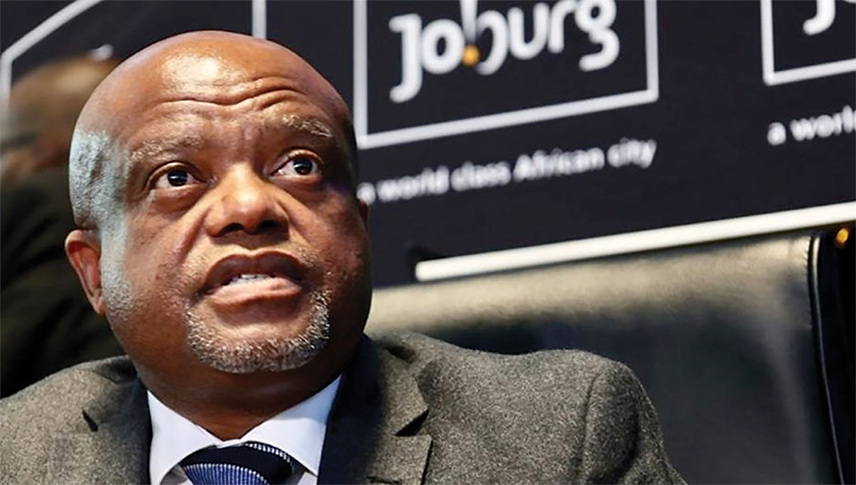
On Wednesday, 20 May, Johannesburg Mayor Dada Morero stood inside St Mary’s Cathedral, delivering a polished sermon about progress in a city held together by duct tape, prayer, and the fraying patience of its residents.
The symbolism was almost too on-the-nose. Morero chose a church for his State of the City Address, intent on showcasing his supposed achievements in the so-called Desmond Tutu District. Yet no sooner had he begun singing Nkosi Sikelel’ iAfrika than someone in the audience groaned.
Not applause. Not pride. Exhaustion.
Because outside that cathedral lies the real Johannesburg. The stench of sewage hangs in the air like a permanent civic perfume. Streets battered by potholes deep enough to bury promises. Traffic lights blink like dying heart monitors. Water outages. Power failures. Refuse piling up. Entire suburbs learning to survive like castaways in the wealthiest city in the country.
Inside, glossy pamphlets urged guests to “never underestimate the power of prayer”.
At this stage, prayer may be the city’s last remaining infrastructure plan.
The sound system failed. Screens flickered. Most people could barely hear the speech. Which, frankly, was the most accurate metaphor for Johannesburg governance in years: elaborate production, collapsing delivery, and nobody able to hear the truth.
Morero insisted the city had “turned the corner”. South Africans have heard that phrase so often it belongs on municipal invoices. Every flailing administration insists it has turned the corner—yet the city continues driving headlong into another wall.
According to the mayor, 99.3% of residents receive water, 96% receive sanitation, 92% receive electricity.
Wonderful.
Now ask residents how often the taps actually work. Ask how many days they spend storing water in buckets like refugees in their own suburbs. Ask businesses how much money they lose every time the power fails.
Ask motorists how many tyres have been sacrificed to Johannesburg’s roads, which increasingly resemble archaeological dig sites.
A city does not become functional simply because a spreadsheet says a pipe exists underground.
A tap without water is not service delivery. It is plumbing cosplay.
And while Morero painted his glowing portrait of recovery, reality came stomping through the cathedral doors in steel-toed boots.
Just one day before his speech, Eskom announced plans to cut power to Johannesburg over its staggering R5.2 billion debt. This isn’t a minor accounting hiccup. It is the financial equivalent of your landlord arriving with a locksmith while you’re still boasting to guests about your household’s success.
Then the real blow: a letter, just weeks old, from Finance Minister Enoch Godongwana.
That letter ripped through the city’s carefully constructed optimism like a chainsaw through cardboard.
According to National Treasury, Johannesburg spends more than it receives. The city allegedly owes R25.2 billion, while holding just R3.9 billion in cash. Salaries overshoot budgets. Bulk electricity and water purchases swallow the finances. Treasury even warned the city’s adjustment budget was effectively unfunded.
In plain language: Johannesburg is behaving like a man earning R5,000 a month and spending R15,000 on designer clothes to impress his neighbours.
The cupboard is bare. The lights are flickering. Still, the performance continues. Most damning of all was Godongwana’s warning that the city cannot even accurately report its finances, creating “critical material risk to data integrity”.
That is bureaucratic for: nobody trusts the numbers. And if the numbers cannot be trusted, neither can the speeches built atop them.
Still, Morero pressed on with investment figures, turnaround plans, visions of the future, and the usual buffet of municipal fantasy: “resilient”, “sustainable”, “liveable”.
South African politicians love these words. They sound impressive while meaning almost nothing to residents standing beside burst sewage pipes.
The city also claims it is “ringfencing” utility revenue to stabilise Joburg Water and City Power. Yet even activists and watchdogs openly question whether this is happening.
Meanwhile, City Power contract workers recently downed tools over unpaid wages. Nothing screams “financial recovery” quite like unpaid workers fixing a collapsing grid.
Then came the truly breathtaking part: Morero celebrating clean audits and improving finances while Treasury threatens to withhold billions in funding because the city cannot afford its wage agreements.
It is like a patient leaving ICU, ripping out the oxygen tubes, and declaring himself fit for the Comrades Marathon.
Organisations like OUTA did not mince words. They described a widening chasm between political messaging and lived reality. They are right.
Johannesburg has become a city where official statements and daily experience now occupy separate universes.
On paper, systems are improving.
On the ground, residents dodge raw sewage and pray their tyres survive the journey home.
On paper, response times are excellent. In reality, complaints are logged and marked “resolved” while the problem festers like an untreated wound.
On paper, the city is recovering. In reality, entire communities have normalised collapse.
Perhaps that is the most tragic part. Johannesburg’s dysfunction is no longer shocking. It is ambient. Background noise. Generators humming through the night, the scent of diesel and sewage mingling in the winter air.
People no longer ask if services will fail. They ask when. And yet, at the end of his speech, Morero invoked the old Johannesburg fairytale: inner-city rejuvenation.
That phrase has outlasted more administrations than some buildings in the CBD.
Every mayor promises to “reclaim” Johannesburg. Every mayor speaks of bringing people back, of renewal, as if the city is always one speech from resurrection.
Meanwhile, hijacked buildings multiply, infrastructure decays, residents retreat behind electric fences, backup water tanks, private security.
Johannesburg is becoming a once-glorious mansion where the owners keep repainting the front gate while the foundation crumbles beneath them. And perhaps that is why the cathedral setting mattered so much.
This State of the City Address felt less like governance and more like a confession.
A political prayer meeting in a city desperately trying to convince itself that decline is progress.
But residents are not fools.
They can smell the sewage outside the church doors.
They can feel the potholes under their tyres.
They can see the darkness when the lights go out.
And no amount of glossy speeches, holy venues or grand slogans can disguise the simple truth: Johannesburg is not being rescued swiftly enough by those entrusted to save it.
Themba Khumalo is a former editor, publisher and independent journalist