
 WeeklySA_Admin
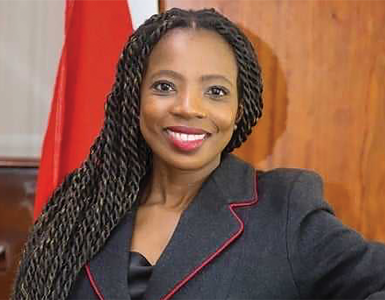
SMASH-AND-GRAB: The arrest of MK Party chief whip Mmabatho Mokoena-Zondi over alleged salary extortion from junior researchers exposes yet another layer of dysfunction, entitlement and political theatre in South Africa’s corridors of power…
By Themba Khumalo
South African politics, that never-ending circus of misrule and mediocrity, has delivered yet another act to leave the audience gasping, not with amazement, but with disbelief.
The latest star performer? None other than Mmabatho Mokoena-Zondi, the MK Party’s chief whip, who has swapped the party whip for a collection plate, trawling the corridors of power for “contributions” in the name of Jacob Zuma’s legal woes.
So far, it appears this was not a party plot, nor a presidential directive. The MK Party, it seems, did not send her out with a shopping list, and Jacob Zuma did not ask for a cent.
This was Mokoena-Zondi’s own solo production—an independent act in the grand theatre of South African political grift.
The Hawks allege that between August and December 2024, Mokoena-Zondi squeezed R233317,99 out of research recruits, like a juicer extracting the last drop from a bitter lemon. Allegedly, these recruits were not just asked, but “compelled” to hand over 50 to 60 percent of their pay. This was not a salary; it was more of a ransom.
The only thing missing was a balaclava and a note reading, “Pay up or else Zuma’s legal team will starve.”
In South African politics, the only thing trickling down is the contempt of those in power for those who still believe in anything better…
Let us pause to appreciate the audacity. Here stands a politician already branded with a fraud conviction, as if criminal history is the new badge of honour in the halls of Parliament. While most would take a previous conviction as a wake-up call, Mokoena-Zondi seems to have treated it as a practice run for the main event.
The charge sheet reads like an exhibition in shamelessness: headhunt four researchers, promise them a career, and then, with the subtlety of a loan shark, demand they hand over up to 60% of their salaries—supposedly to keep Zuma’s lawyers in silk ties and fine whisky.
One imagines the shock: you sign up to serve your country and end up funding the never-ending legal battles of someone else. R233,317.99 vanished—not into party accounts, not into some official fund, but into the black hole of Mokoena-Zondi’s own ambition. She wielded her “chief whip” title not as a tool for discipline, but as a crowbar for the recruits’ wallets, with all the delicacy of a smash-and-grab at a Sandton robot.
The Hawks say it was a clean operation, at least for Mokoena-Zondi, who allegedly siphoned off R233,317.99 from the freshly recruited researchers. Not just asked, but compelled, these four must have wondered if they had joined a political party or stumbled into a mob protection racket. Instead of serving the party, they were forced to serve up half their salaries on the altar of another man’s non-existent legal defence fund.
And what was the response when the balloon finally burst? Mokoena-Zondi handed herself over with the kind of dignity reserved for a schoolkid caught bunking class—head high, excuses loaded, and ready for her close-up in the Cape Town Magistrate’s Court. Bail was set at R30,000—a snip compared to the bounty allegedly extorted from her own staff.
Meanwhile, the MK Party, whose senior ranks have become a revolving door spinning out of control, issued the sort of statement that would make a corporate PR flack blush. “We reaffirm our commitment to constitutionalism and the rule of law,” they intoned, as if reciting a spell to ward off bad headlines. The party is “studying the situation”—translation: hoping the scandal will quietly die as the next disaster takes centre stage.
Let us not pretend this is an isolated bit of farce. The MK Party has become a showcase of instability, with chief whips resigning, spokespeople suspended, and the only reliable constant being chaos. Colleen Makhubele, the last chief whip, barely had time to warm her seat before being shown the door. Nhlamulo Ndhlela, poster child for the party after Zuma, barely had time to rehearse his lines before the curtain came down on his tenure.
The theatre of the absurd reaches its peak when one notes that Mokoena-Zondi was elected to serve on the Parliamentary Impeachment Committee, tasked with judging President Ramaphosa’s ethics in the Phala Phala affair.
Yes, nothing says “integrity” quite like putting someone with a previous fraud conviction in charge of judging another’s ethics. It is as if the foxes have set up a tribunal to investigate the missing hens.
The real victims, as always, are not the bigwigs, but the four researchers who thought they were signing up for public service and instead found themselves bankrolling an individual’s unhealthy appetite for money.
The South African public, popcorn in hand, watches this farce unfold, reminded once more that in our politics, the only thing that trickles down is the contempt of those in power for those who still believe in anything better.
It was another week, another scandalous headline, and now we have discovered that a political party’s research recruits learnt a painful lesson: their greatest workplace hazard was not the opposition, but a politician with sticky fingers and an appetite for massive payroll deductions.
The only question left is not whether the circus will ever end, but how many more acts we will have to endure before the tent finally collapses under the weight of its own absurdity.
The writer, Themba Khumalo, is a former editor, publisher and independent journalist
Comment
Africa’s Revolutions Must Not Betray Themselves
When Senegal’s Ousmane Sonko rose to deliver his speech as the newly elected Speaker of Parliament this week, he was doing far more than addressing lawmakers in Dakar. He was speaking into the soul of modern African politics.
Delivered just a day after Africa Day, Sonko’s address landed with unusual force because it touched a raw continental nerve: the widening gap between liberation promises and governing realities.
Across Africa, many parties and leaders who once rode into power on the language of justice, dignity and people-centred transformation have gradually drifted into elitism, arrogance and political insulation. Sonko’s speech was philosophical, layered and at times openly confrontational. Yet, beneath the rhetoric was a warning African societies cannot afford to ignore. “A nation does not die only from economic poverty — it can die from moral exhaustion,” he declared. That sentence alone deserves to echo through every parliament, state house and cabinet chamber on the continent.
Africa’s post-colonial story is full of movements born in sacrifice. Liberation parties emerged from prisons, exile camps, underground cells and student uprisings. Many inspired millions because they promised ethical leadership and a decisive break from exploitation and abuse of power.
But history also reveals a painful pattern. Once in office, some revolutionary movements begin to resemble the very systems they once opposed. Public institutions become tools of patronage. Loyalty replaces competence. Criticism is treated as betrayal. Citizens who once marched in hope slowly retreat into cynicism. Sonko’s speech was clearly shaped by Senegal’s own internal political fractures, including tensions within the very movement that swept President Bassirou Diomaye Faye into power. Yet, the speech resonates beyond Senegal precisely because it reflects a broader African anxiety.
Citizens across the continent are increasingly impatient with leaders who campaign as reformers and later govern as caretakers of privilege.
South Africa is not immune to this reality.
The governing ANC, itself born from one of the greatest liberation struggles in human history, faces mounting criticism over corruption, state collapse, service delivery failures and growing public distrust.
Similar frustrations can be found elsewhere across the continent, where unemployment, inequality and collapsing institutions coexist alongside political slogans about renewal and transformation.
What makes Sonko’s intervention compelling is not merely its criticism of power, but its insistence that morality matters in governance. In an era dominated by spin doctors, propaganda machinery and personality cults, this is a reminder Africa desperately needs. Democracy cannot survive on elections alone. It survives on trust. And trust survives only when leaders remain accountable to the ideals that brought them to power.
Africa Day should never become a ritual of speeches detached from reality. It should be a mirror.
Sonko’s speech forces Africa’s leaders to confront an uncomfortable question: Have our revolutions remained faithful to the people — or merely faithful to power?