 WeeklySA_Admin
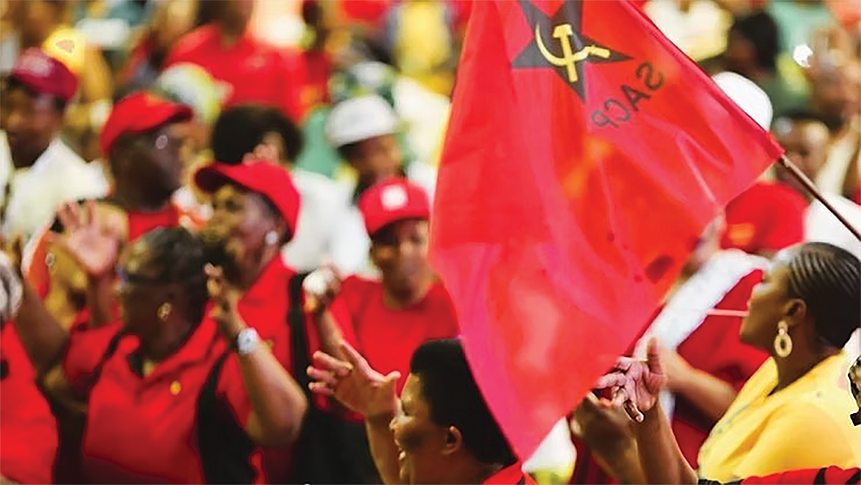
AGENDA: Leaders from the EFF, SACP, PAC, MK Party, trade unions and socialist movements have launched a new platform aimed at building working-class unity and confronting South Africa’s deepening economic and social crisis…
By Nicholas Mwangi
South Africa’s progressive forces are converging. On May 29, 2026, a diverse array of socialist, communist, and Pan-Africanist organisations converged for the “Conference of the Left.”
The meeting was held under a definitive mandate of “Building a Left Movement for Working Class & Popular Power.”
At a moment marked by deepening economic crisis, unemployment, austerity and fragmentation within progressive politics, the gathering reflected an attempt to rethink the future of left politics in the country.
The conference, organised by the South African Communist Party (SACP), brought together a distinctly broad spectrum of organisations, including the Economic Freedom Fighters, Pan Africanist Congress of Azania, Azanian People’s Organisation, Mkhonto we Sizwe Party, the Socialist Party of Azania, Workers’ Socialist Party, Independent Labour Party, the country’s key trade union federations, as well as Marxist and Pan-Africanist formations.
Guests and solidarity delegates from various countries also attended, rallying on the prospects of left unity in South Africa.
What made the conference politically important was not simply the attendance of these organisations, many of which have historically operated in isolation or in competition, but the recognition that the social and economic conditions facing the working class can no longer be addressed through fragmented struggles.
In a pre-conference statement, organisers argued that the crisis confronting workers and the poor was not temporary but structural. South Africa continued to face mass unemployment, rising living costs, deteriorating public services, and widening inequality, despite the democratic transition of 1994.
According to the statement, political freedom had not translated into material transformation for the majority, while the economy remained dominated by private accumulation and corporate power.
They further noted that global capitalism had reorganised itself in ways that have weakened organised labour. Informalisation, precarious work and attacks on trade unions had undermined working-class power, while progressive movements remained divided across parties, unions, and community organisations. The conference therefore saw itself as an attempt to rebuild a common forum through which left organisations can coordinate around shared working-class objectives.
Opening the conference, Solly Mapaila pointed out that the gathering was a platform for collective action.
“We are different political organizations, we are not going to dissolve our independent political organisations, we are creating a platform of common coordination of the working-class agenda.”
Mapaila argued that the material conditions facing ordinary South Africans should form the basis of left unity rather than personal ambitions or organisational rivalries.
“We are seeking to deepen the unity of the working class, to revitalise working class activism and indeed articulate a medium-term agenda based on the objective demands of the working class in our country.” He further urged humility and mutual respect among progressive forces, acknowledging that no single organisation possesses all the solutions.
“We must humble ourselves as forces of the left to recognise that none of us has the monopoly of answers to the struggle of the working class. Therefore, we must treat each other with respect, humility and understanding.”
Next, was Julius Malema, leader of the Economic Freedom Fighters, he situated the gathering within what he described as a global crisis of capitalism.
“This conference convenes at a decisive historical moment characterised by economic instability, political uncertainty, and the visible confusion of the global capitalist order itself.”
Malema highlighted the absurd contradictions of modern society.
“Humanity has never had better scientific knowledge, greater productive potential, or greater technological sophistication than it does today, yet billions of people continue to exist in conditions of insecurity, deprivation, violence and despair because society remains controlled by the private accumulation of profit rather than the fulfillment of basic human needs.”
A major theme of his speech was the importance of Pan-African solidarity in the struggle against imperialism and exploitation.
“A Left that cannot defend Pan-African solidarity has abandoned its own historical mission because the fragmentation of African people along nationalist and xenophobic lines merely strengthens imperialism and weakens working-class unity.”
He pointed out that the future of Africa depends on coordinated efforts to break patterns of dependency. “The future of African liberation depends fundamentally upon continental solidarity, regional industrialization, and coordinated resistance against global systems of extraction and dependency.”
Malema also identified sectarianism as one of the greatest weaknesses facing progressive politics today.
“International capital coordinates across borders with extraordinary efficiency, yet organizations claiming commitment to socialism often remain paralyzed by sectarianism, ego, historical resentment, and ideological confusion.”
For him, rebuilding hope and confidence among oppressed people is a central challenge of the present era.
“The greatest task facing the Left is therefore also psychological and moral: to restore imagination among the oppressed and to demonstrate once again that societies can be organized differently.”
Speaking on behalf of the uMkhonto we Sizwe Party, Deputy President Tony Yengeni contextualized the conference as a response to a historic demand for unity among progressive forces. “The time has come for the Black majority to come together, unite, and take over political power.”
Yengeni emphasised that political power must be used to advance genuine liberation for the masses.
“The reason why we are here, we are responding to that command, to forge unity among all progressive forces in the country, so that we can use that political power to liberate our people.”
Looking beyond the conference itself, he called for the establishment of a permanent coordinating structure.
“This conference must emerge as a solid and powerful united left platform.” He proposed that the gathering establish a revolutionary council capable of guiding the process forward.
“This conference at the end must come out with a revolutionary council and run the affairs of this platform. And it must be guided by a set of principles and anchor it forward.”
Beyond the keynote addresses, representatives from the various participating organisations shared perspectives on the political, economic, and social crisis confronting South Africa and the need for unity among the left.
Whether this process ultimately leads to a permanent united front, a revolutionary council, coordinated campaigns, or a broader movement for socialist transformation remains to be seen.
However, the conference has already achieved something important; it has created a space where organisations from diverse left traditions can engage one another directly and explore the possibilities of collective action in a period of deepening crisis. – People’s Despatch
Comment
COMPASSION BEFORE POLITICS
The bitter legal battle between the family of former Zambian president Edgar Lungu and the Zambian government over his final resting place is deeply unfortunate and risks tarnishing the dignity that should accompany the burial of a former Head of State.
What should have been a solemn period of mourning and national reflection has instead become a divisive confrontation involving politics, personal grievances and questions of State authority. Nearly a year after his death in South Africa on June 5, 2025, Lungu has still not been buried.
The Lungu family insists that the former President be buried in South Africa, citing what they say were his personal wishes and longstanding tensions with the administration of President Hakainde Hichilema. The Zambian government, meanwhile, argues that a former Head of State deserves a full state funeral and burial in his homeland. Both sides believe they are defending principle and honour. Yet the prolonged standoff is achieving the opposite — causing pain for the family and embarrassment for the nation.
Across Africa, burial rites carry profound cultural and emotional significance. The passing of a former leader is usually a moment when political differences are set aside in recognition of national service. Zambia has long been regarded as one of Southern Africa’s most stable democracies, respected for peaceful transitions of power and political tolerance. This public dispute risks undermining that reputation. The State has a legitimate interest in honouring a former President. Edgar Lungu led Zambia for years, occupied the highest office in the land and represented the nation internationally. A state funeral would therefore be neither unusual nor inappropriate.
However, governments must recognise that beyond public office lies the private reality of family. The wishes of close relatives — and where known, those of the deceased — deserve serious consideration. Funerals are deeply personal matters. Attempts to impose State authority over grieving family members can easily be perceived as insensitive or politically motivated, particularly in a polarised environment. The danger is that this dispute may evolve into a contest over Lungu’s legacy rather than a genuine effort to honour his memory. Ordinary Zambians are likely less interested in legal arguments than in seeing a dignified resolution that promotes healing and unity.
The courts may ultimately rule on the legalities of repatriation and burial rights, but morality and statesmanship require more than legal victories. Dialogue and compromise are urgently needed. There are ways to honour a former President without disregarding family sensitivities, just as the family should acknowledge the symbolic importance Lungu holds for many Zambians who wish to mourn him at home. History will not remember who won the legal argument. It will remember whether Zambia handled the passing of one of its former Presidents with compassion, wisdom and unity.