 WeeklySA_Admin
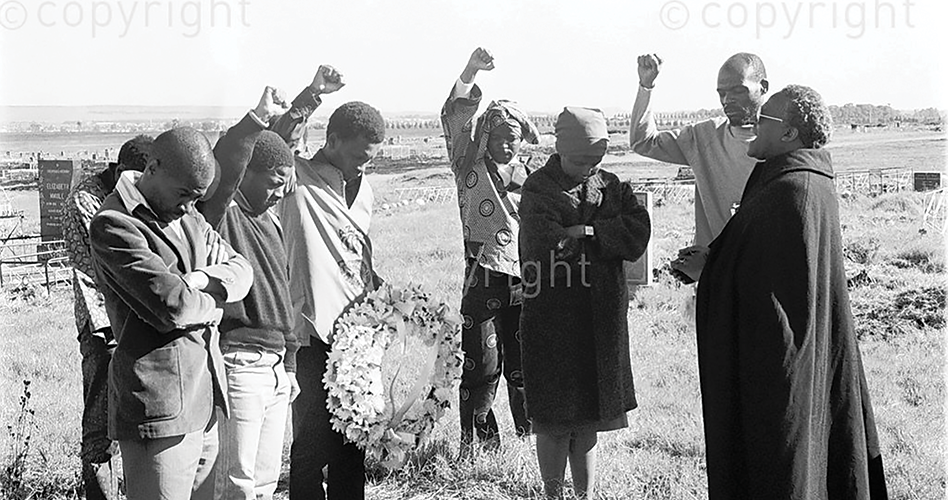
Photos: Bongani Mnguni / african.pictures: From wreath-laying ceremonies at Avalon Cemetery to a national torch tribute at FNB Stadium, South Africa will mark the 50th anniversary of the Soweto Uprising with reflection, remembrance and renewed debate about the unfinished struggle for equality, education and economic justice…
By WSAM Reporter
South Africa will commemorate the 50th anniversary of the June 16, 1976 Soweto Student Uprising this week with a series of events that seek not only to honour the sacrifices of the youth who confronted apartheid, but also to confront the challenges facing today’s generation.
Under themes ranging from remembrance and resistance to renewal and intergenerational responsibility, commemorations planned in Soweto will bring together veterans of the liberation struggle, student leaders, government officials, workers, community activists and young people – in what organisers describe as a critical moment of reflection on the country’s democratic journey.
At the centre of the commemorations is a simple but profound question: What has South Africa done with the freedom won through the sacrifices of the youth of 1976? On June 16 1976, thousands of students marched through the streets of Soweto in protest against the apartheid government’s decision to impose Afrikaans as a medium of instruction in Black schools.
Freedom is never held by one generation alone. It is received, protected,
renewed and passed on…
The peaceful demonstration was met with brutal force as police opened fire on unarmed students, triggering a nationwide uprising that would fundamentally alter the course of South African history.
Fifty years later, the memory of that day remains a defining chapter in the country’s liberation story. One of the major commemorative events will be hosted jointly by the Black Consciousness Movement-United (BCM-U) and the Socialist Party of Azania (SOPA) under the theme “June 16 1976: Seeds of Resistance and Unfinished Revolution”.
The programme will begin with a wreath-laying ceremony at Avalon Cemetery, where participants will honour student leaders Tsietsi Mashinini, Khotso Seatlholo and hundreds of young people who lost their lives during the uprising.
The commemoration will then move to the Banner of Truth Church Hall in Freedom Park, Soweto, where activists, workers, students and community organisations are expected to gather for a mass rally.
Organisers say the event will focus on contemporary challenges confronting young people, including access to education, transport costs, food insecurity, unemployment and deteriorating school infrastructure.
The programme will feature testimonies from learners, parents, teachers, workers and unemployed residents, highlighting the realities faced by many South Africans despite three decades of democracy. International solidarity messages are also expected from representatives of workers’ organisations, liberation movements and social justice campaigns from across Africa and beyond.
BCM-U and SOPA leaders argue that while apartheid has been defeated politically, many of the social and economic conditions that fuelled the 1976 uprising remain unresolved.
They describe June 16 not as a closed chapter of history, but as an unfinished revolution whose demands continue to resonate in communities struggling with poverty, inequality and exclusion.
At a national level, government’s official commemoration will take place at the FNB Stadium precinct in Johannesburg under the theme “RESET@50 – Our National Commitment to the Future: Freedom Lives in Every Generation”.
The event will culminate in an address by President Cyril Ramaphosa following a symbolic intergenerational torch ceremony designed to link the struggles and aspirations of different generations of South Africans.
The ceremony, led by Minister in the Presidency for Women, Youth and Persons with Disabilities Sindisiwe Chikunga, will see a torch passed between representatives of the 1976 generation, the architects of the democratic Constitution, student activists associated with the 2015-2017 Fees Must Fall movement, and young leaders representing the youth of 2026.
According to the programme, the torch symbolises the idea that freedom is not owned by a single generation but must be inherited, protected and renewed by those who follow. The tribute is intended to create a bridge between the sacrifices of the past and the responsibilities of the future.
Representatives of the 1976 generation are expected to reflect on the influence of Black Consciousness and student activism in challenging apartheid education and demanding dignity for Black South Africans.
The 1996 generation will focus on the achievement of constitutional democracy, while former student movement leaders will highlight the role played by the Fees Must Fall campaign in expanding access to higher education.
The final message will come from today’s youth, who are expected to speak about unemployment, technological change, innovation and the opportunities and obstacles facing a generation navigating a rapidly changing world. The programme emphasises that young people should be viewed not as a problem to be managed, but as innovators, entrepreneurs and builders of South Africa’s future.
Although the two commemorations emerge from different political traditions, both are united by a common recognition that June 16 remains a living legacy. Both acknowledge that the struggle waged by the students of Soweto was not simply about language policy or education, but about dignity, equality and the right of young people to shape their own future.
As South Africa marks half a century since the uprising, the anniversary arrives at a moment when many young people continue to confront unemployment, poverty and social exclusion. The commemorations therefore serve as both a tribute to those who came before and a reminder that the aspirations of 1976 remain a work in progress.
Fifty years after the students of Soweto challenged one of the most powerful apartheid institutions, their courage continues to echo through the nation’s conscience.
The question facing South Africa today is whether the promise they died for can finally be fulfilled.