
 WeeklySA_Admin
DIALOGUE: With nine Mozambicans killed, hundreds displaced and more than 700 repatriated from South Africa, the ANC has launched a diplomatic charm offensive in Maputo amid growing concern that anti-illegal immigration violence could damage decades of solidarity…
By WSAM Reporters
The African National Congress (ANC) has moved swiftly to reassure Mozambique that the recent wave of anti-illegal migration violence sweeping parts of South Africa does not reflect state policy or values that bound the two countries together during the liberation struggle.
The intervention comes amid growing diplomatic concern after nine Mozambican nationals were killed and more than 700 repatriated following attacks linked to anti-illegal mmigration protests in several South African provinces. The violence has prompted fears that one of Southern Africa’s most important bilateral relationships could come under strain.
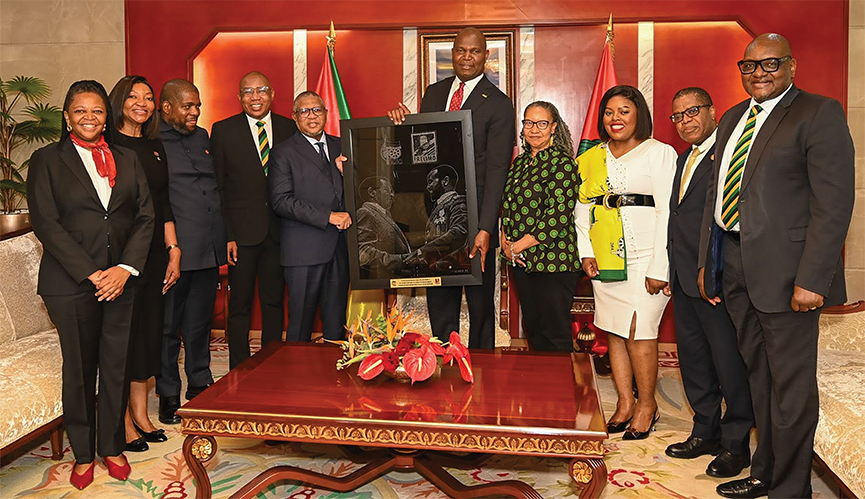
This week, ANC secretary-general Fikile Mbalula led a high-level delegation to Maputo, where he met officials of Mozambique’s ruling Frelimo party and held discussions with President Daniel Chapo in an effort to ease tensions and reaffirm the historic bonds between the two liberation movements.
Illegal immigration is a global problem
and must be treated as such – Frelimo
The visit followed a strongly worded statement from Frelimo’s Political Commission, which warned that the violence was undermining decades of cooperation between the neighbouring countries and threatening broader regional solidarity.
In its communiqué, the commission condemned what it described as a “wave of xenophobia” directed at immigrants, including Mozambicans, and warned that such attacks jeopardise collective efforts to maintain healthy historical relations between South Africa and Mozambique.
The concern is not merely political.
Mozambique has approximately 300 000 citizens living and working in South Africa, many employed in mining, agriculture, construction and the informal economy. The country has historically supplied labour to South African industries, creating deep social and economic ties stretching back generations.
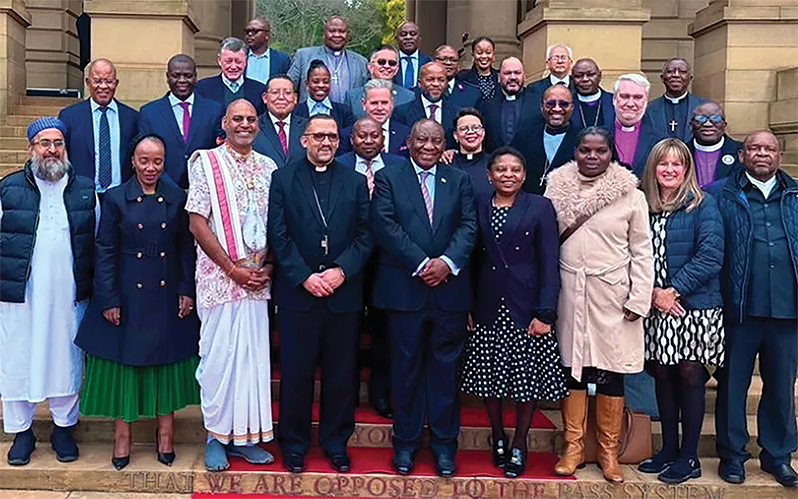
A delegation of the South African Council of Churches (SACC), led by President Archbishop Sithembele Sipuka, pictured with President Cyril Ramaphosa after a meeting in which the church leaders condemned the scapegoating of migrants for South Africa’s economic and social difficulties. Photo: ACI Africa
Mozambican authorities say at least 714 citizens had been repatriated by early June, while hundreds more have returned voluntarily through border crossings as fears of further violence spread.
Many reportedly lost homes, possessions and documents during attacks in communities where foreign nationals have increasingly become targets of public anger over unemployment, crime and service delivery failures. Yet, both the ANC and Frelimo appear determined to prevent the crisis from escalating into a diplomatic rupture.
Speaking during Mbalula’s visit, Frelimo Secretary-General Chakil Aboobacar stressed that the attacks should not be interpreted as the official position of the South African government.
“Illegal immigration is a global problem and must be treated as such,” Aboobacar said, adding that solutions must promote coexistence, respect for human dignity and adherence to human rights. He noted that both parties had jointly rejected xenophobic attitudes and reaffirmed their commitment to finding constructive solutions to migration challenges. Mbalula echoed that sentiment.
“We accept that people protest against illegal immigration and drug cartels; however, we have been very clear that we do not support attacks,” he said, describing xenophobic violence as inhumane and contrary to the principles of the ANC.
The ANC delegation’s visit comes as tensions continue to rise ahead of 30 June, a deadline set by anti-illegal immigration groups demanding that undocumented foreign nationals leave South Africa.
Meanwhile, Mozambican authorities have warned that the atmosphere is becoming increasingly volatile in Gauteng, Mpumalanga and KwaZulu-Natal, where demonstrations continue to call for stricter migration controls.
While government leaders on both sides of the border are working to calm the situation, religious leaders have also entered the debate.
Church leaders’ dialogue
South African Council of Churches (SACC) President Archbishop Sithembele Sipuka used a recent meeting with President Cyril Ramaphosa to challenge what he described as the scapegoating of migrants for South Africa’s economic and social difficulties.
“If tomorrow every African foreign national were to leave this country, our problems would still be with us,” Sipuka said. “The cause is not the foreigner. The cause is the elephant in the room.”
Sipuka argued that unemployment, corruption, poor service delivery and failures in education were the real drivers of public frustration. He warned that attacks on migrants distract attention from deeper structural problems while risking further violence and instability.
President Ramaphosa has similarly condemned vigilantism and related violence, insisting that illegal immigration cannot be blamed for South Africa’s broader economic challenges.
“Migration is not the cause of our problems,” Ramaphosa told faith leaders, while calling for migration to be managed “constructively and collectively” within the framework of constitutional values. For Mozambique, however, the issue remains urgent.
Officials in Maputo continue to monitor developments closely and have warned that the situation could deteriorate further if inflammatory rhetoric continues. The Mozambican government has pledged support for affected citizens while working with South African authorities to ensure the safe return of those wishing to leave.
The challenge facing both governments now is to balance legitimate concerns about border management and undocumented migration with the need to protect vulnerable communities from violence. For many observers, the stakes extend far beyond immigration policy. South Africa and Mozambique share a liberation history forged through sacrifice, solidarity and mutual support during the struggle against apartheid.
The ANC’s emergency diplomatic mission to Maputo is therefore about more than crisis management — it is an attempt to preserve one of Southern Africa’s most enduring political relationships before anger on the streets erodes trust between neighbours.
As the June 30 deadline approaches, both governments will be hoping that dialogue, diplomacy and the rule of law prevail over fear, vigilantism and division. For now, the message from Maputo and Pretoria is clear: migration challenges must be addressed, but not at the cost of human dignity or regional unity. – Lusa/WSAM/ACI Africa