 WeeklySA_Admin
JARGON: The state has abdicated its core duty, passing the buck of economic survival onto a generation buried under structural neglect…
By Themba Khumalo
Half a century—fifty solid years—since the children of the townships faced down lethal police fire to demand a future.
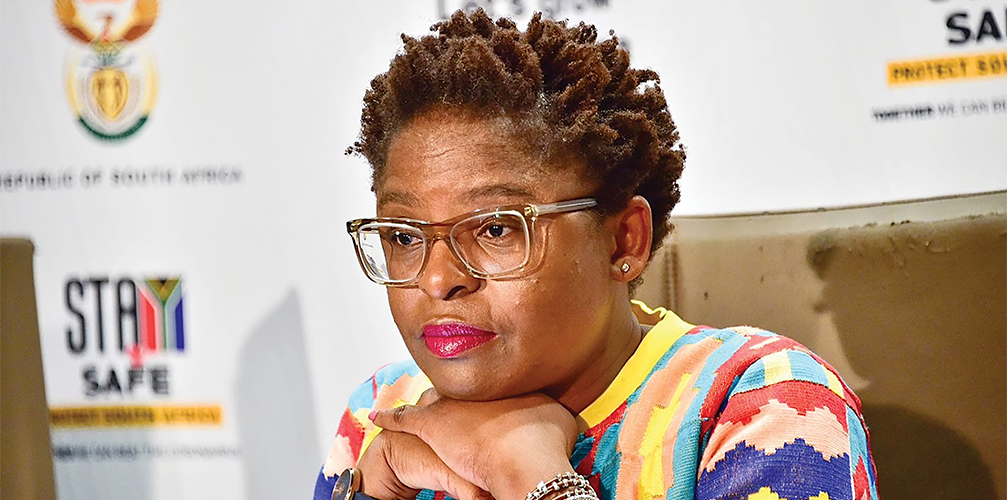
And how does the state honour that sacrifice? By shrugging its heavy, well-tailored shoulders and telling the grandchildren of 1976 that they are entirely on their own. On Tuesday 16 June, Minister in the Presidency, Khumbudzo Ntshavheni, stood before the cameras and delivered a spectacular performance in political gaslighting.
“There is no government that is going to create employment,” she proclaimed with the chilly detachment of an undertaker handing over a bill.
Instead, she urged the youth to ‘take matters into their own hands’ and make entrepreneurship a ‘lived experience’.
Let us translate that despicable bureaucratic jargon into plain South African English: We have broken the state, we have plundered the coffers, and we have left you nothing but ash. Now go start a spaza shop in the ruins and call it liberation.
To evoke the ghost of 1976 to justify state paralysis is not just insulting; it is obscene. The youth of 1976 fought a monstrous system because the state stood in their way. The youth of 2026 are completely paralysed because the state is a dysfunctional corpse rotting across the tracks of economic progress.
Our esteemed Minister points across the ocean to Germany, marvelling at how small and medium enterprises drive that economy. It takes a dizzying level of delusion to compare the German Mittelstand to the absolute nightmare of trying to survive in the South African market.
German entrepreneurs do not have to run their businesses on expensive diesel generators because Eskom cannot keep the lights on. German start-ups do not have to navigate a labyrinth of red tape designed solely to extract bribes, nor do they have to move their goods along railway lines stripped bare by syndicates.
The state has spent decades choking the life out of the economy through spectacular incompetence, rampant corruption, and policies that treat entrepreneurship as a hostile enemy rather than an engine of growth. Now, faced with a youth unemployment rate that behaves like a ticking thermonuclear device, the grand strategy is to tell starving twenty-somethings to become ‘pioneers’.
What exactly are they supposed to build these empires with? Air?
Consider the sheer weight of the regulatory boot pressing down on the neck of anyone daring to start a business. The International Monetary Fund recently exposed South Africa as having one of the most restrictive, competition-stifling regulatory landscapes among all G20 emerging economies.
This is not just paperwork; it is a violent ‘time tax’ that strips away a firm’s capacity to survive. Statistics show that a mere one-percentage-point increase in time spent wrestling with state regulation correlates directly with a one per cent drop in firm-level job growth.
The state has manufactured a machine where the average entrepreneur spends twice as long navigating decentralised, duplicative municipal and provincial permits as they did two decades ago.
But nowhere is this cognitive dissonance more sickening than in the state’s sudden, aggressive obsession with regulating the poorest of the poor: the informal spaza shops.
Following the tragic foodborne illness crisis, the government issued a frantic national directive forcing every single spaza shop to register with their municipalities.
Look at what compliance actually demands from a survivalist trader in a township. To legalise a tiny shop, an owner must produce valid zoning approvals, formal building plans, South African Revenue Service tax certificates, and a municipal Certificate of Acceptability.
The absolute absurdity of demanding engineered building plans and formal zoning certificates for a corrugated iron structure or a backyard garage in Diepkloof or Khayelitsha would be hilarious if it were not so tragic. The cost of compliance—hiring consultants, paying for transport to unresponsive municipal offices, and purchasing administrative paperwork—safely exceeds the entire monthly turnover of the actual business.
The Minister mentions a paltry R500 million funding pot, casually admits that it is not enough, and dares the youth to ‘challenge’ the government for more. It is a sickening deflection. She invites the victim to lobby the perpetrator for a slightly larger crumb.
The money that should have funded factories, digital hubs, and artisan academies has been consumed by the insatiable appetites of the political elite. It disappeared via corrupt tenders, inflated municipal contracts, and endless bailouts for state-owned enterprises that exist only as feeding troughs for the politically connected.
You cannot throw a young person into a shark tank with no life jacket, no training, and no capital, and then praise their ‘entrepreneurial drive’ when they sink under the weight of your own red tape.
This is not a pivot to economic independence. It is an open admission of bankruptcy—not just fiscal bankruptcy, but moral bankruptcy. The government has officially run out of ideas, run out of conscience, and run out of excuses.
The 1976 generation fought for a state that would care for its people and unlock their human potential.
Fifty years later, the current government has reduced that magnificent dream to a cruel joke: a country where the only ‘lived experience’ for millions of young South Africans is the crushing, daily indignity of joblessness, while the people who failed them sit in the back of luxury sedans, telling them to work harder.