

 WeeklySA_Admin
COURAGE: From Babita Deokaran to Mpho Mafole, Gauteng honours the public servants who paid the ultimate price for exposing corruption and defending taxpayers’ money…
By WSAM Reporters
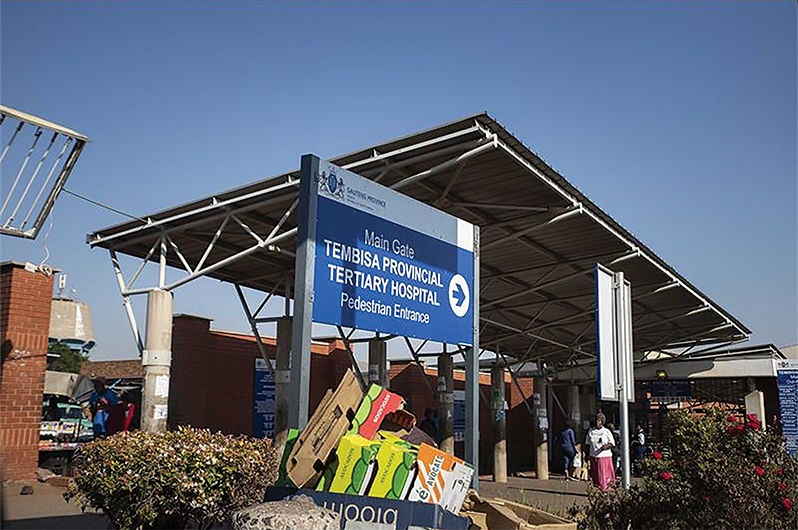
When Gauteng Finance MEC Nkululeko Dunga leads a memorial service at Tembisa Hospital on Monday, it will be more than another official ceremony.
It will be an occasion to remember men and women who, in different municipalities and government departments, found themselves on the front line of South Africa’s battle against corruption—and paid with their lives.
Held under the theme of protecting public resources and defending financial accountability, the memorial honours officials including Babita Deokaran, Mpho Mafole, Martha Mani Rantsofu and Simnikiwe Mapini, whose deaths have become powerful symbols of the dangers facing whistleblowers, auditors and financial investigators.
Dunga has declared an uncompromising stance against corruption, describing the memorial as a tribute to public servants who lost their lives while acting with integrity. He has also called for tougher consequence management for financial crimes and vowed that Gauteng “will not normalise the killing of public servants.”
Among the key commitments announced by the MEC are hosting the memorial service, strengthening protection for officials who expose corruption, improving financial governance and transforming public procurement into a tool for inclusive economic development that supports black-owned and township businesses.
He has also warned that Gauteng’s finances remain under severe pressure, citing more than R11 billion in unauthorised expenditure and billions more in intergovernmental debt.
For many South Africans, the names being honoured are familiar. Their stories, however, deserve to be remembered.
Perhaps no name has become more synonymous with courage than Babita Deokaran, the Gauteng Department of Health’s Chief Director of Financial Accounting.
Before her assassination in August 2021, Deokaran became a crucial witness in investigations into procurement irregularities at Tembisa Hospital. She painstakingly identified hundreds of suspicious transactions worth hundreds of millions of rand and alerted authorities to what later emerged as one of the country’s largest public healthcare corruption scandals.
She was gunned down outside her Johannesburg home moments after dropping her daughter at school.

Although six men have since been convicted for carrying out the murder, investigators have yet to bring the alleged masterminds behind the assassination to justice. Subsequent investigations by the Special Investigating Unit (SIU) confirmed that the procurement irregularities she uncovered formed the basis of a much wider corruption investigation.
Nearly four years later, tragedy struck again.
Mpho Mafole, Ekurhuleni Metro’s Group Divisional Head for Corporate and Forensic Audits, was shot dead in June 2025 while driving in Kempton Park.
Mafole had reportedly been in the position for only a few months but had already submitted findings relating to a controversial R1.8-billion chemical toilet contract before he was murdered.
His killing intensified concerns that financial investigators and municipal auditors are increasingly becoming targets of organised criminal networks determined to protect lucrative corruption schemes. Civil society organisations described his death as another devastating blow to public sector accountability.
The memorial will also honour Martha Mani Rantsofu, an employee of Emfuleni Local Municipality whose murder earlier this year shocked anti-corruption activists.
Reports indicate that Rantsofu had allegedly provided information to investigators regarding financial misconduct and tender irregularities shortly before she was shot dead. Her family and civic organisations believe the killing may have been linked to efforts to expose corruption inside the municipality, although investigations remain ongoing.
Another name to be remembered is Simnikiwe Mapini, a member of Ekurhuleni’s finance department who served on municipal bid adjudication processes.
Mapini was shot dead in December 2023, becoming one of several finance officials connected to Ekurhuleni who have been attacked in recent years.
Her killing came only months after then-municipal Chief Financial Officer Kagiso Lerutla survived an apparent assassination attempt, raising alarm over the growing risks confronting officials responsible for overseeing procurement and public finances.
The memorial reflects growing concern that those tasked with safeguarding public money are becoming increasingly vulnerable.
Organisations campaigning for stronger whistleblower protection argue that these murders illustrate the high personal cost of fighting corruption in South Africa. They continue to call for enhanced witness protection, stronger legal safeguards for whistleblowers and specialised security for investigators handling sensitive financial matters.
In his recent Budget Vote speech, Dunga said the memorial is intended not only to honour the fallen but also to reaffirm government’s commitment to protecting those who uphold integrity, accountability and the rule of law.
The choice of Tembisa Hospital as the venue is especially poignant.
The hospital has become synonymous with one of South Africa’s biggest public-sector corruption scandals. Investigators believe more than R2 billion may have been looted through fraudulent procurement schemes allegedly orchestrated by deeply entrenched criminal syndicates working with corrupt officials.
The tragedy is forever linked to Deokaran.
In 2021, she exposed hundreds of suspicious purchase orders flowing from the hospital and warned colleagues that powerful interests could retaliate. Weeks later she was assassinated.
Her death transformed what appeared to be a procurement investigation into a national symbol of the dangers facing whistleblowers.
Monday’s ceremony therefore represents far more than remembrance.
It is an acknowledgement that behind every corruption investigation lies an individual—a parent, colleague, sibling or friend—who chose public service over personal safety.
Their names have become part of South Africa’s unfinished struggle against corruption.
As Gauteng gathers to honour them, one question remains: will future public servants who choose integrity over silence receive the protection they deserve?