
 WeeklySA_Admin
ENFORCEMENT: A total of 3 400 troops deployed as Ramaphosa toughens migration response amid rising anti-illegal immigration protests…
By WSAM Reporters, Reuters and Lusa
The Government has dramatically escalated its response to the country’s deepening migration crisis, deploying more than 3 400 soldiers nationwide while simultaneously tightening labour migration rules and stepping up border enforcement in the wake of increasingly organised anti-illegal immigration protests.
President Cyril Ramaphosa has authorised the deployment of 3 405 members of the South African National Defence Force (SANDF) to assist police in maintaining law and order after demonstrations calling for tougher action against undocumented foreign nationals spread across several cities.
According to a letter sent to Parliament, the military deployment began on 28 June and is expected to cost taxpayers about R54.6 million, with soldiers remaining on standby to support police should unrest intensify.
The issue of migration cannot be handled by one country alone.
We need to work together as African sister countries to find solutions…
— President Cyril Ramaphosa
The deployment follows nationwide protests in which thousands of demonstrators marched under South African flags, demanding decisive government action against illegal immigration. Although most protests were peaceful, isolated incidents of violence, looting and intimidation prompted a heavy security response.
Police arrested more than 900 people on charges ranging from immigration violations and public violence to robbery and harbouring undocumented migrants.
Soldiers were also deployed to parts of Johannesburg’s inner city, home to large migrant communities, as authorities sought to prevent further unrest.
The anti-illegal immigration movement has vowed to continue staging demonstrations every Thursday until government addresses its demands.
The security crackdown comes as Cabinet formally endorsed a significantly tougher migration strategy, signalling a shift from short-term enforcement towards longer-term structural reforms aimed at regulating migration and employment.
Speaking after the latest Cabinet meeting, Minister in the Presidency Khumbudzo Ntshavheni announced that government had intensified labour inspections targeting businesses suspected of employing undocumented foreign nationals. Joint operations involving the Departments of Employment and Labour, Home Affairs and Police have already begun.
Border enforcement has also been strengthened. Since early June, the Border Management Authority (BMA) has intercepted hundreds of undocumented migrants, undesirable persons and travellers carrying invalid documentation while attempting to enter South Africa illegally.
Cabinet has also begun implementing the National Labour Migration Policy White Paper 2025, the country’s first comprehensive labour migration framework.
The policy introduces employment quotas limiting the number of foreign nationals who may be employed in selected sectors, including agriculture, hospitality, tourism and construction. It also complements proposed restrictions on business visas for certain sectors and planned amendments limiting foreign nationals from operating small businesses in designated areas of the economy.
Government says the objective is twofold: attracting scarce skills needed by the economy while protecting employment opportunities for South Africans and addressing the country’s continuing “brain drain” of skilled professionals.
While government has intensified enforcement, Ramaphosa has repeatedly stressed that South Africa’s response must remain firmly rooted in constitutional values and respect for human rights.
Speaking during a bilateral visit to the Democratic Republic of Congo, the President acknowledged growing frustration among South Africans over unemployment, crime and poverty, while insisting that undocumented migrants must still be treated with dignity and protected from violence.
“Our government has a duty to protect all people who live in our country,” Ramaphosa said, emphasising that security forces had acted during recent protests to safeguard both demonstrators and foreign nationals.
He admitted that public anger over migration reflects genuine socio-economic pressures facing millions of South Africans.
However, he argued that government must balance those concerns with its constitutional obligation to uphold the rights of everyone living within the country’s borders.
The President also announced that South Africa will intensify diplomatic engagement with African governments by dispatching special envoys across the continent to seek a coordinated continental response to migration.
“The issue of migration cannot be handled by one country alone,” Ramaphosa said.
“We need to work together as African sister countries to investigate it and find solutions that will be fitting to the problem that we now have.”
His remarks came as neighbouring Mozambique confirmed that dozens of its citizens had become victims of attacks linked to the recent unrest.
Moz president concerned
Mozambican President Daniel Chapo said 38 Mozambican nationals who were legally residing in South Africa had been assaulted and forced from their homes in Benoni.
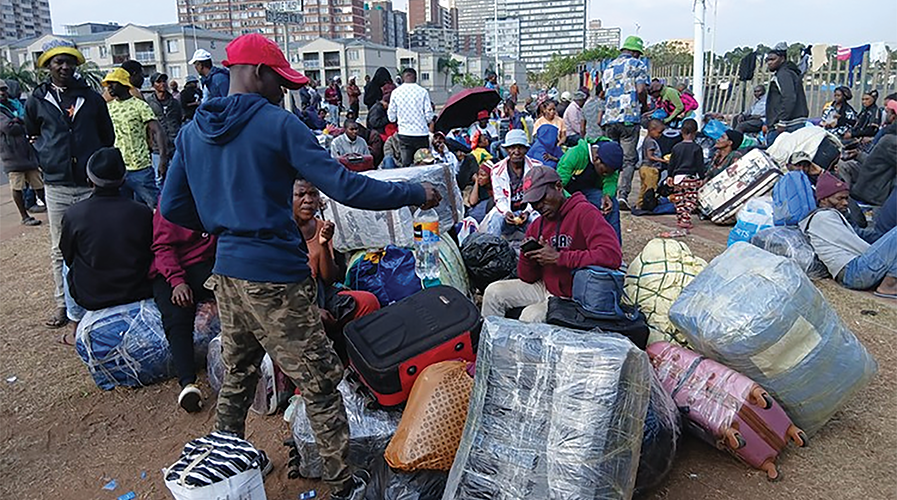
Among them were six women, including one who was pregnant. According to Mozambican authorities, one woman gave birth while receiving assistance during the repatriation process.
Chapo stressed that the victims were documented migrants, highlighting concerns that tensions surrounding illegal immigration are increasingly affecting foreign nationals legally living and working in South Africa.
The developments underline the delicate balance confronting the South African government.
Public frustration over illegal immigration has grown steadily amid persistently high unemployment, pressure on public services and rising concerns over crime. At the same time, government faces mounting regional and international scrutiny over allegations of xenophobia and violence directed at foreign nationals.
For now, Pretoria appears determined to pursue a twin-track strategy: strengthening border security, tightening migration controls and enforcing immigration laws while insisting that constitutional rights and African solidarity remain central to its response.
With weekly protests planned to continue and government accelerating implementation of its new migration policy, the country’s immigration debate has entered a decisive new phase—one that will test both the state’s ability to enforce the law and its commitment to protecting the rights of all who live within South Africa’s borders.