 WeeklySA_Admin
EXPRESSION: Despite persistent funding challenges, the National Arts Festival once again transformed Makhanda into the country’s cultural capital, showcasing world-class theatre, music, dance and visual arts while proving that South Africa’s creative heartbeat remains as resilient as ever…
By Jacob Mawela
For 10 days, the chilly Eastern Cape city of Makhanda became South Africa’s cultural capital once again as thousands of artists, performers and visitors gathered for the 52nd National Arts Festival.
Running from June 25 to July 5, the country’s premier celebration of artistic expression once again demonstrated why it remains one of Africa’s most important cultural events, despite continuing financial pressures and the absence of direct funding from the Department of Sport, Arts and Culture.
Since its inception in 1974, the festival has provided a platform for theatre, dance, music, visual arts, poetry, comedy and multidisciplinary performance, bringing together established names and emerging talent from across South Africa and abroad.
Long-time corporate partner Standard Bank once again played a pivotal role in ensuring the festival’s success, continuing its decades-long commitment to nurturing South African creativity.
The festival also entered a new chapter with the appointment of Eastern Cape arts administrator Palesa Kadi as Chief Executive Officer. Formerly Head of Arts and Culture in the Nelson Mandela Bay Municipality, Kadi now faces the challenge of steering the institution through an increasingly difficult funding landscape while building on its legacy.
Her appointment came as the festival reaffirmed its resilience after surviving the disruptions of the COVID-19 pandemic and years of financial uncertainty.
Standard Bank Group Head of Brand Experience Yolisa Khoza expressed confidence that Kadi’s leadership would guide the festival into “a new chapter of growth, innovation and sustainable impact.” Away from the administrative challenges, however, the focus remained firmly on artistic excellence.
Audiences filled venues across Rhodes University and Makhanda’s central business district, moving between performances in an atmosphere that has become synonymous with the National Arts Festival. One of the festival’s highlights was the presentation of the 2026 Standard Bank Young Artist Awards recipients, whose new works traditionally premiere at the festival.
This year’s recipients included Lee-Che Janecke (Dance), Ndumiso Manana (Music), Bronwyn Katz (Visual Arts), Jason Jacobs (Theatre) and Gabi Motuba (Jazz).
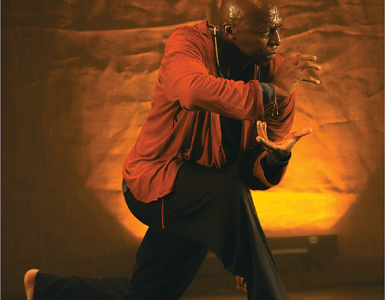
Performing under the stage name Litchi HOV, Janecke presented Majaivan: A Movement Story of the Life of Lee-Che Janecke, tracing a deeply personal journey through family, identity and the global rise of African dance.
Eswatini-born singer-songwriter Ndumiso Manana unveiled Pulchritudinous: The Beauty of the Journey, a richly layered performance accompanied by a full band that reflected the evolution of his musical career.
Visual artist Bronwyn Katz exhibited Ta a-b kobab ada kāxu-da, ti khoe-du’e! at the Monument Gallery, using sculpture and installation to explore memory, land and indigenous knowledge systems.
Northern Cape theatre-maker Jason Jacobs presented an ambitious body of work centred on Kraal, an immersive exploration of inherited trauma, colonial history and healing. Complementing the performance were the contemplative Matjieshut installation and the film Variations on a Theme, which tells the story of an elderly Namaqualand goat farmer deceived by a fraudulent reparations scheme.
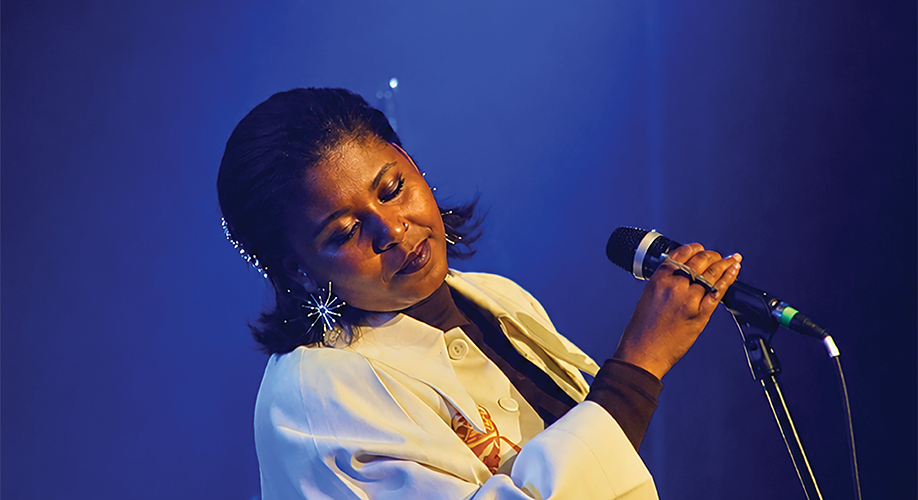
Jazz vocalist Gabi Motuba delivered one of the festival’s musical highlights with The Sounds of a Black Girl, blending spiritual jazz and neo-soul alongside an accomplished ensemble featuring pianist Afrika Mkhize and drummer Tumi Mogorosi.
Among those in attendance was veteran theatre pioneer Smal Ndaba, whose presence served as a reminder of the festival’s rich history. Ndaba, together with Phyllis Klotz and John Kani, helped shape the festival’s early years during the 1970s.
The Standard Bank Young Artist Awards have long provided recipients with an opportunity to premiere new work at the National Arts Festival, reinforcing the festival’s role as an incubator of South African artistic excellence.
The historic 1820 Settlers National Monument, home to the festival since its inception, again served as its operational hub. Its iconic Guy Butler Theatre hosted numerous productions, including a performance by celebrated musician Thandiswa Mazwai.
Music lovers also flocked to The Black Power Station, where emerging neo-soul artist Internet Athi and acclaimed jazz pianist Andile Yenana delivered memorable performances.
On a characteristically cold evening on July 3, Yenana joined the Dumza Maswana Duo for Uhambo Yengoma, transforming the converted power station into a vibrant space of musical celebration.
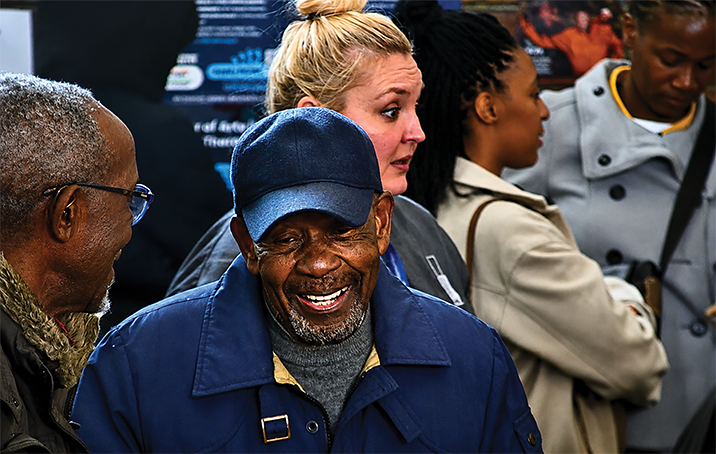
Beyond the formal programme, the festival’s true magic remained in the encounters between artists, audiences and residents. Conversations flowed in restaurants, pubs and public spaces, where visitors rubbed shoulders with performers including Kgomotso Christopher and Jerry Phele, creating the unique sense of community that has defined the National Arts Festival for more than five decades.
Even amid financial uncertainty, the festival once again demonstrated that South African creativity continues to flourish. If anything, the 52nd National Arts Festival reinforced its enduring role as a cultural institution that celebrates artistic excellence while bringing together diverse voices from across the country and beyond.