 WeeklySA_Admin
MOULD: A chance meeting in Soweto set North West lucerne farmer Mems Ramaila on a new path. Today, her women-led company produces premium honey and value-added bee products while creating opportunities for others…
By Own Correspondent
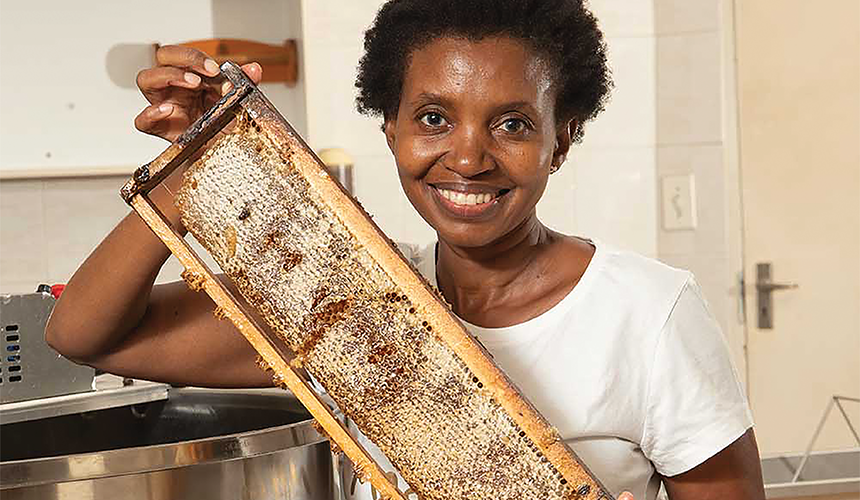
A chance encounter with a German tourist at a restaurant in Soweto’s Vilakazi Street, a hive of tourism, transformed North West farmer Mems Ramaila’s curiosity about beekeeping into a thriving agribusiness.
Today, her company, Bee African, is gaining recognition as one of the few women-led enterprises making significant strides in South Africa’s largely male-dominated beekeeping industry.
Ramaila, a lucerne farmer based near Brits in North West, says her journey into beekeeping began with a simple question: What could she do with the bees constantly swarming around her farm?
“I had always been interested in beekeeping and wondered how I could make use of the bees that were already part of my farming environment. A casual conversation with a German tourist in Vilakazi Street in 2019 changed everything,” she said. The tourist introduced her to internationally acclaimed honey judge Arie Krieke, who travelled to South Africa later that year and spent three weeks at Ramaila’s farm sharing his expertise in beekeeping and honey production.
Our vision is to grow the business, create more jobs, and empower
more women and young people to participate in the beekeeping value chain…
“By then, I had already done extensive research and realised that beekeeping had strong income-generating potential while also delivering significant environmental and socio-economic benefits,” Ramaila said.
Today, the Bee African farm is a hive of activity. More than 50 beehives are spread across the property, where the constant buzz of bees and the sweet aroma of honey reflect a business that has expanded from primary honey production into value-added agro-processing.
Ramaila’s success has been accelerated through her participation in the Partnering in Business with Germany Programme, an initiative involving the Department of Trade, Industry and Competition (the dtic), the German Federal Ministry for Economic Affairs and Climate Action, and the German Corporation for International Cooperation (GIZ).
The programme strengthens trade and investment ties between South Africa and Germany by equipping emerging South African exporters with the knowledge and networks needed to enter international markets.
“My three-week visit to Germany in 2025 through the dtic and GIZ programme was a turning point for my business. Not only did I gain valuable insights into accessing the German and broader European markets, but I also secured a memorandum of agreement with a respected German beekeeping company, Kriel Honig,” Ramaila explained.
Premium products
The partnership has already produced tangible results. In February 2026, Kriel Honig owner Utha Bonowsky spent a month in South Africa training the Bee African team in value addition and the beneficiation of bee products.
“We learned to manufacture premium beeswax candles, honey condiments and other speciality products. These products have expanded our offering well beyond raw honey, and the consumer response has been overwhelmingly positive,” Ramaila said.
Sales are growing rapidly as the company produces distinctive, high-quality food and wellness products aimed at the premium market.
“We mainly reach our customers through pop-up markets, and demand continues to increase at an unexpected pace,” she said.
The growing popularity of Bee African’s products has also attracted the attention of major shopping centres, which have invited the company to showcase its range to their customers.
“Our value proposition goes beyond selling honey. We are trading wellness. Honey and other bee products offer nutritional and medicinal benefits, including supporting gut health, and consumers appreciate that,” Ramaila said.
With demand continuing to rise, her next priority is to expand and commercialise the business.
“Our goal is to scale up production and help increase South Africa’s domestic honey output, as the country still relies heavily on imported honey. However, access to land remains one of the biggest barriers facing black producers who want to grow in the sector,” she said.
Education and expansion
Beyond its commercial ambitions, Bee African is committed to environmental education. The company regularly hosts school learners at the farm, teaching them about the essential role bees play in biodiversity, pollination and sustainable agriculture.
The business has also diversified into manufacturing beekeeping equipment and customised gift boxes, while generating additional income through educational farm experiences.
“We are proud of how far we have come. We have evolved from beekeeping and raw honey production into producing premium value-added products that continue to gain popularity in the market,” Ramaila said.
Although Bee African currently employs three people, Ramaila believes the business has considerable potential to create more jobs.
“With the support we have received from the dtic and our international partners, we are optimistic about the future. Our vision is to grow the business, create more jobs, and empower more women and young people to participate in the beekeeping value chain,” she said.