 WeeklySA_Admin
TURBULENCE: A photographic exhibition featuring rare images from the funeral of those killed during the 1985 Mamelodi Massacre seeks to honour the victims, preserve the township’s history and confront the unfinished search for truth, healing and justice…
By Moses Mushi
Four decades after apartheid police turned a peaceful protest into a scene of bloodshed, Mamelodi is preparing to honour the victims of one of the darkest chapters in the township’s history.
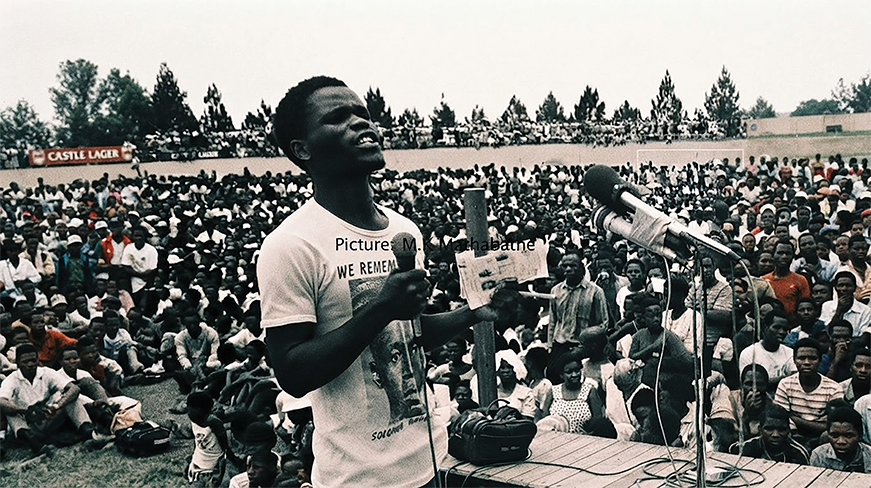
The proposed 40th-anniversary commemoration of the Mamelodi Massacre will include a photographic exhibition featuring rare black-and-white images taken during the funeral of residents killed following the protest march of November 21 1985. Many of the photographs have reportedly not been publicly exhibited since the turbulent apartheid years.
The images form part of the personal archive of award-winning photojournalist, freelance journalist and writer Mangoeng Kendridge Mathabathe, who captured many of them while working as a freelancer.
Behind every name was a family, a home and a community forced to carry the pain of the massacre for four decades…
With more than three decades of experience in journalism and public communication, Mathabathe believes the exhibition can help preserve Mamelodi’s collective memory while creating a space for residents to reflect on the township’s contribution to South Africa’s struggle for freedom and human rights.
He said the commemoration was necessary to ensure that the victims were remembered with the dignity and respect they deserved.
It is also intended to give younger generations an opportunity to learn about events that profoundly shaped the community in which they live.
A peaceful march…
According to Mathabathe’s concept document, the 1985 march was organised and led by the Mamelodi Parents Association in response to mounting anger over rent increases and other apartheid-era restrictions imposed on township residents.
Community members gathered at the YMCA in Mamelodi East before marching towards the municipal offices, where they intended to submit a memorandum setting out their grievances.
Among their demands were the lowering of rent, an end to restrictions on weekend funerals, the removal of limits on the number of people permitted to attend funerals and the withdrawal of the apartheid army from the township.
The march attracted broad support from community structures, including women’s organisations, youth formations, student activists and other residents who had grown increasingly frustrated with oppressive living conditions.
What began as a peaceful demonstration, however, ended in tragedy.
Apartheid police opened fire on unarmed residents near the municipal offices. Teargas and live ammunition were used as protesters scattered and tried to flee. Witnesses also reported hearing gunfire from a police helicopter hovering above the area.
The killings left families shattered and deepened the atmosphere of fear and resistance already gripping the township.
Remembering victims
Among those remembered in Mathabathe’s concept document are Ntombane Mello, Jerry Shikoane Ngwatle, Sam Shumi Nkonyane, Sarah Raisibe Tefo, Moses Pontsi Motsei, Elizabeth Baphelile Msiza, Magdeline Matengo Mlambo, Paulos Mavimbela, Beauty Thoko Malaza, Jacob Dipuo Songo and Salome Namgidi Mabena.
The account also recalls the death of three-month-old Trocia Ndlovu, who reportedly died after inhaling teargas.
In the days following the shooting, Mamelodi was described as resembling a war zone. More bodies were reportedly discovered in and around the township, including in nearby mountainous areas.
Some residents remain missing or unaccounted for, leaving families without complete answers about what happened to their loved ones.
The uncertainty surrounding the final death toll remains part of the massacre’s painful legacy. It also underlines the importance of preserving the testimony, photographs and personal records of those who witnessed the events.
Collective mourning
The funeral of the victims, held at HM Pitje Stadium, attracted an estimated 10,000 mourners.
It became more than a moment of collective mourning. The gathering also served as a powerful act of political defiance, with speakers condemning apartheid laws, police brutality and the conditions imposed on black communities.
Winnie Mandela and Martha Mahlangu, the mother of executed uMkhonto weSizwe combatant Solomon Kalushi Mahlangu, attended the funeral despite restrictions imposed on them by the apartheid authorities.
Mathabathe’s photographs capture the grief, anger and solidarity that defined the occasion. They offer a visual record of families mourning their loved ones and of a community refusing to be silenced by state violence.
Through the exhibition, organisers hope to bring those images back into the public consciousness and ensure that the massacre is not reduced to a footnote in South Africa’s liberation history.
The photographs also provide a human record of an event often recalled through casualty figures and political accounts. Behind every name was a family, a home and a community forced to carry the consequences of the killings.
A platform for healing
The proposed anniversary programme is expected to include a memorial lecture, speeches and other commemorative activities involving residents, activists, historians and community organisations.
Organisers envisage the event as a platform for remembrance and healing, as well as an opportunity to examine how far Mamelodi and South Africa have travelled since the fall of apartheid.
The commemoration is expected to raise difficult questions about whether the democratic state has adequately preserved the histories of township communities and recognised the sacrifices made by ordinary residents.
It will also invite reflection on the continuing struggles confronting Mamelodi, including poverty, unemployment, inadequate services and the marginalisation of young people.
For Mathabathe, remembering the massacre is not only about looking backwards. It is also about ensuring that the lessons of the past inform the present and help shape a more just future.
The organisers are calling on heritage institutions, community organisations, businesses, public bodies and individuals to support the commemoration and photographic exhibition.
Those wishing to support or partner with the initiative may contact Mangoeng Kendridge Mathabathe on 072 843 1083. – WSAM/Mamelodi Times