 WeeklySA_Admin
act now’
OUTBREAK: The Bundibugyo Ebola outbreak spreading through the Democratic Republic of Congo has exposed dangerous gaps in surveillance, treatment, funding and public trust. Lessons from West Africa show what must be done before the crisis crosses more borders…
By Jia B. Kangbai
Given its speed, scale and reach, the Bundibugyo Ebola virus disease outbreak that began in the Democratic Republic of Congo (DRC) in mid-2026 has the potential to become a global epidemic.
I am an infectious disease epidemiologist who helped manage the 2014–2016 Ebola outbreak in my country, Sierra Leone. Drawing on that experience, and having watched the DRC crisis unfold, I believe the threat must be treated with far greater urgency.
Preventing a fast-moving outbreak that has already spread across a vast geographical area is extremely difficult. Its speed also makes it hard to establish the true incidence — the number of detected cases — and the case-fatality rate, or the proportion of confirmed patients who die.
During the 2013–2016 West African epidemic in Guinea, Liberia and Sierra Leone, it took about four months after the official declaration for cumulative cases to reach 1,000. In the DRC, that threshold was crossed in less than two months.
The central lesson from Sierra Leone is simple: Ebola exploits hesitation.
The response must match the outbreak’s speed and scale…
Official figures tell only part of the story. The outbreak was probably spreading well before it was detected, meaning earlier infections and deaths may not have been recorded. Frontline teams must therefore deal not only with new patients but also with a backlog of treatment, surveillance and contact-tracing work.
Several interlocking factors are driving the rapid transmission: possible super-spreading events, weak data, shortages of diagnostics, the absence of approved strain-specific vaccines and treatments, slow adoption of public-health measures, community mistrust and insecurity caused by armed conflict.
The danger of super-spreading
Super-spreading is not new. Research into the West African Ebola epidemic found that super-spreaders were responsible for more than 60% of sustained onward transmission.
Super-spreaders are infected people who transmit a pathogen to a disproportionately large number of others. This may be influenced by the way the disease affects the body, as well as environmental, behavioural, social and demographic conditions.
Such transmission is often more common early in an outbreak, particularly when a disease or strain is unfamiliar. People may not recognise the symptoms or understand how the infection spreads, delaying diagnosis and unknowingly exposing relatives, caregivers and health workers.
The relative rarity of the Bundibugyo strain makes this outbreak especially difficult. A shortage of suitable diagnostic kits contributed to delayed diagnoses during its early stages. Across an outbreak of this size and velocity, inadequate testing does more than slow treatment: it allows hidden chains of transmission to multiply.
Age patterns also matter. In the West African outbreak, infected children younger than 15 and adults older than 45 were associated with super-spreading. In the DRC crisis, people aged 18 to 49 account for the largest share of infections, while children under 15 represent about a quarter of deaths.
Children may not recognise or communicate their symptoms and can seek treatment late, increasing the risk to caregivers. Adults aged 18 to 49 are generally more mobile and socially active. Some may also engage in high-risk behaviour, including unprotected sex, which can increase transmission. The virus spreads through direct contact with an infected person’s blood or other bodily fluids, or with contaminated materials and surfaces.
Clinical presentation creates a further challenge. The early symptoms of the more familiar Zaire Ebola strain can include vomiting, diarrhoea, coughing and haemorrhaging. Early Bundibugyo infection, however, may present with fever, fatigue, muscle pain, headache and a sore throat. These symptoms can easily be mistaken for other tropical infections. Their apparently mild nature can give patients false reassurance and delay care.
Conflict compounds every weakness. Eastern DRC, where the outbreak is spreading, has endured violence for decades. Insecurity restricts movement, interrupts health services, endangers responders and makes it harder for sick people to reach treatment centres.
Data gaps and deep mistrust
The outbreak demonstrates both what preparedness can achieve and how much remains undone. When a virus has circulated silently for weeks, the early data available after an emergency declaration will inevitably be incomplete.
In some health zones, fewer than 20% of Bundibugyo cases have been linked to known contacts. When most infections cannot be connected to recognised transmission chains, the virus can move undetected into unaffected communities.
Attacks on health and aid workers have made the response even harder, with August 2026 recording the highest number. Such violence often grows from deep mistrust of authorities and from tension between cultural practices and medical protocols.
Communities cannot simply be instructed from outside. Trusted local leaders, religious figures, youth organisations and community health workers must help design and explain the response.
The DRC’s geography presents another formidable obstacle. The country is almost the size of Western Europe and, by September 2026, the affected area was reportedly comparable in size to France.
Porous borders and large population movements complicate screening and contact tracing, while the central government struggles to provide services across territory affected by armed groups.
The treatment void is equally alarming. The lack of registered therapeutics and a vaccine specifically proven against Bundibugyo increases the risk that the outbreak will escape containment.
Failure to develop such a vaccine earlier represents a serious biomedical and governance failure, particularly because localised Bundibugyo outbreaks have occurred before. Diagnostic tools, therapies and vaccine candidates may be entering trials, but preparedness should have begun long before this emergency.
What must happen now
Stopping the outbreak requires a coordinated strategy that anticipates setbacks. That was one of the clearest lessons from West Africa: response plans must be flexible enough to absorb new shocks while maintaining essential services.
The deployment of the Ervebo vaccine, developed for Zaire Ebola, as part of the DRC response is welcome, particularly if trials generate evidence relevant to the current strain.
But vaccination alone will not stop an epidemic. It must be combined with strong surveillance, rapid testing, safe isolation and treatment, rigorous infection control and genuine community participation.
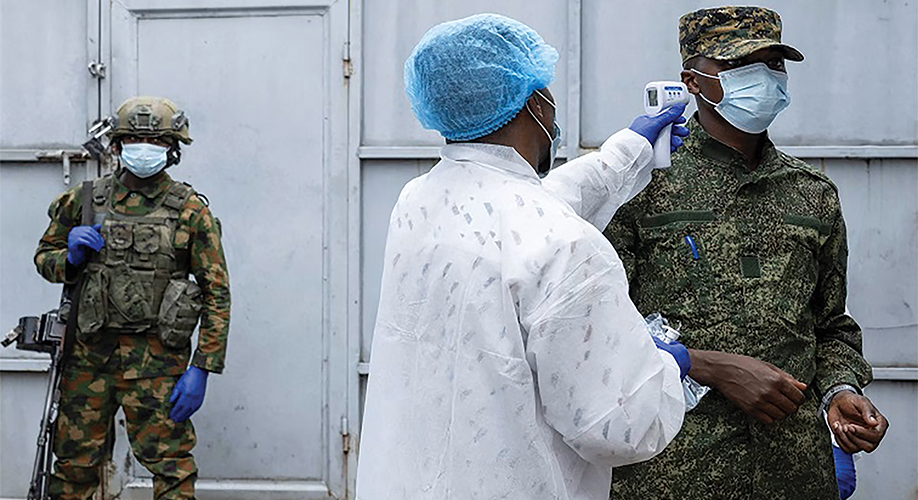
Health facilities and border posts must enforce effective infection-prevention measures. Authorities must establish a safe, clearly understood pathway through triage, isolation, testing and treatment. Border screening should be strengthened, although it cannot replace community surveillance and contact tracing.
Above all, the response needs adequate, sustained funding — not short bursts of emergency money. Resources are needed for frontline salaries, laboratory supplies, personal protective equipment, transport, treatment centres and infection-control materials.
In a country as vast as the DRC, surveillance requires extensive logistics and a large, properly supported workforce.
Cuts to international public-health funding have placed additional pressure on precisely the systems needed during a fast-moving outbreak. Ad hoc financing during a crisis cannot repair years of underinvestment in preparedness.
Health zones recording high prevalence, mortality or transmission must receive priority, but unaffected areas also need resources to prevent the virus from gaining new ground.
The most urgent task is to expand real-time testing, backed by robust surveillance. Faster confirmation allows patients to be isolated and treated sooner, alerts contact tracers and gives decision-makers a clearer picture of where transmission is accelerating.
International assistance must also be accompanied by financial accountability. More than US$500 million is reported to have entered the DRC since the outbreak was declared. Frontline workers should not be going unpaid.
Strikes by responders show that an effective health operation must be supported by transparent administration, dependable payroll systems and oversight of how emergency funds are spent.
The world still has an opportunity to prevent a much wider disaster, but that window will not remain open indefinitely. The response must match the outbreak’s speed and scale. Delay, fragmented funding and weak public trust will allow the virus to move faster than the institutions meant to contain it.
The central lesson from Sierra Leone is simple: Ebola exploits hesitation. The DRC needs sustained international support, accountable leadership and communities treated as partners.
Acting decisively now is not charity. It is the most effective way to protect the DRC, its neighbours and the wider world. – The Conversation