 WeeklySA_Admin
CRACKDOWN: R100-million Mandrax factory equipped to produce crystal meth, hydroponic dagga operation and two suspected cocaine couriers intercepted at OR Tambo airport extend the trail of drug busts reported in Weekly SA Mirror last week…
By WSAM Reporter
South Africa’s illicit-drug war moved from remote farms to Gauteng’s urban fringe and its busiest international gateway this week as police uncovered a R100-million Mandrax laboratory west of Pretoria, raided a hydroponic dagga operation in the Vaal and intercepted another suspected cocaine courier at OR Tambo International Airport.
The three operations, conducted within days of one another, have reinforced fears that the country is simultaneously being used to manufacture, cultivate, distribute and export illicit drugs.
The swoops exposed a string of multimillion-rand drug factories from Swartruggens and Klipvoorstad in North West to Musina in Limpopo. Some of the operations involved Mexican nationals and sophisticated industrial equipment which police said pointed to financiers with “deep pockets”.
The week’s operations expose different parts of the same illicit
economy: drug manufacturing, indoor cultivation
and the cross-border movement of cocaine…
This week’s biggest breakthrough came on a smallholding in Erasmia, west of Pretoria, where Hawks investigators allegedly found two drug-production facilities operating or being prepared on the same property.
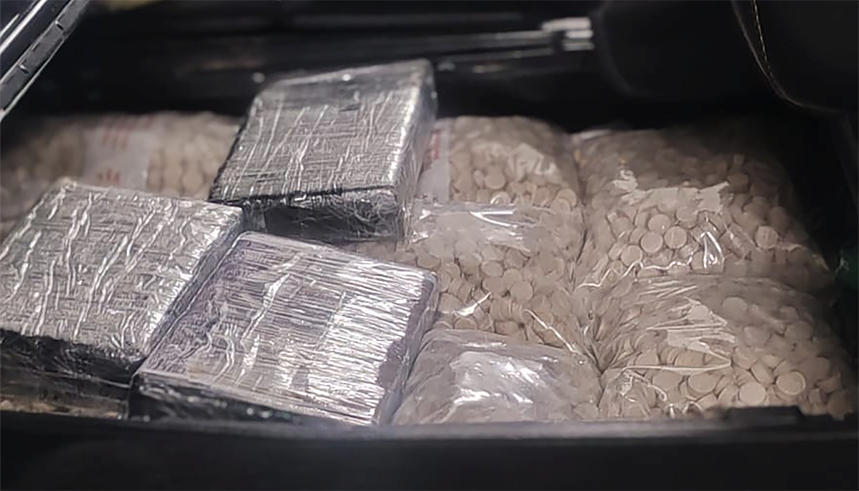
Two foreign nationals were arrested during the intelligence-driven operation on Wednesday. Police said one laboratory was being used to manufacture Mandrax tablets with an estimated value of R100 million. Inside the premises, officers allegedly discovered another newly established laboratory where the suspects were preparing to manufacture crystal methamphetamine.
The discovery suggests the property may have been intended to produce more than one type of synthetic drug—raising fresh questions about the money, technical expertise and supply networks behind South Africa’s illicit factories.
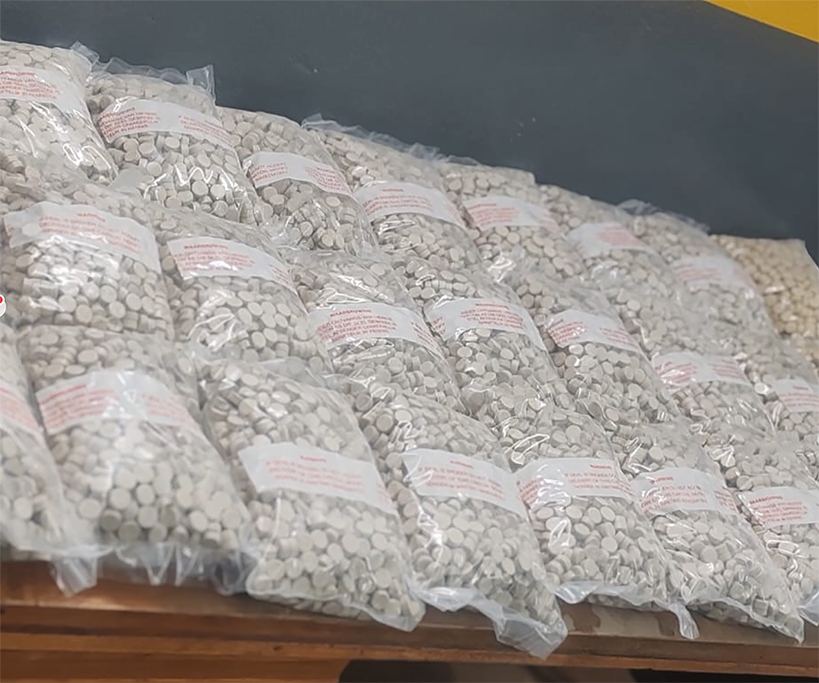
The operation involved members of the Hawks’ South African Narcotics Enforcement Bureau, Crime Intelligence, the West Rand K9 Unit and the Pretoria Special Task Force.
The suspects, subsequently identified in court reports as Jose Vaso Sete (53) and Arlindo Fernand (44) face drug-manufacturing and immigration-related charges. They were due to appear in the Pretoria Magistrate’s Court on Friday.
Their arrest forms part of a broader national campaign involving the SAPS, Hawks, Customs and other agencies to disrupt the illicit-drug trade.
But, as with the remote meth laboratories previously uncovered, the arrest of people found on a property does not necessarily identify those financing the operation, supplying precursor chemicals or organising the movement of the finished drugs.
Police will need to follow the property lease, machinery purchases, chemical supplies, bank transactions and communications if they are to identify the organisers above those allegedly working inside the laboratory.
R1.5-million dagga operation
A day before the Erasmia bust, an intelligence-led police operation in Hartzenbergfontein, within the De Deur policing precinct in the Sedibeng District, uncovered a hydroponic dagga cultivation laboratory valued at approximately R1.5 million.
Police arrested a 22-year-old Malawian national during Tuesday’s raid.
He is expected to face charges under the Drugs and Drug Trafficking Act as well as the Immigration Act when he appears in the Vereeniging Magistrate’s Court.
The operation brought together Gauteng Counter-Intelligence Narcotics, Organised Crime investigators, the West Rand K9 Unit, the police Forensic Science Laboratory and private security companies.
Hydroponic cultivation allows cannabis plants to be grown indoors under controlled conditions using water-based nutrient systems and artificial lighting. Such operations can produce crops throughout the year while remaining concealed inside ordinary-looking buildings.
The equipment, electricity consumption and controlled growing environment required for commercial-scale cultivation may provide investigators with further leads about those who funded and supplied the operation. Police investigations into the De Deur facility are continuing.
OR Tambo cocaine interceptions
The week’s crackdown extended to OR Tambo International Airport, where police arrested a 45-year-old man and seized approximately two kilograms of suspected cocaine valued at more than R800 000.
The man was intercepted on Monday after police received intelligence that he was allegedly preparing to travel to Hong Kong, China.
Officers searched his luggage and allegedly found the cocaine concealed inside. The suspect was expected to appear in the Kempton Park Magistrate’s Court on drug-related charges.
His arrest was the second involving a suspected drug courier at the airport in four days.
On September 3, police intercepted a 54-year-old South African man who was also allegedly travelling to Hong Kong. Suspected cocaine was discovered concealed in his luggage, although its weight and value had not initially been confirmed.
Police spokesperson Lieutenant-Colonel Amanda van Wyk said the successive arrests demonstrated continuing efforts to disrupt trafficking networks using South Africa’s ports of entry.
The two courier arrests followed a far bigger interception at OR Tambo on August 25, when police and Customs officials seized two cocaine consignments weighing about 334kg and valued at more than R200 million.
No arrests were announced in connection with those consignments, leaving investigators with the more difficult task of identifying the people responsible for importing, receiving and distributing the drugs. The latest airport arrest involved cocaine worth R800 000.
Two Mexicans in Musina court
Meanwhile, two Mexican nationals were among five foreign suspects who returned to the Musina Magistrate’s Court on Thursday following their arrest at a suspected crystal-meth laboratory outside Musina last month. The accused were arrested during a two-month intelligence-driven operation in which police seized drugs, manufacturing equipment and other material valued at approximately R600 million. The other accused are two Zimbabwean nationals and a Malawian national.
The five face charges relating to the alleged manufacture and possession of illicit drugs and remain presumed innocent until proved guilty. The appearance keeps attention on whether investigators can move beyond those arrested at the farm and identify the financiers, chemical suppliers and trafficking networks behind the operation—particularly after police promised to “follow the money” and pursue every person connected to the laboratory.
One trade, several fronts
Police have not established that the Erasmia, De Deur and OR Tambo cases are connected. The nationalities of those arrested cannot, by themselves, establish membership of an international cartel.
However, the week’s operations expose different parts of the same broader illicit economy: synthetic-drug manufacturing, indoor cannabis cultivation and the cross-border movement of cocaine.
The discoveries also show that drug production is no longer confined to isolated rural properties. Smallholdings and buildings near major cities can offer criminal groups access to transport routes, chemicals, labour, electricity and large consumer markets while still providing a measure of secrecy.