 WeeklySA_Admin
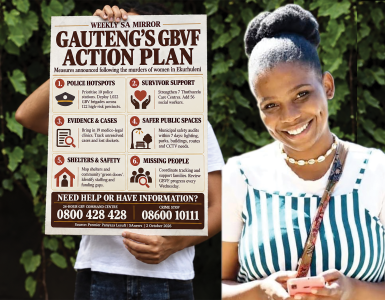
SHAME: In a Heritage Day address shaped by the killings of women in and around Ekurhuleni, the President promised a national update on the investigations and the government’s response to gender-based violence….
By Monk Nkomo
President Cyril Ramaphosa has promised to address the nation on the government’s response to gender-based violence and the investigation into the killings of women in and around Ekurhuleni.
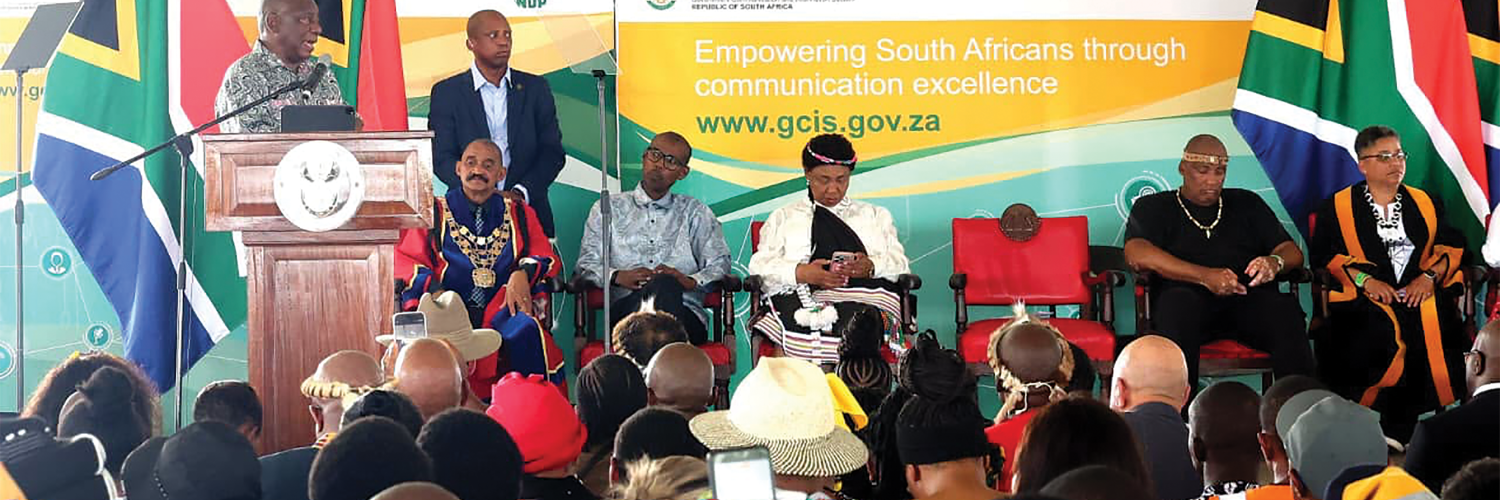
Speaking at the National Heritage Day celebrations at Bongolethu Sports Stadium in Oudtshoorn on Thursday, Ramaphosa said the abuse, rape and killing of women had brought shame on South Africa. Women, he said, should be able to walk the streets at any hour without fear.
“In a few days, I will address the nation on the steps the government is taking to confront gender-based violence, and to update South Africans on the investigation into the killings of women in and around Ekurhuleni,” he said.
The discovery of nine women’s bodies in the area over recent months has intensified public anger and concern. Ramaphosa did not set out new measures in his Heritage Day speech, but called on South Africans to reject violence against women as part of the country’s future.
A nation that forgets its history risks losing its way…
“The abuse, rape and killing of women is not our heritage,” he said. “There is no culture worthy of the name that diminishes the dignity of women.”
His remarks gave the celebration’s theme — Celebrating Our Living Heritage: Strengthening the Ties That Bind Us — a pressing meaning. Freedom, Ramaphosa said, was experienced unequally by a man able to walk without fear and a woman who must continually weigh whether she is safe.
He urged the country to declare that violence against women would not be part of the inheritance left to the next generation. Safety, he argued, was essential to the freedom promised to all South Africans under democracy.
Ramaphosa also asked the nation to remember the suffering that preceded democracy. Heritage was more than food, clothing, songs and ceremonies, he said. It included the memory of dispossession, slavery, colonialism, apartheid and forced removals — as well as the courage of those who resisted them. “A nation that forgets its history risks losing its way,” he said.
He recalled people who were barred by race from living or working where they chose, loving whom they chose, or even entering through the same door as other South Africans. Alongside that humiliation, he said, the country must remember the solidarity of millions who refused to accept injustice as permanent.
In Oudtshoorn, he paid particular tribute to the struggle histories of Bongolethu and Bridgton and to the communities of the Southern Cape that organised under the United Democratic Front. Their sacrifices showed how black, coloured, Indian and progressive white South Africans had worked together against apartheid, he said.
That history, Ramaphosa argued, helped shape the decision to build one country after generations of division. He described the Constitution as part of South Africa’s heritage and a bond between people with different languages, cultures and beliefs.
But, belonging had to be felt in daily life, not simply guaranteed on paper.
Ramaphosa pointed to the gap between children born into privilege and poverty, between households with reliable services and those dependent on failing municipalities, and between communities that felt safe and those living with crime.
He said democracy had expanded access to education, healthcare, housing and social protection, while acknowledging that many South Africans still could not fully enjoy the freedom gained in 1994. Creating a country where women were safe, young people had opportunities and public office served citizens remained unfinished work.
Ramaphosa also honoured the Khoi and San ancestors whose ancient rock paintings are found near Oudtshoorn. He praised traditional practitioners, storytellers, musicians, healers and craftspeople who preserve languages and knowledge across generations.
Such people were custodians of the country’s collective memory, he said. Their knowledge needed to be recorded, taught and passed on so that heritage remained a living part of communities.
The President warned against those who sought to deepen divisions and urged South Africans to confront unemployment, gender-based violence, corruption, and alcohol and drug abuse together. The common task now, he said, was to make the promise of freedom real in people’s lives.
He closed with an appeal for unity, ubuntu and human dignity — values he said South Africans must practise if they hoped to leave a stronger country to the next generation.