 WeeklySA_Admin
REALITY: South Africans can vote, but too many still lack reliable water, electricity and accountable government. Reviving democracy means giving communities power beyond the ballot box…
By Ido Lekota
South Africa’s democracy is running on empty. The rituals are intact – ballots are cast, results are tallied, coalitions are formed – but the substance is slipping away.
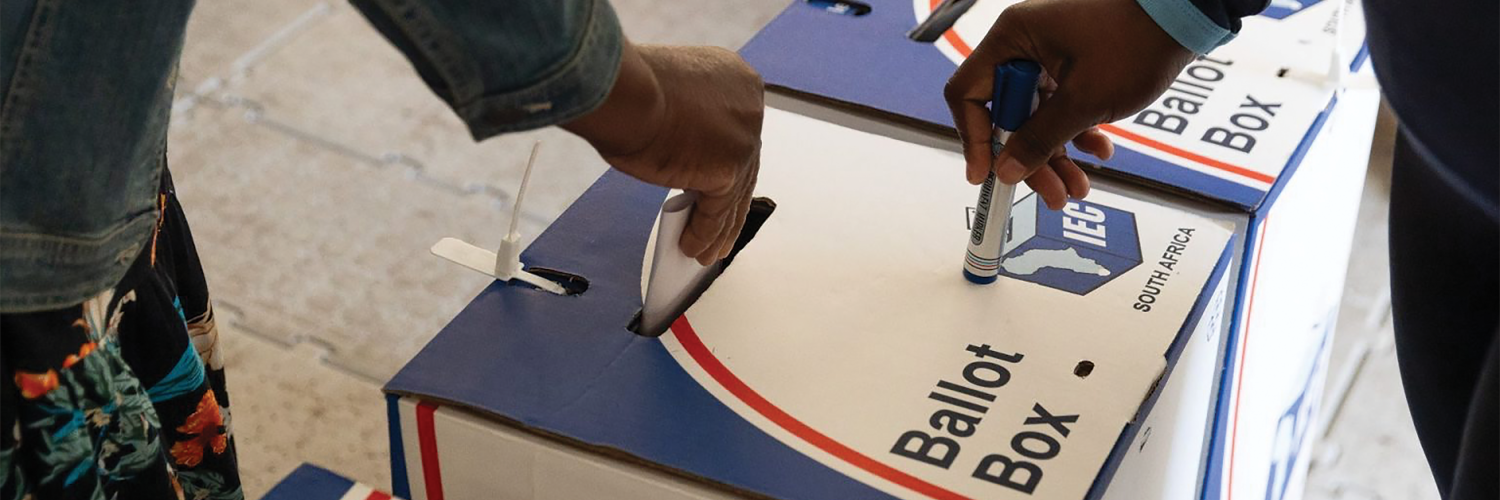
The 2024 general election was hailed as historic, with the ANC losing its majority for the first time and a Government of National Unity emerging without violence or constitutional rupture. On paper, this was democracy at its best: peaceful transition, robust institutions, and an independent Electoral Commission.
Yet, for millions of South Africans, democracy feels like a hollow promise. Their daily reality is water shortages, rolling blackouts, collapsing sanitation, and housing backlogs. The gap between the procedural strength of democracy and its substantive weakness has never been wider.
Democracy must be rescued not just at the ballot box, but in the streets, the schools, the workplaces, and the homes of ordinary South Africans…
The causes of this malaise are not mysterious. Service delivery failures have become endemic, eroding trust in government and leaving communities to fend for themselves. Corruption and state capture, laid bare by the Zondo Commission, hollowed out state capacity and entrenched patronage networks that reduce citizens to clients rather than empowered participants.
Coalition instability at municipal level has turned governance into a bargaining game among elites, while ordinary people endure broken infrastructure and stalled development. Economic inequality deepens the disempowerment, as poverty and unemployment limit political agency, forcing citizens to prioritize survival over civic participation. The result is a democracy that exists in form but not in substance.
The impact of this disjuncture is dangerous. The latest 2025 Afrobarometer survey show 49% (fewer than half) of South Africans now prefer democracy over other forms of government, a sharp decline from earlier decades.
Previous Afrobarometer surveys revealed that preference for democracy was 72% in 2011, then fell 40% in 2021, standing at 49% in 2025. Meanwhile voter abstention is rising, and elections risk becoming empty rituals rather than meaningful exercises of power.
According to the South Africa Post-election Review Policy Series only 58% of registered voters cast ballots in the 2024 national and provincial elections down from 66% in 2019. The 16.3 million people who voted represented only 40% of the voting age population.
The report states that declining turnout in what was widely described as a “watershed election” has raised alarm bells about the health of South Africa’s democracy.
With just 58% of registered voters participating, the Independent Electoral Commission (IEC) also described the 2024 election as having the lowest voter turnout since the advent of democracy in 1994, in this context, is at risk of becoming a shell-procedurally intact but substantively emasculated.
Reversing this trajectory requires more than tinkering. Electoral reform is one avenue. Automated voter registration could expand participation, particularly among youth, while mixed-member proportional representation or constituency-based systems could strengthen accountability by making representatives more directly answerable to communities rather than party hierarchies.
Streamlining the party system through stricter eligibility rules may reduce fragmentation, though care must be taken not to stifle pluralism.
But technical reforms alone will not save South Africa’s democracy. Service delivery must become the yardstick of legitimacy, not merely the holding of elections. Coalition politics must be disciplined by principles and transparency, ensuring that alliances serve communities rather than elites. Anti-corruption measures must be enforced with vigour, restoring faith in institutions.
What is needed is a philosophical renewal, a revival of the Azanian tradition that prevailed in the 1970s. Rooted in Black Consciousness and Pan-Africanism, the Azanian tradition insists that democracy is, not only about procedures, but about dignity, agency, and collective empowerment.
It calls for grassroots institutions – township assemblies, worker councils, civic forums -to reclaim autonomy and define priorities from below. It demands radical political education that inoculates communities against manipulation and teaches that democracy is a struggle for liberation, not a ritual of voting.
It emphasizes culture as a weapon of resistance, reclaiming schools, churches, and arts as sanctuaries of liberation rather than instruments of depoliticisation.
In this way, the Azanian tradition re-centers democracy in everyday life, linking liberation to service delivery, dignity, and agency. Strong civil society structures are the bridge between Azanian ideals and democratic practice, ensuring that democracy is lived, not merely performed.
The path forward lies in marrying procedural reforms with substantive empowerment. South Africa must move from electoral democracy to effective democracy, where votes translate into accountable governance and tangible improvements in daily life.
Automated voter registration, constituency-based accountability, and streamlined party systems can strengthen procedural integrity. Grassroots empowerment, radical education, and cultural resistance can restore substantive meaning.
Together, these strategies can reverse the political emasculation of the people and re-anchor democracy in its most important factor: the lived dignity of citizens.
The stakes could not be higher. Either democracy evolves into a substantive practice of liberation, or it risks sliding into authoritarian temptation. South Africa’s choice is stark: continue down the path of hollow rituals and elite bargains, or revive the spirit of Azania and build a democracy that delivers dignity, agency, and liberation.
The time for half-measures has passed. Democracy must be rescued not just at the ballot box, but in the streets, the schools, the workplaces, and the homes of ordinary South Africans.
If it fails to humanise the people it claims to serve, then it is not democracy at all—it is theatre. And theatre will not keep the lights on, fill the taps, or restore the dignity of a nation at the crossroads.
Ido Lekota is a veteran journalist and political commentator
Comment
GBV: REAL ACTION AFTER PROMISES
The measures announced by President Cyril Ramaphosa and Gauteng Premier Panyaza Lesufi deserve a welcome. Against the anguish caused by the murders of women in Ekurhuleni, and the wider violence endured by women across South Africa, government has a duty to respond with urgency, resources and resolve.
Ramaphosa’s acknowledgement that previous interventions have not been enough is necessary. It recognises the distance between policy commitments and the daily reality of women who fear walking home, using public transport, reporting abuse or leaving a violent partner.
The national focus on unresolved cases, forensic backlogs, prosecution and unsafe public spaces addresses failures that can deny survivors justice. Gauteng’s commitments to prioritise police stations, strengthen survivor support, deploy community structures and identify shelter shortages offer a provincial response.
These interventions must reinforce each other. A survivor should encounter a functioning chain of protection, from her first report through medical care, investigation, shelter and prosecution. When any link fails, the consequences can be devastating.
ACCOUNTABILITY MUST FOLLOW
South Africa has heard commitments before. The test now is whether police stations receive trained personnel, whether evidence is processed promptly, whether missing dockets are recovered and whether survivors find safe accommodation when they need it.
The deadlines attached to safety audits and case reviews create an opportunity for public accountability. Government should publish progress, identify institutions falling behind and explain how remedial work will be funded.
Communities deserve to know which dangerous spaces have been identified, which streetlights have been repaired and what action follows an audit. Counting meetings and announcements will not suffice. Progress must be measured through improved services, credible investigations and survivors’ access to justice. Officials who turn women away or neglect their cases must face consequences. Ramaphosa’s appeal to men is equally necessary. Silence allows abusive behaviour to flourish in families, workplaces and friendship circles. Men must challenge harassment, coercion and the belief that financial support confers ownership over a woman. Yet, community mobilisation must support, rather than substitute for, the state’s responsibilities. Women cannot be expected to organise their own protection while institutions fail them.
Kutlwano Masilo’s safe return brought relief to one Soshanguve family. Too many others await answers, or mourn daughters who will never return. We welcome these measures because they address urgent needs. We will judge them by delivery. Every woman deserves protection that works, justice that moves and the freedom to live without fear.
That requires sustained political leadership, properly supported frontline workers and communities prepared to confront abuse wherever it occurs, every day.