 WeeklySA_Admin
SUPPLY: Families in Makhuvha near Giyani say a prolonged water shortage has forced them to buy drinking water or rely on unsafe sources, raising health concerns despite years of investment in the Giyani Bulk Water Project…
By Moyahabo Mabeba
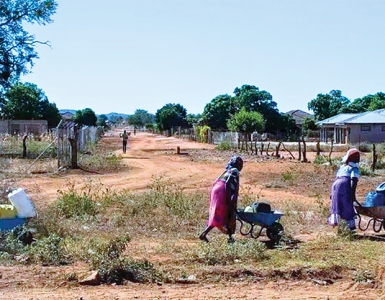
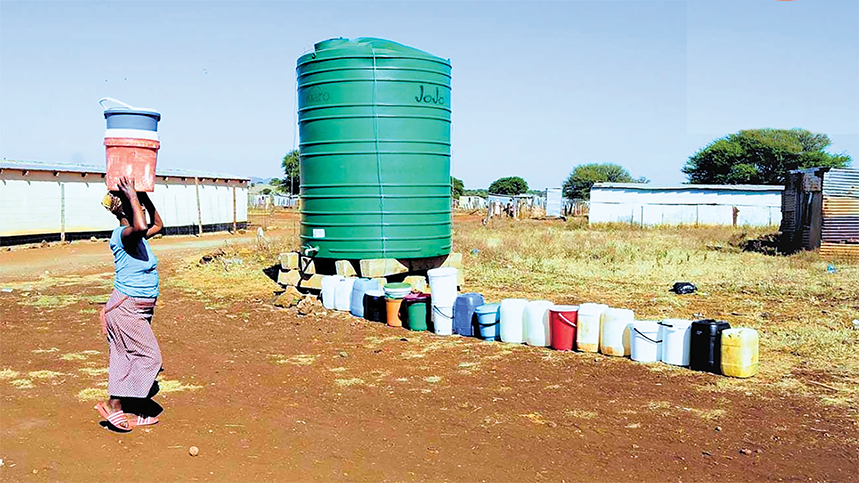
Residents of Makhuvha village near Giyani in Limpopo say they have struggled to access clean water since a communal borehole stopped working in March 2025, forcing families to buy water or collect it from unsafe sources.
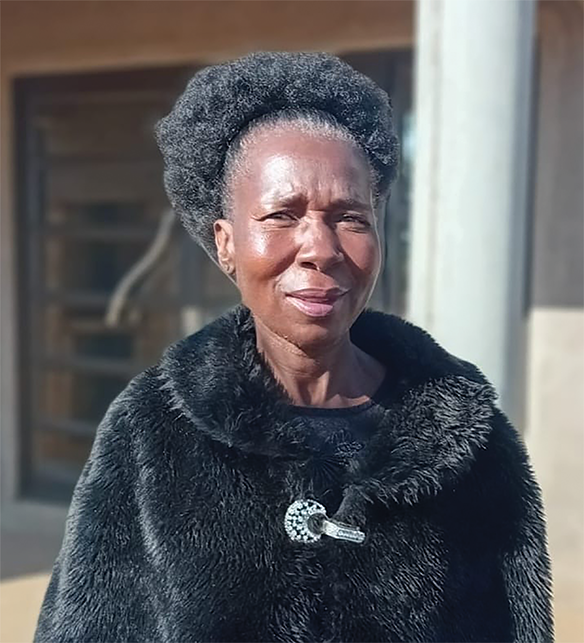
Resident Christine Mashel says her family has had to pay for safe drinking water since last year. She attributes the shortage to the removal of a borehole pump by Mopani District Municipality officials.
“We have been without water since March 2025. We buy water for R10 and we travel long distances to fetch water,” she told Health-e News.
We often drink contaminated water
and this poses severe health risks. We are suffering because
we don’t always have money…
“We often drink contaminated water and this poses severe health risks. We are suffering because we don’t always have money.”
Mashel says residents pay R5 for a 25-litre container or R250 for a 2,500-litre tank of water. Villagers said households unable to afford water sometimes collect it from unprotected rivers or rely on rainwater.
Families fear waterborne illnesses
Mashel says her 14-year-old daughter became ill in August after drinking rainwater collected from the family’s roof.
“We sometimes drink rainwater from the roof. The water isn’t clean because it is mixed with bird feces and dead lizards. My 14-year-old daughter fell ill in August. She complained of abdominal pains, severe headache, nausea and diarrhoea,” she says.
“I took her to the community clinic where nurses told me that she probably consumed something that unsettled her stomach. Some of our neighbours also experienced stomach complications. All we got from the clinic was allergy medication and educational health pamphlets.”
Her account does not establish the cause of her daughter’s illness.
Mashel says her family has resorted to boiling water and using household bleach in an attempt to make it safer to drink.
Children exposed to contaminated water
Mavis Manyape, who lives in nearby Petanenge village, says her son was among 142 learners who tested positive for bilharzia at Malwandla Primary School in August 2024.
According to Manyape, the affected children received treatment at Nkowankowa, Dan and Khujwana clinics in Greater Tzaneen Municipality.
“My son returned from school complaining of stomach pains and some blood in his urine. Nurses confirmed that he had bilharzia. Despite the household usage of contaminated water, children often swim in contaminated pools in the nearby bushes,” she says.
Manyape says residents share water sources with animals, while children also swim in the water.
According to the World Health Organisation, bilharzia is a parasitic disease contracted through contact with freshwater contaminated with parasite larvae. The parasites can damage the urinary tract and intestines, causing long-term health problems if left untreated.
Water crisis becomes an election issue
Hitler Rikhotso, a community leader in Dan village, says the continuing water crisis will be a major issue for residents ahead of the local government elections.
“The water crisis in Mopani will strongly influence our voting decision,” he told Health-e News.
“For many years, villagers have been struggling to get water under the current local and district councils. Due to municipal incompetence to provide us with clean water, we depend on nearby streams like the Molototsi and Mai Mai rivers to get water,” he says.
“Impoverished families buy water from people who have boreholes in their yards. We are forced to consume unsafe water daily despite the risks of waterborne illnesses.”
The shortages continue despite years of government investment in the Giyani Bulk Water Project, launched in August 2014 to provide reliable water to 55 villages.
At a parliamentary committee meeting on August 19, 2026, MPs raised concerns that the project was reported to be more than 90% complete, yet residents in parts of Mopani District were still struggling to get water from their taps.
The project has also been dogged by corruption allegations. The Special Investigating Unit found irregularities in the awarding of a contract to LTE Consulting.
The contract grew from approximately R90 million to R2.2 billion, with payments eventually reaching R4.1 billion.
Municipality confirms borehole problems
Mopani District Municipality spokesperson Mildred Risaba confirmed that two of Makhuvha’s five boreholes were not operating.
“Makhuvha village has five boreholes, and three of them are working and supplying water to residents,” she told Health-e News.
“One of the boreholes was disconnected because of the unsafe water. The second one became dysfunctional after the electricity transformer malfunctioned. We reported the matter to Eskom.”
Asked whether the municipality had arranged alternative water supplies for affected households, Risaba said she was not the accounting officer and did not have that information. – Health-e News