 WeeklySA_Admin
CYCLE: Residents brave gang territory to fetch water, businesses lose revenue and wealthier households pay for private supplies as Johannesburg’s failing infrastructure deepens inequality…
By S’thembile Cele and Bonolo Mokonoto
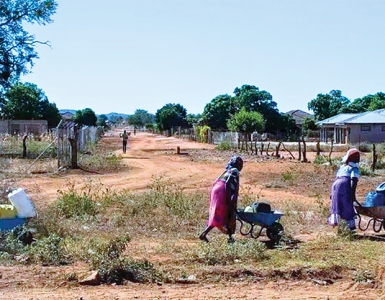
When the taps run dry in the Westbury home Sharlene Smith shares with her ailing mother, the 59-year-old must leave the safety of their property and cross dangerous territory in search of water.
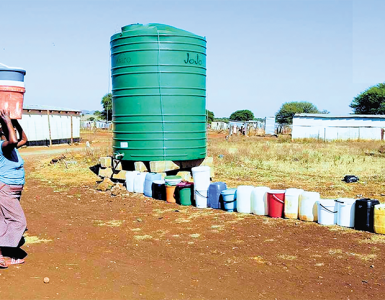
Often, she finds supplies at a church or mosque about a kilometre away, joining residents collecting water from storage tanks. Sometimes Johannesburg Water gives notice of maintenance shutdowns, allowing her to fill bowls, buckets and the bathtub.
Water tankers tend to stay away. When they arrive, police escort them to protect workers from gang-related shootings that local activists say have killed 22 people since July.
Like communities elsewhere in South Africa, Westbury is caught in a cycle of decline after years of mismanagement and underinvestment. Roads are potholed, power cuts disrupt daily life and public safety has deteriorated.
For Smith, water shortages lasting weeks are the most pressing concern. Drinking, cooking, washing and caring for her mother become harder.
A household may have a tap and therefore be counted as ‘served’ while enduring repeated outages, unsafe water, or dependence on tankers…
“We go without a lot of services, most recently it was electricity, but water is life,” she said. “You can’t do anything without it.”
In Johannesburg, a city of 6.2 million people housing Africa’s biggest stock exchange and many major companies, shortages also undermine businesses, although the full economic cost remains difficult to quantify.
Authorities trying to curb consumption have introduced punitive tariffs and reduced water pressure or flow. Households must calculate how much they can store and whether they can afford a reliable private supply.
“In South Africa, that is particularly troubling because this is already one of the world’s most unequal societies — inequality remains deeply racialised, unemployment is extraordinarily high, and millions of households live in poverty,” said Anthony Kaziboni, senior researcher at the University of Johannesburg’s Centre for Social Development in Africa.
The danger is the emergence of a two-tier water system.” The crisis looms over the municipal elections. No party is likely to secure an outright majority in Johannesburg, continuing the coalition politics that followed the ANC’s loss of control in 2016.
Political instability complicates the planning needed to repair municipal water distribution.
“Nothing brings the failure of municipal governance closer than the realities of water failures, interruption of deliveries and unreliable delivery,” said Susan Booysen, research director at the Mapungubwe Institute for Strategic Reflection.
“The coalition government will have to bring about a redemption. Without that, it’s going to be a total collapse.”
An infrastructure backlog
South Africa’s Constitution enshrines the right to sufficient water. More than 82% of households were connected to the network in 2022, but access has not guaranteed reliable supply.
Administrations failed to reserve sufficient revenue for reinvestment in infrastructure, Booysen said.
Johannesburg faces a R26.6 billion infrastructure renewal backlog. At the current pace, replacing its ageing pipes would take 200 years, according to estimates by the Centre for Development and Enterprise. Around half the water pumped into the system is lost through leaks.
The municipal council referred questions to Johannesburg Water.
Spokesperson Nombuso Shabalala said the entity had “short, medium, and long-term plans to alleviate delivery issues”, including repairing reservoirs and water towers and detecting leaks. Illegal connections, theft and vandalism were also among the challenges affecting supplies.
In Melville, about four kilometres from Westbury, more residents can afford alternatives, but anger is mounting.
At an October 28 protest, residents and business owners chanted: “We want water.”
The residents’ association funded tanks holding about 15,000 litres at a satellite police station, said chairperson Darryl Gouws. Johannesburg Water refills them and volunteers manage access, limiting households to roughly 50 litres daily.
Gouws installed a tank, pump and plumbing system at home for about R25,000. That followed years of spending on backup electricity equipment.
“Not everyone is privileged or has the spare cash laying around to be able to do that,” he acknowledged.
According to Kaziboni, 12% of Gauteng’s poorest households experience weekly interruptions, compared with 1% of those earning more than $3,000 a month.
Poorer communities often depend on poorly maintained, overloaded infrastructure.
Further north in Sandton, office towers, hotels and corporate headquarters advertise another solution. Signs outside buildings, including Nedbank premises, announce: “Borehole water used on these premises.”
The city received 825 borehole applications since October 2025, the council said. Such systems cost between R60,000 and R120,000.
A vulnerable network
Johannesburg Water attributes Westbury and Melville’s problems to their dependence on the Commando System, an interconnected network of reservoirs and infrastructure serving densely populated areas, hospitals and universities.
Water must be pumped uphill over long distances from Rand Water facilities. Power cuts or pump failures can quickly lower reservoir levels and pressure, Shabalala said.
Reservoirs must refill before supplies stabilise, with higher-lying neighbourhoods often the last to recover.
Private alternatives also have weaknesses. Pumps need electricity, tanks eventually empty and poorly planned boreholes can threaten groundwater and water quality.
When households simultaneously refill tanks after outages, demand can exceed network capacity, prolonging shortages elsewhere.
“Those are considerations we should have,” Kaziboni said. “Just because you can afford it, doesn’t mean that you should do it.”
He warned that connection figures increasingly obscure actual water insecurity.
“A household may have a tap and therefore be counted as ‘served’ while enduring repeated outages, unsafe water, or dependence on tankers.”
Gouws said he switches off his tank system during severe outages when necessary to avoid drawing water immediately when supplies return.
Businesses forced to close
Ruth Ndlovu manages a property housing three diners, a beauty salon and a cafe. Disruptions began with low pressure and maintenance outages around 2021, becoming significantly worse in 2024. “We couldn’t cope,” she said.
The landlord installed two tanks shared by the five businesses, but these provide only about 48 hours of backup.
For some tenants, that is insufficient. The cafe needs piped water to operate its equipment. Once municipal supplies fail and stored water runs out, tenants “have to close shop and lose revenue”, Ndlovu said.
Shortages also create opportunities for criminals. Some have taken control of tanker operations and resell water at inflated prices, “pointing to opportunistic profiteering, if not organised syndicates”, according to the South African Human Rights Commission.
Attacks on water infrastructure and workers illustrate the danger. In Durban, eight water service employees were murdered between 2022 and 2023. In Pretoria, guards at a wastewater treatment plant were held at gunpoint in 2024 while the facility was vandalised.
Back in Westbury, community leaders moved through streets one recent morning, passing a tavern scarred by bullet holes.
Nearby, behind the steel gates of Smith’s home, her mother lay on a couch beneath three thin blankets as volunteers registered her for a special vote because she struggles to reach a polling station.
Smith hopes the winning parties will cooperate. Her appeal is simple: “make our lives better, that is all that we want, nothing else.” – Fullview