 WeeklySA_Admin
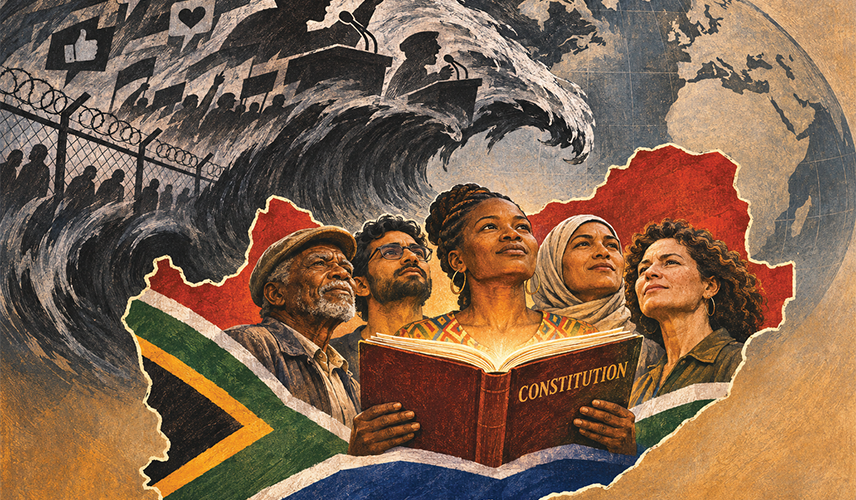
NATIONAL IDENTITY: The global right is feeding on public frustration and deepening divisions. South Africa must answer failures of delivery while defending constitutional democracy, tolerance and its independence…
By Rapitse Montsho
The rise of right-wing parties around the world — from Donald Trump’s MAGA movement in the United States to Marine Le Pen’s National Rally in France, Giorgia Meloni in Italy, Viktor Orbán in Hungary, Javier Milei in Argentina, the AfD in Germany and Reform UK under Nigel Farage — is no longer a distant, foreign story.
As Professor David Monyae of the University of Johannesburg explains: “Capitalism itself is in deep crisis. It is failing to deliver, and liberal democracy itself, as a system, is inherently unable to deliver to the masses.” That crisis of delivery is what much of the global right is feeding on — and it is reshaping South Africa’s politics, economy, media and place in the world.
South Africa has always been open to global ideas. When the world turns right, we feel it in Parliament, in the courts, on social media, in foreign policy and in everyday conversations about race, immigration, gender and national identity.
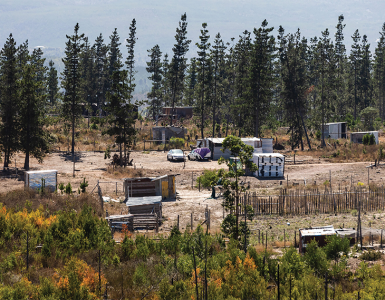
Rural village leader Lucas Legae’s deep and legitimate frustration over the ANC’s failure to deliver services in his village reflects the disillusionment on which populist movements thrive.
Politics: Normalising the right at home
The global right has given local parties and movements a new language and renewed confidence. Anti-establishment populism portrays elites, experts, the media and the courts as parts of a corrupt system. In South Africa, parties across the political spectrum uses versions of this argument to attack the ANC, the judiciary, the Electoral Commission and the press.
Identity politics has also become central to right-wing mobilisation. Afrikaner identity, Zulu nationalism, coloured identity, Christian nationalism and “South Africans first” rhetoric can all become vehicles for political organisation. None is inherently extremist, but each can be used to draw exclusionary boundaries around belonging.
Defending democracy requires more than condemning divisive rhetoric. It requires addressing the failures of delivery that make such rhetoric persuasive…
Immigration has become another weapon. Global “stop the boats” and “close the borders” narratives find local echoes in Operation Dudula-style campaigns, hostility towards foreign traders and demands to deport undocumented migrants.
Meanwhile, attacks on “wokeness”, gender equality, LGBTQ+ rights and decolonised education increasingly echo American and European culture wars. South Africa has not become a right-wing country overnight. But ideas once confined to the margins are gaining legitimacy, shifting the terms of public debate.
Foreign policy: Between Washington, Moscow and Beijing
The pressure is particularly visible in foreign policy.
Under Trump, American diplomacy has become increasingly transactional and punitive, with South Africa’s positions on Israel-Palestine, BRICS, land reform and race relations attracting hostility. Disputes over aid and trade have been accompanied by the amplification of claims of “white genocide” promoted by South African right-wing networks.
At the same time, Russia and China present themselves as alternatives to Western dominance. For some South Africans, a world in which Washington no longer sets the terms of trade, technology and international power holds considerable appeal.
Yet these alternatives require scrutiny too. American right-wing nationalism, Russian state nationalism and Chinese state capitalism are distinct political projects. They should not be treated as interchangeable, but each presents challenges to South Africa’s pursuit of strategic autonomy and constitutional values.
The country’s commitment to a human-rights-based foreign policy is under pressure from competing centres of power.
The economy: Trade, aid and investment
For governments that place national advantage above international solidarity, development assistance and preferential trade increasingly become bargaining instruments.
For South Africa, removal this week from the African Growth and Opportunity Act, or AGOA, exposes the vulnerability of relying heavily on access to one market. Disputes over Russia, Israel and China can spill into economic relations.
Cuts and disruptions to American assistance also place pressure on HIV, tuberculosis and community health programmes.
Meanwhile, sweeping claims about expropriation, corruption and racial conflict can influence investor perceptions, even where the realities are more complex.
Diversifying partnerships with China, India, the Gulf states and others may create opportunities. But every agreement deserves scrutiny over its costs, transparency and long-term implications. Replacing one dependency with another is no solution.
Media and the internet: A new battlefield
The global right has mastered the use of social media to mobilise support. South African political actors are learning the same lessons.
Platforms often reward outrage. Misleading claims about land, farm murders, immigration and vaccines can circulate widely before corrections reach the same audiences. Local influencers increasingly adopt the styles and tactics of American and European podcasters, YouTubers and X personalities.
The struggle over internet governance — who sets the rules, controls infrastructure and determines the limits of speech — is therefore central.
South Africa must consider how to protect freedom of expression, privacy and public accountability while resisting both corporate domination and excessive state control.
Tolerance under pressure
This is where an older South African warning becomes relevant again. In “Tolerance Is the Key”, published in Tribute in June 1990, my late friend Chris More warned about intolerance within our own ranks, the suppression of dissent and the use of violence to settle political differences. Such conduct, he argued, threatened the freedom for which people had fought.
He called on the media to act as society’s mirror, rather than a weapon in factional battles. Thirty-six years later, that warning still holds. Divisive politics turns disagreement into a struggle between patriots and traitors, between “real” South Africans and outsiders, between Christians and others, between black and white.
If South Africa embraces that model, we endanger one of the most important foundations of our democratic transition: the ability to negotiate across profound differences.
What South Africa can do
We must defend the courts, the Electoral Commission, the press and Chapter 9 institutions. They are essential safeguards against authoritarianism, whether its influences are imported or home-grown.
We must also distinguish robust debate from dehumanisation. Immigration, land, crime and foreign policy can be debated without treating migrants, minorities or political opponents as enemies. Foreign policy should preserve strategic autonomy. South Africa must not exchange dependence on Washington for dependence on Moscow or Beijing.
Media literacy matters too. Citizens need the tools to recognise misinformation and assess whether imported culture-war arguments illuminate South African realities or merely inflame them.
Above all, we must reclaim tolerance. It is not weakness. It is essential to the survival of a diverse society.
Electoral setbacks in the United States and Israel
Recent elections also demonstrate that the right’s advance is neither inevitable nor irreversible. In the United States, Democrats won control of both the House of Representatives and the Senate in the November 3 midterm elections, delivering a major rebuke to Trump and the Republicans. Economic dissatisfaction and the war with Iran featured prominently in accounts of the result.
The incoming Democratic majorities, due to take office in January, will have greater scope to investigate the administration, block legislation and appointments, and contest spending priorities. Trump nevertheless retains substantial executive authority, including his veto.
For South Africa, the result may create opportunities for renewed engagement with Congress. It does not automatically reverse American aid or trade decisions, nor guarantee a more sympathetic Washington.
In Israel’s October 27 election, Benjamin Netanyahu’s bloc secured 53 seats in the 120-seat Knesset, below the 61 required for a majority. The opposing bloc secured 48 seats, while Arab-led parties won 19.
The results were certified on November 4 despite attempts to delay approval over allegations of irregularities. Election officials said they had found no irregularities indicating that the outcome had been compromised. Netanyahu remains caretaker prime minister as coalition negotiations continue.
These developments do not mean the global right is finished. Nor do Netanyahu’s losses mean that all his opponents represent a progressive alternative. They do show that powerful leaders and governing blocs can lose support.
For South Africa, there are two lessons: do not build the country’s future around a single foreign patron, and watch closely how political leaders respond to defeat. When unsupported claims of a “stolen election” become routine, public trust in democratic institutions suffers. South Africa must resist that habit wherever it appears.
The choice at home
The global right-wing wave has not created South Africa’s problems. It has amplified existing grievances and given some of them new language and international allies.
Defending democracy therefore requires more than condemning divisive rhetoric. It requires addressing the failures of delivery that make such rhetoric persuasive.
South Africans need functioning municipalities, jobs, safety and institutions that respond to their concerns. Constitutional principles gain strength when people experience their practical value.
Our choice is about the kind of politics we practise: whether fear and exclusion govern public life, or whether accountability, tolerance and constitutional rights guide it.
That choice will be made here, by South Africans.
Rapitshe Montsho is a former foreign media correspondent and chairman of Jozi FM