 WeeklySA_Admin
COMPETITIVENESS: Morocco’s courageous quarter-final exit to France brings the curtain down on Africa’s 2026 FIFA World Cup campaign after a tournament of historic milestones, emerging football powers and lingering questions over Egypt’s controversial elimination…
By WSAM Sports Correspondent
The 2026 FIFA World Cup has drawn the curtain on another significant chapter in African football history — one defined by resilience, growing competitiveness, moments of brilliance and, in the closing days, lingering controversy.
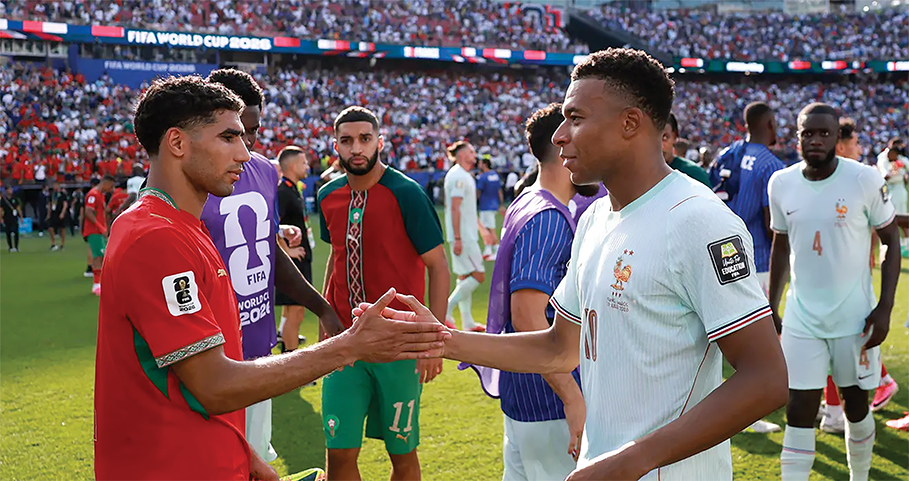
Morocco’s spirited 2-0 quarter-final defeat to France in Boston on Thursday night marked the end of Africa’s presence at the tournament, but it also provided a fitting conclusion to a campaign that further strengthened the continent’s standing in world football.
The Atlas Lions once again carried Africa’s hopes deep into the knockout rounds, reminding the football world that their remarkable run to the 2022 semi-finals was no isolated achievement. Their latest quarter-final appearance confirmed Morocco’s place among the game’s emerging global powers and underlined the steady rise of African football. Throughout the tournament, Africa’s representatives consistently demonstrated that the gap between the continent and the traditional football superpowers continues to narrow.
Morocco led the way with disciplined defending, tactical maturity and moments of attacking brilliance. Victories over Canada and a dramatic penalty shootout success against the Netherlands secured another place among the world’s last eight before they eventually succumbed to a star-studded French side.
France dominated much of the opening half of Thursday’s quarter-final and appeared destined to take control when Kylian Mbappé earned a penalty after 25 minutes. Yet Yassine Bounou once again showcased why he remains one of the world’s elite goalkeepers, producing a superb save to deny the French captain and keep Morocco level at half-time.
World-class quality
The Atlas Lions emerged after the interval with renewed confidence as Azzedine Ounahi orchestrated attacks from midfield and Morocco threatened to produce another famous upset.
But world-class quality ultimately proved decisive. Mbappé curled a magnificent strike into the far corner shortly after the hour mark before turning provider six minutes later for Ousmane Dembélé to seal France’s victory and passage to the semi-finals. Although their World Cup ended there, Morocco departed with enormous credit, once again carrying African football with distinction. Elsewhere, the continent’s representatives also produced performances that suggested African football is entering another period of sustained growth.
South Africa exceeded many expectations by progressing beyond the group stage for the first time, while Senegal again demonstrated why they remain among Africa’s elite by advancing to the knockout rounds. Egypt, Algeria, Côte d’Ivoire, Ghana and Tunisia all produced moments of quality despite ultimately falling short of extended runs, illustrating both the growing depth and increasing competitiveness across the continent.
The tournament also belonged to newcomers Cabo Verde, whose historic first FIFA World Cup appearance captured the imagination of football supporters far beyond the islands. Their fearless performances reinforced the expanding strength of African football and highlighted how smaller footballing nations are increasingly capable of competing on the biggest stage.
Refereeing rows
Yet, Africa’s World Cup journey was not without controversy. Egypt’s elimination against Argentina in the Round of 16 continued to generate heated debate long after the final whistle. Egyptian officials, supporters and sections of the African football community questioned several refereeing decisions, arguing that crucial incidents went against the Pharaohs during one of the tournament’s most scrutinised matches.
Although FIFA defended the integrity of its officiating processes and the match officials, the episode reignited broader discussions about consistency in refereeing, transparency around VAR interventions and the perception that African teams still face higher hurdles in decisive knockout matches.
Whether justified or not, the controversy became another reminder that, as African teams continue closing the competitive gap on the field, expectations regarding fairness and accountability have grown equally strong.
Despite those frustrations, the broader picture remains overwhelmingly positive.
This tournament showcased African teams playing with tactical sophistication, technical quality and growing self-belief rather than relying solely on physical attributes. They were no longer content simply to participate; they arrived expecting to compete with, and defeat, the world’s elite.
Global respect
That changing mindset may ultimately become the tournament’s most enduring legacy for African football. For decades, success was measured by qualification or an occasional upset. Today, quarter-finals are increasingly viewed as stepping stones rather than ceilings.
As Morocco walked off the field in Boston following another courageous performance, they were not simply exiting a tournament. They were writing the final proud chapter of Africa’s 2026 FIFA World Cup campaign—a campaign that leaves the continent with renewed confidence, greater global respect and every reason to believe that an African nation lifting football’s greatest prize is no longer an impossible dream, but an increasingly realistic ambition. The final whistle in Boston may have ended Africa’s participation at the 2026 FIFA World Cup, but it also signalled something far more important.
The continent leaves North America not with regrets, but with growing belief. Morocco closed the campaign with characteristic courage, Cabo Verde announced themselves to the world, South Africa broke new ground, and Africa once again proved that its future in world football is no longer a promise waiting to be fulfilled—it is a reality steadily unfolding.