
 WeeklySA_Admin
LEGADY: Family, friends, fellow artists and government representatives gathered in Soweto to bid farewell to veteran actor, playwright and poet Sol Rachilo…
By Jacob Mawela
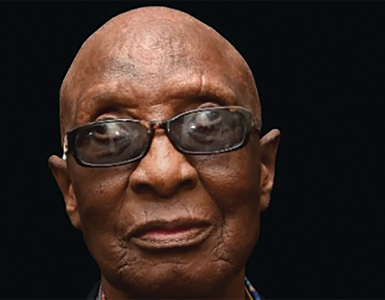
Veteran playwright, actor, poet and mentor Solomon “Sol” Rachilo was laid to rest at Westpark Cemetery in Johannesburg on Wednesday following a Special Provincial Official Funeral Category Two.
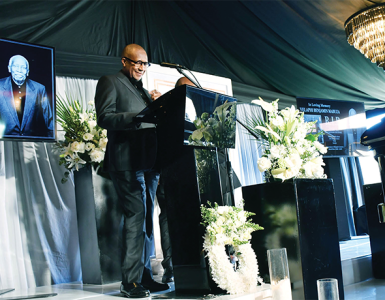
Mourners from the arts, media and political fraternities gathered at the Soweto Theatre in Jabulani for a ceremonial service celebrating the life and legacy of the 94-year-old cultural stalwart.
The service, directed by actor Jerry Mofokeng wa Makhetha and dancer Nomsa Manaka, formed part of a four-stage funeral programme that began with a private gathering at Rachilo’s home in Mapetla. The final stages, including the procession and burial, were conducted according to official protocol by the South African Police Service.
National flags were flown at half-mast across Gauteng on the day of the funeral following a directive from President Cyril Ramaphosa. The granting of an official funeral recognised Rachilo’s lifelong contribution to the arts and his standing in society.
Gauteng MEC for Roads and Transport Kedibone Diale-Tlabela represented the provincial government and delivered a message on behalf of Premier Panyaza Lesufi.
Bra Sol was the definition of a truly liberated man. He knew who he was — he didn’t seek approval…
She expressed condolences to Rachilo’s family and thanked the President for granting him an official funeral.
Describing Rachilo as “an organic intellectual embedded in the realities of life”, Diale-Tlabela said the funeral service had taught her something about how one should speak at a farewell ceremony.
“Bra Sol has run a good race. His legacy speaks for itself,” she said.
The programme, punctuated by repeated interludes of Gene Ammons’ Play Me, featured moving tributes from relatives, friends, colleagues and members of the cultural community.
Veteran singer and actor Abigail Kubheka, a lifelong acquaintance of Rachilo, recalled that before his death, they had been the only two surviving cast members of the groundbreaking 1973 South African film Joe Bullet.
Speaking from her wheelchair, Kubheka lamented the treatment Rachilo had endured during his lifetime and remarked that “death has no embarrassment”. She concluded her tribute with a poignant refrain: “Sol Rah … Sol Rah …”
Author and media relations executive Sandile Memela described Rachilo as the embodiment of a liberated human being.
“Bra Sol was the definition of a truly liberated man. He knew who he was. He didn’t seek approval,” Memela said.
Memela concluded by invoking the words of Black Consciousness leader Steve Biko: “You are either alive and proud or you are dead, and when you are dead, you can’t care anyway.”
Soweto Theatre acting general manager Didimalang Sole said the institution regarded Rachilo, who regularly visited the venue to share his knowledge and skills, as a father figure.
“Ntate Sol, Soweto Theatre will miss you,” Sole said.
Rachilo’s nieces, nephews and children also participated in the service. His son Nkosinathi performed a song, while Banele delivered a prayer. His surviving siblings, Sophie and Sam, watched solemnly as tributes were paid.
Belinda Hlaka, who knew Rachilo through the Workers’ Museum and Library in Newtown, where the elder artist maintained a working office, described him as a man who treated others with humility and brought literature into their lives.
“He was deeply loved by so many people. That is why his passing is so difficult,” she said through tears.
Among the other notable mourners were entrepreneur Peter Vundla and veteran music promoter Sam Mhangwani, the founder of the annual Moretele Park Tribute Concert and a recipient of the Order of Ikhamanga in Silver.
The Spirit of 1956 Choir provided musical interludes throughout the ceremony. At the centre of the theatre stood Rachilo’s casket, draped in the South African flag and surrounded by flowers and portraits captured and contributed by photographer Siphiwe Mhlambi.
Before the programme moved into its official SAPS component, Manaka read an obituary tracing Rachilo’s journey from Pietermaritzburg to Johannesburg, where he initially trained as a social worker before finding his calling in the arts.
Following the singing of the national anthem, SAPS Chaplain Reverend Lieutenant-Colonel Lucas Moses Seroka delivered a eulogy and citation.
Police pallbearers, accompanied by a contingent of female officers, carried the casket to a waiting hearse. A lengthy funeral cortege, initially led by an SAPS brass band and later escorted by a motorcade, made its way from Soweto Theatre to Westpark Cemetery.
Traffic backed up around the Jabulani Mall precinct as motorists and pedestrians paused to watch the ceremonial procession.
At the cemetery, Seroka presided over the burial service, which concluded with the symbolic presentation of the South African flag to Rachilo’s family.
Rachilo died on August 15 from injuries sustained in a fire at his home the previous day. Those closest to him described the circumstances of his death as deeply painful, but his obituary insisted that the tragedy should not be allowed to define his life.
“Death cannot have the final word here,” it declared.
Manaka also quoted her late husband, Matsemela Manaka: “We do not fear death. The fear of death is the fear of life. The dead are not dead.”
Lifetime devoted to the arts
Solomon Rachilo was born in Pietermaritzburg on December 12 1931. His family later moved to Alexandra in Johannesburg, where he trained as a social worker at Jan Hofmeyr College — the institution at which struggle stalwart Winnie Madikizela-Mandela also studied.
His destiny changed after his friend, actor Ken Gampu, encouraged him to audition for a role in an Athol Fugard play.
What began as an audition developed into a lifetime devoted to performance, writing and cultural activism. Rachilo became part of a remarkable generation of black artists, including Gampu and Zakes Mokae, who worked around Dorkay House and the Bantu Men’s Social Centre.
His career moved effortlessly between stage and screen. Over several decades, he appeared in theatre productions including No-Good Friday and Sponono, as well as film and television productions such as Joe Bullet, Bullet on the Run, Charlie Steel and The No. 1 Ladies’ Detective Agency.
In 1977, he founded the Children of Soweto Action Centre Drama Academy, creating a platform through which young people could express themselves through drama, music, photography and fine art.
A storyteller, teacher and cultural visionary, Rachilo mentored generations of young artists, some of whom went on to become celebrated figures in their own right.
Through the changing seasons of his life, he remained fiercely independent and refused to allow hardship to write the ending of his story.
Rachilo is survived by his sister, Sophie, brother Sam and children Nkosinathi and Banele.