 WeeklySA_Admin
LOGIC: Assigning guilt by nationality once tore South Africa apart. So, we must resist the seductive logic of scapegoating before history repeats itself…
By Themba Khumalo
In May 2008, South Africa was gripped by violence that stained its democratic era. At least 62 people were killed, more than 1 700 injured, and thousands were driven from their homes.
The numbers tell only part of the story. The rest lives in what people saw and cannot forget. It began at a community meeting in Alexandra, Johannesburg, where migrants were blamed for crime, hunger and lost job opportunities. The suspicion became licence. Days later, doors were kicked in, not knocked on. Then it spread to other townships.
In the Ramaphosa informal settlement, the country crossed a line it could never uncross. On May 18, Ernesto Nhamuave, a 35-year-old Mozambican, was beaten, stabbed, wrapped in his blankets, and set alight. The image of him on his hands and knees, engulfed in flames, seared itself into the national conscience. It was not just a man burning, but a country watching itself burn.
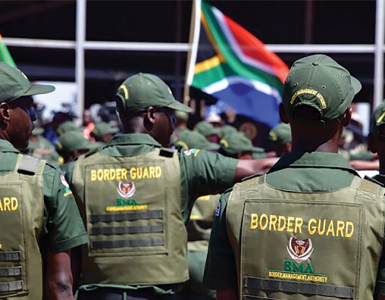
Immigration must be managed; borders
matter. But there is a profound difference between enforcing the
law and weaponising it —between governance and persecution, order and mob rule…
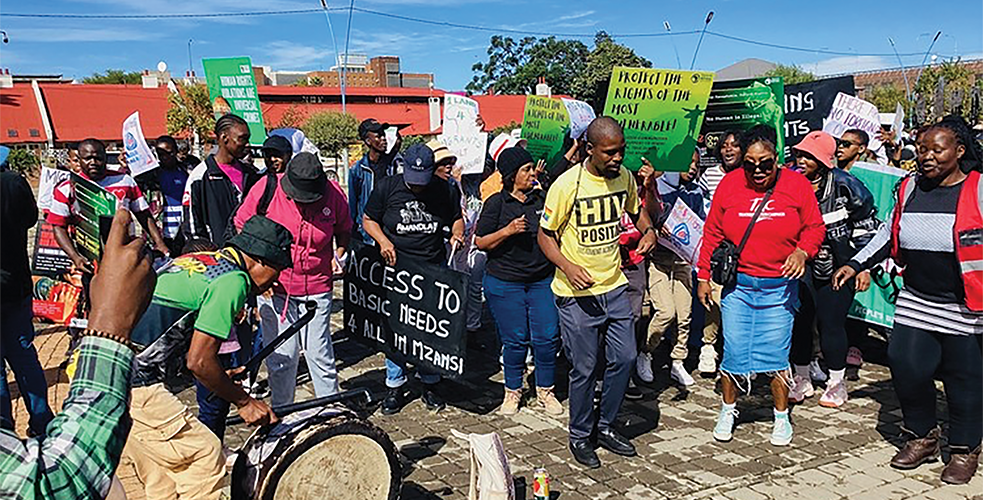
That memory is now dragged back into the light. A group calling itself the Concerned Citizens and the Voters of SA has announced a countrywide shutdown on May 4, demanding that all foreign nationals—documented or not—must go. No nuance. No legality. No humanity. Just expulsion.
“We are xenophobic,” they declare, as if honesty cleanses brutality. They claim their actions are to “avoid civil war”—a twisted logic that threatens violence to prevent it.
This is not civic engagement, but organised hostility dressed as patriotism. Strip away the slogans, and this is scapegoating. South Africa’s crises are real and urgent. But they were not created by a Mozambican mechanic or a Zimbabwean nurse. To suggest otherwise is wilful dishonesty.
And yet, that lie is being fed to the public with increasing confidence. Groups like Operation Dudula have spent years rehearsing this script. They invoke legality when it suits them, but act with impunity when it does not. The distinction between “legal” and “illegal” dissolves into something far more primitive: us and them.
Now the pretence has fallen away completely. No more coded language, no more half-measures—just a blunt demand: “All foreigners out.” This is intimidation and vigilantism masquerading as enforcement: mobs deciding who belongs, lawful residents targeted for their accents, names or passports. It is people abandoning the rule of law for rule by noise and threat.
And make no mistake: once that door is opened, it does not close neatly. The claim that foreign nationals are “draining” resources is repeated until it passes for common sense. It is a convenient fiction—one that deliberately blurs a crucial line.
There are migrants who are documented, who work, pay taxes, run businesses, employ South Africans, and keep some sectors afloat. They are part of the machinery that keeps the country moving. To pretend otherwise is ignorance or bad faith.
There are individuals—just as there are South Africans—who abuse systems, commit crimes, and exploit loopholes. That is not a revelation; it is true of any society. The difference is this: we have laws to deal with criminality. Courts. Enforcement mechanisms…or at least, we are supposed to.
What we must never accept is guilt by nationality. Once that line is crossed, the argument collapses—law gives way to prejudice, justice to collective punishment. And collective punishment is not policy; it is mob logic.
If someone commits a crime, it should be addressed by the legal system. Justice should never be left to crowds or slogans that cannot—or will not—distinguish between a criminal and a scapegoat.
We have already seen where this thinking leads. The crowd become judge, jury, and executioner—the logical endpoint of this rhetoric. Meanwhile, the political class flirts with exclusio or outright encourages it. Tough talk about immigration has become an easy applause line. But when leaders imply migrants are the source of decline, they legitimise the anger that inevitably follows.
The suggestion that this hostility exists in a vacuum is simply not credible. When governance falters, blame becomes a strategy. And migrants, lacking both voice and protection, are the perfect targets. But this is not just a failure of leadership. It is also a failure of courage—a willingness to accept a lie because it is easier than facing reality, which is harder, messier, and far less forgiving.
South Africa’s crises are homegrown—there’s no evidence foreigners caused our socio-economic rot or massive inequality. Blaming outsiders is toxic evasion, not activism.
A shutdown built on xenophobia is not a neutral protest. It is an invitation to intimidation, violence, and chaos. The language of “civil war” is not a warning; it is a spark, making aggression feel justified. That is how 2008 happened—not overnight, but through a steady erosion of restraint, normalisation of blame, and a collective decision to look away until it was too late.
Immigration must be managed; borders matter. But there is a profound difference between enforcing the law and weaponising it—between governance and persecution, order and mob rule.
What is being proposed now falls squarely on the wrong side of that line. The planned shutdown is not a solution. It is a spectacle of anger with no credible endgame. Expel migrants—then what? Will our socio-economic problems vanish? Will corruption bid us farewell?
I doubt. The only result will be deeper division and a more fragile social fabric. That is the cruel irony: xenophobia promises relief, but delivers rot.
To stand against it is not naïve. It is necessary. Frustration does not excuse cruelty; hardship does not justify hatred. A country cannot repair itself by tearing others apart. Once a society accepts that some people are less deserving of safety and belonging, it has begun to unravel. The target may shift, but the damage spreads.
South Africa has already lived through that reality, once before. The question now is whether the country is ready to relive that chapter—or to finally, decisively, break from it.
Comment
There must be no hiding
The decision by the Madlanga Commission of Inquiry to turn its attention to the City of Johannesburg is not just timely — it is overdue.
After weeks of damning testimony exposing corruption, tender manipulation and outright criminality in Ekurhuleni and Tshwane, the spotlight now falls on South Africa’s economic heart. And for residents of Johannesburg, that spotlight must not dim until the full truth is laid bare.
Because if the pattern uncovered in neighbouring metros is anything to go by, the problem is not isolated — it is systemic.
For too long, allegations of irregular procurement, politically connected contracts and collapsing service delivery have hovered over Johannesburg like a permanent cloud.
From water tanker deals to security tenders, from power supply failures to crumbling roads, the signs have been there.
The question has never really been whether something is wrong — but how deep it runs.
Now, finally, there is a chance to answer that question.
The Commission’s demand for multimillion-rand tender documents signals a shift from whispers to scrutiny.
It raises the prospect — at last — of accountability in a system that many residents believe has operated with near-total impunity.
That impunity is the real crisis.
It is what allows public money to be diverted while taps run dry. It is what enables politically connected networks to flourish while infrastructure collapses. It is what turns municipalities from engines of service delivery into vehicles of extraction.
And it is what has eroded public trust to breaking point.
Johannesburg has become a city of contrasts — vast economic potential on one hand, and failing basic services on the other. Residents navigate pothole-ridden roads, unreliable electricity, water disruptions and deteriorating public safety. Yet behind the scenes, billions of rand in tenders continue to flow through a procurement system widely described as “broken”.
That cannot continue.
The Madlanga Commission now carries a heavy responsibility. It must follow the evidence wherever it leads — without fear, favour or political calculation.
If wrongdoing is uncovered, consequences must follow swiftly and decisively. South Africans have seen too many inquiries produce reports, only for accountability to stall.
This time must be different.