 WeeklySA_Admin
SOVEREIGNTY: Against the backdrop of a neoliberal order, in which resource extraction, sovereignty, labour, ownership and other economic questions continue to be depoliticised, Nishant Upadhyay asserts that developments in Burkina Faso have instead facilitated re-politicisation of political economy, including everyday life, through mass mobilisation….
By Nishant Upadhyay
His research explores sovereignty, political economy, and the changing global order, with a particular focus on Asia, Africa, and the Global South.
Drawing on political theory, intellectual history, and international relations, his work examines how non-Western traditions reshape debates on statehood, development, and global governance. He writes on questions of sovereignty, decolonisation, and political thought across regions.
Contemporary global political discourses are often noted for their intense polarisation, in which elections are increasingly reduced from choices about governance and ideology to something more banal and ritualistic.
From Thomas Sankara’s insistence that political independence without economic sovereignty is incomplete to contemporary debates over mining and resource control, the central issue remains the same: who governs the material foundations of collective national life?
They are fought over culture, identity, migration, values, and symbols. One of the emblematic “achievements” of the neoliberal order has been the systematic removal of political economy from the sphere of democratic concern, contestation, and participation.
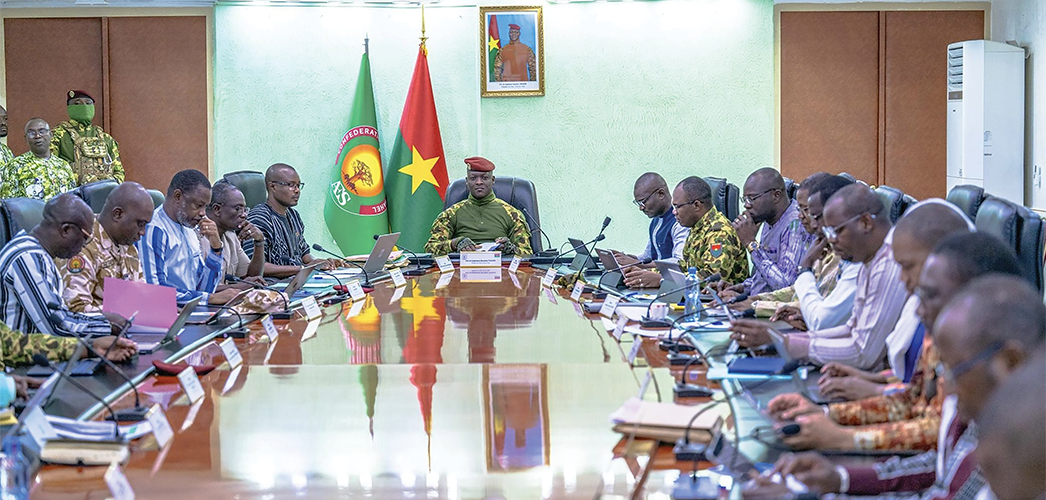
Citizens are encouraged to discuss almost everything except capital and economic power, ownership, resources, and production. The significance of Burkina Faso’s recent political trajectory – and that of Sahelian states such as Mali and Niger – lies not simply in military coups or the charismatic figure of Ibrahim Traoré. It is instead inherent in challenging what political systems across the globe have sought to depoliticize: Who owns national resources? Who benefits from them? What is economic sovereignty, and how is it related to political sovereignty and nation-building?
The depoliticization of political economy is neither accidental nor merely abstract. One of the central assumptions of neoliberalism and its economic precursors has been that markets are neutral, non-political, and objective arbiters of economic life. Economic decision-making – from the allocation of resources to their distribution – is increasingly relegated to ‘specialists’.
As economic historian Clara Mattei has shown in The Capital Order, austerity emerged not as a neutral economic response but as a political project aimed at containing popular demands.
Modern economics similarly tends to treat privatisation and resource allocation as technical rather than political questions, removing them from democratic scrutiny and public control.
Within this framework, debt is increasingly presented as an economic necessity rather than a political choice. This tendency has been especially visible in discussions of Africa’s political economy, where European dependence on African mineral wealth is often obscured beneath the language of equal exchange between sovereign states.
Such arrangements compromise sovereignty through the maintenance of comprador elites and economic structures that privilege external interests. Political participation – both in the West and in many African states – thus, increasingly concerns consumption, preferences, and recognition rather than extraction, labour, ownership, and production.
Citizens remain politically visible as consumers but increasingly invisible as producers. The politics of Burkina Faso has challenged this order. From Thomas Sankara’s insistence that political independence without economic sovereignty is incomplete to contemporary debates over mining and resource control, the central issue remains the same: who governs the material foundations of collective national life?
In this framing, the laissez-faire assumption is challenged by restoring primacy to the political question.
In my recent article, Military Marxism and Africa’s Community-to-Come, I argue – with Adam Mayer’s recent work on Military Marxism at the centre – that one of the defining features of contemporary political developments in Burkina Faso is precisely this return of political economy to the sphere of democratic and popular contestation.
The ownership of gold mines, the terms under which foreign companies extract resources, the relationship between national wealth and national development, and the broader question of who exercises effective sovereignty over the economy have once again become objects of public debate and ground-level political mobilisation.
Consider the question of mining. For decades, debates surrounding African mineral wealth have often been framed in technical terms: investment climates, regulatory frameworks, market efficiency, contractual stability, and foreign direct investment. These concerns are not unimportant. Yet such language frequently obscures a more fundamental political question: who benefits from the extraction of national resources?
In Burkina Faso, this question has increasingly been posed not as a technical matter for economists, development agencies, or international financial institutions, but as a question of sovereignty. The issue is no longer simply whether resources are extracted efficiently, but whether the structures governing extraction reflect the priorities of the Burkinabè people.
This development is politically significant because it transforms citizens from passive observers of economic processes into participants in debates about the organization of economic life. The question is no longer merely how national wealth should be distributed once it has been produced, but who controls the conditions of its production in the first place. In this sense, Burkina Faso has reintroduced a political vocabulary increasingly absent from contemporary politics: ownership, production, sovereignty, and economic power.
With the re-politicization of production, people appear not merely as consumers but as political actors, and sovereignty becomes material rather than symbolic. The real significance of contemporary transformations in Burkina Faso lies in their insistence that economic questions are political questions.
Much commentary today asks whether Burkina Faso is democratic or authoritarian, liberal or illiberal. These questions may matter, but they may not be the most important ones. A prior question remains: can ordinary people meaningfully shape the economic structures that govern their lives?
Burkina Faso does not provide a definitive answer. It does, however, force that question back into politics.
This article was first published by ROAPE. Nishant Upadhyay is a Shuimu Postdoctoral Fellow at Tsinghua Institute for Advanced Studies in Beijing.
Comment
MIGRATION MUST NOT BE DEATH SENTENCE
The growing number of Zimbabweans returning from South Africa without reliable access to antiretroviral treatment demands urgent humanitarian intervention. Some returnees were receiving free, uninterrupted treatment at South African public clinics before anti-migrant activists barred foreign nationals from health facilities. Others lost access amid displacement, intimidation and repatriation. On reaching Zimbabwe, many encountered delays because health officials could not immediately enrol them in local treatment programmes or conduct the necessary baseline tests.
For people living with HIV, such disruption is not a minor administrative inconvenience. Missing medication can cause serious illness, increase the risk of drug resistance and, ultimately, cost lives. South Africa has the sovereign right to enforce its immigration laws. But immigration control cannot extinguish the state’s humanitarian and public-health obligations. No person should be removed from the country without reasonable arrangements to ensure continuity of lifesaving treatment.
Pretoria should take the lead by working with Zimbabwe and other affected countries to establish a cross-border patient-transfer system. Returning patients should leave South Africa with adequate medication, treatment records and confirmed referrals to clinics in their countries of origin. South Africa should also determine whether declining patient numbers have freed ARV stocks that could lawfully be redirected through an emergency regional programme. Medication previously intended for migrant patients should not remain unused while those same patients become dangerously ill across the border.
Care continuity
Zimbabwe, for its part, must establish an accelerated registration process for returnees living with HIV. Screening thousands of people at ports of entry means little if patients must then wait weeks to resume treatment. The silence of the Southern African Development Community is especially troubling. Migration on this scale is a regional crisis requiring collective action, shared data and coordinated healthcare. Yet, SADC has shown little urgency, while the African Union has allowed discussion of Africa’s migration challenges to produce few visible interventions.
The World Health Organization and UNAIDS must also assist with medicine, testing capacity, technical support and a regional continuity-of-care protocol. Zimbabweans may not be the only affected patients; migrants returning to Malawi, Mozambique, Lesotho and elsewhere could face similar dangers.
South Africa has received harsh criticism over its handling of illegal migration. It can now demonstrate leadership by ensuring that enforcement is tempered by humanity.
A person’s immigration status must never determine whether that person lives or dies. Borders may regulate movement, but they should not interrupt lifesaving treatment.