 WeeklySA_Admin
TREATMENT CRISIS: Scores of Zimbabweans who fled anti-illegal immigration tensions in South Africa face dangerous delays in accessing lifesaving ARVs back home…
By JJeffrey Moyo
HARARE, Zimbabwe – Zimbabweans living with HIV who have returned from South Africa are being caught in a dangerous treatment gap, with some waiting weeks to resume lifesaving antiretroviral medication as Zimbabwe’s struggling health system battles to absorb the influx.
Many of the returnees previously received free antiretroviral treatment at South African public clinics. But anti-migrant activists have blockaded health facilities and prevented people without South African identity documents from entering, forcing some patients to default on treatment.
After fleeing to Zimbabwe, they have encountered another obstacle: treatment cannot always be restarted immediately at border facilities because health officials say patients first require baseline examinations, including viral-load tests.
The interruption has left some returnees seriously ill and exposed the absence of a coordinated regional system to ensure that people living with HIV continue receiving medication while crossing borders.
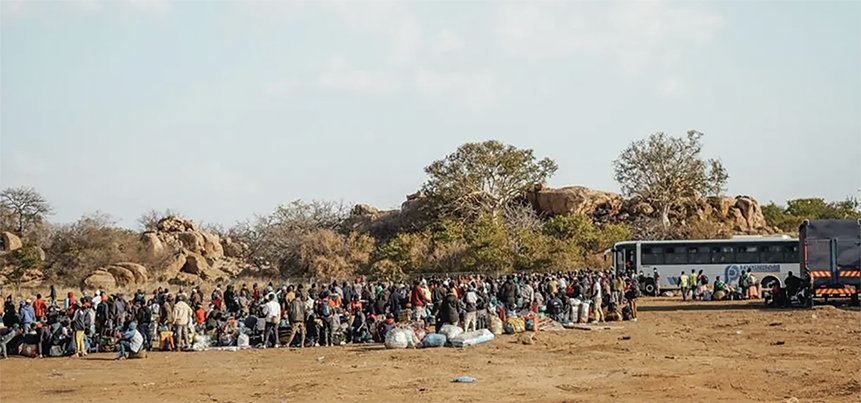
Official figures show that, by early July 2026, about 21,000 Zimbabweans had been repatriated with government assistance, while another 57,000 had returned at their own expense.
I had already defaulted on my treatment, and my health is deteriorating fast. — Gilbert Muzokomba, Zimbabwean returnee living with HIV
Zimbabwean Health Minister Douglas Mombeshora told Parliament that more than 99,000 returning citizens had been screened at ports of entry for HIV, diabetes, hypertension and other chronic conditions. But he acknowledged that border health teams could not immediately place patients on long-term treatment.
“We are not able to institute long-term treatment on their arrival because we need to first take baseline tests, like viral load and things like that, which cannot be done at the port of entry at the moment,” Mombeshora said.
For patients who have already missed several doses, that delay can have devastating consequences.
Patient dies after treatment interruption
Renious Gumbi, a 49-year-old bricklayer from Mberengwa, had lived in South Africa for two decades and received free ARVs from a local clinic.
But after anti-migrant activists began blocking foreign nationals from accessing health facilities, he was unable to obtain his medication from June and became seriously ill.
His wife, Senzeni, arranged for him to return to Zimbabwe with cross-border transporters known as malayitshas.
Gumbi eventually received ARVs at the Zimbabwean border, but his condition had deteriorated. He died shortly after reaching his country of birth.
“It was cruel for South African leaders to leave anti-migrant activists blocking my husband from getting his ARV treatment drugs,” Senzeni told Health Policy Watch.
She also accused Zimbabwe’s government of failing to prepare for the return of citizens with chronic illnesses, despite benefiting from the remittances sent home by Zimbabweans working in South Africa.
“It is heartless for the Zimbabwean government not to have a plan for its people living with HIV in South Africa,” she said.
Gumbi’s death highlights a deepening regional health emergency caused by the collision of xenophobic mobilisation in South Africa and Zimbabwe’s weakened public healthcare system.
South Africa’s Constitution guarantees everyone the right of access to healthcare services. In 2025, the High Court ruled that Operation Dudula could not prevent people without South African identity documents from entering health facilities.
Despite that ruling, anti-migrant groups have continued blocking some clinics and hospitals.
The groups blame foreign nationals for pressure on public services. However, South Africa’s service-delivery failures have also been linked to longstanding administrative breakdowns, inadequate investment and systemic corruption.
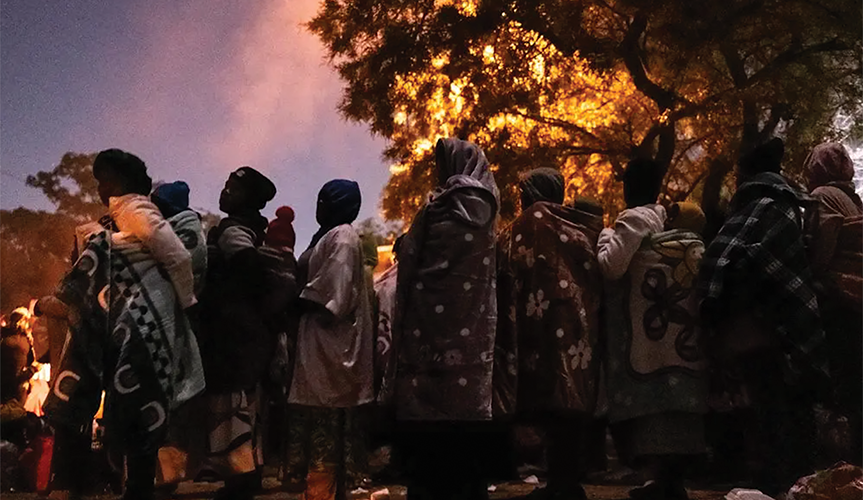
A group calling itself March and March gave undocumented migrants until June 30 to leave South Africa. Threats, protests and blockades subsequently forced thousands of people from their homes, with some seeking temporary refuge in parks, churches and consulates.
Treatment defaults mount
Gilbert Muzokomba, 58, had lived in South Africa since 1999. He married a South African woman five years after arriving in the country, and the couple tested positive for HIV in 2009.
They immediately began antiretroviral treatment.
After his wife died in 2020, Muzokomba came under increasing pressure from neighbours to leave South Africa. He was also repeatedly prevented from collecting medication at a clinic on Gauteng’s East Rand. By the time he returned to Zimbabwe, he had been without treatment for an extended period and his health was deteriorating.
“I left South Africa voluntarily after seeing that I might end up dying without access to my HIV treatment drugs,” Muzokomba told Health Policy Watch. “I had already defaulted, and my health is deteriorating fast.”
But returning home did not bring immediate relief. Muzokomba said there was no clear guidance at the border about where returning patients should go to resume treatment.
He was placed on a waiting list to be registered as a local patient eligible for free ARVs. The process took longer than he expected, further endangering his health. Twenty-three-year-old Nelisiwe Mugodhi faced a similar ordeal.
Born with HIV in South Africa, Mugodhi fled after being denied access to a clinic in Khayelitsha, Cape Town. She had already missed several doses by the time she reached Zimbabwe.
Her parents had died from AIDS-related illnesses, and she survived in South Africa with help from people who supported her after she was orphaned. Although she was eventually placed on treatment in Zimbabwe, the delay left her suffering from diarrhoea, headaches, swollen feet and persistent coughing.
“To be honest, I don’t know if I will ever recover,” Mugodhi said. “I was healthy and had never fallen sick when I had access to treatment in South Africa before the latest xenophobic tensions.”
Border intervention cannot guarantee continuity
Médecins Sans Frontières has been providing the triple-combination ARV Reydin to some patients at the Zimbabwean border. In late July, MSF reported that it was running a clinic alongside the South African government’s repatriation centre in Musina, near the Zimbabwean border.
The organisation said its teams were assisting people who had defaulted on ARVs and medication for chronic conditions, particularly high blood pressure. MSF said reports that approximately 100,000 people had returned to Zimbabwe and 34,000 to Malawi illustrated the regional scale of the displacement.
“More than 100,000 people fleeing or being displaced are the kind of numbers MSF sees in hot conflict areas, not relatively stable democracies like South Africa,” said MSF’s Caroline Masunda.
“With so many displaced people, we call on governments in the region to step up collaborative efforts to ensure continuity of care for patients.”
The crisis comes as Zimbabwe’s HIV programme is already under intense financial pressure.
Talks between Zimbabwe and the United States over future American assistance for HIV and other health services broke down in February, threatening programmes supporting approximately 1.2 million people.
One recent study projected that about 75,000 Zimbabweans could contract HIV within a year if funding from the United States President’s Emergency Plan for AIDS Relief were withdrawn completely. South Africa has also been affected by reductions in American health assistance, although its government does not depend on the United States to purchase ARVs.
An estimated 1.3 million people are living with HIV in Zimbabwe, according to UNAIDS. Health activists warn that the unplanned return of patients from South Africa will increase pressure on an already fragile system.
‘They don’t know where to get help’
Kensington Marufu, a 36-year-old lawyer and HIV activist who was born with the virus, warned that fear and stigma could prevent returnees from disclosing their status and obtaining treatment.
“Most of these returnees are definitely secretive about their health status, especially HIV, which will cause problems here,” Marufu said.
“They don’t know where to get help with their condition after being away from home for many years.”
He warned that treatment interruptions could weaken patients’ immune systems, increase the risk of drug resistance and worsen Zimbabwe’s broader HIV crisis.
Marufu tested positive at the age of 10. His parents and only brother died from AIDS-related illnesses. Pastor Reki Jimu, who has lived with HIV for decades and campaigns for improved treatment, said he knew of several returnees who had become seriously ill after missing their medication.
“I know several returnees from South Africa who have defaulted on ARV treatment after getting disturbed by xenophobic tensions there,” Jimu said.
“Many of these people are now hospitalised here because of missing out on opportunities to acquire their medication.” For returnees, the crisis has become a race against time: shut out of some clinics in South Africa and unable to move seamlessly into Zimbabwe’s treatment programme.
Mugodhi, whose health deteriorated as she waited to resume treatment, said she remained uncertain about her future.
“I don’t know if I will survive here in Zimbabwe,” she said.