 WeeklySA_Admin
PRESSURE: Beijing has condemned Washington’s indictment of former Cuban leader Raúl Castro as political overreach, while solidarity groups in South Asia rally behind Cuba amid renewed tensions…
By Abdul Rahman
China denounced fresh threats of military aggression against Cuba issued by the Donald Trump administration in the context of the US Department of Justice’s indictment of its former president Raúl Castro.
Calling it an “abuse of judicial means to exert pressure on Cuba,” Chinese Ministry of Foreign Affairs spokesperson Guo Jiakun, during a regular press conference yesterday, questioned the legitimacy of such proceedings in international law.
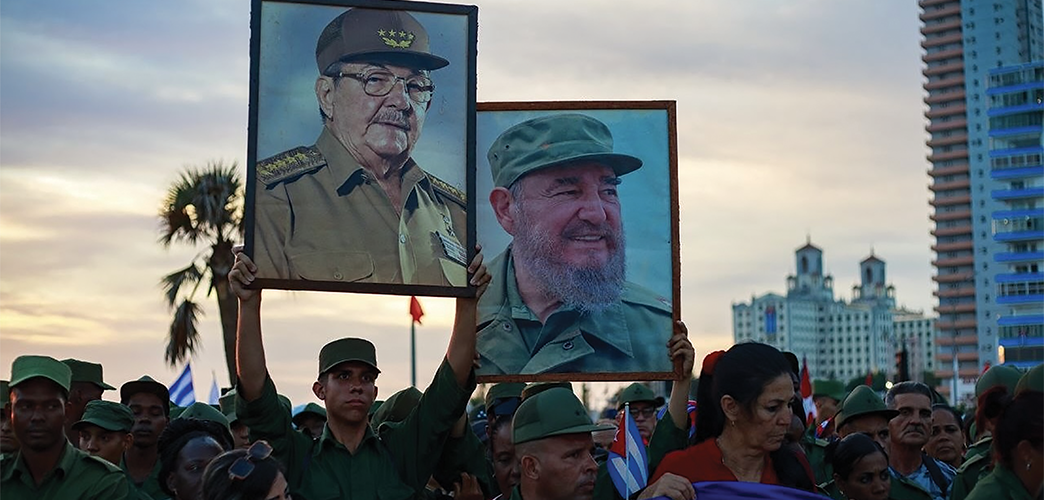
One of the leaders of the Cuban Revolution, general in the army, and former president of the nation Raúl Castro (94), was indicted by the US Department of Justice on Wednesday for “conspiracy and murder” during the downing of two private aircrafts in Cuban airspace in 1996. Castro was then the minister of the country’s Armed Forces.
Cuba has maintained that the two aircrafts in question were flying in the country’s airspace illegally and their presence was endangering the country’s national defences.
The aircrafts owned by a “terrorist organization” were shot down only after they failed to respond to multiple warnings issued and it was an act of self-defence under Cuba’s rights of territorial integrity.
The Trump administration has demanded Castro to surrender and face trial in the US. Cuba has called the indictment a pretext to launch military aggression against the country and an extension of the decades long economic blockade.
China reiterated that “unilateral sanctions or judicial proceedings do not have any validity in international politics.”
It claimed that it has consistently and firmly opposed “unilateral sanctions that have no basis in international law or authorization of the UN Security Council” and asked the US to “stop brandishing sanctions or judicial proceedings at Cuba and stop resorting to the threat of force at every turn.”
“China firmly supports Cuba in safeguarding its sovereignty and national dignity and opposing external interference,” Guo underlined.
China has been consistent in its support to Cuba. Since January this year it has sent over 60 000 tonnes of rice and provided over USD 80 million in emergency aid. It has also installed hundreds of megawatt of solar energy panels across the island to beat the regular disruptions in power services caused by the US blockade on energy supplies to the country.
Solidarity
Social and political movements in South Asia have come out and expressed their solidarity and support to Cuba and its people facing unprecedented attacks from the imperialist power.
The Communist Party of India (Marxist) issued a statement on Friday titled “Cuba is not alone” condemning the “shocking and illegal indictment of the historic leader of the Cuban Revolution,” Raúl Castro.
“This is a cynical political move without any legal basis and clearly stems from the inability of imperialism to break the will of the Cuban people who, despite tremendous suffering from the recent intensification of the economic blockade, have rallied together in defence of their Revolution,” the statement says.
CPI (M) called for greater popular mobilisation against the repeated US aggressions against Cuba.
The Mazdoor Kisan Party (MKP) in neighbouring Pakistan also issued a statement expressing its firm support and solidarity with Cuba.
“No one in the world believes the ridiculous claims of these self-appointed “guardians of the free world,” MKP said.
MKP asserted that the US blockade on Cuba “has nothing to do with democracy, the freedom of the Cuban people, or the protection of American citizens. It has only one purpose: to strangle the Cuban Revolution and reimpose American colonial domination over Cuba, just as they are attempting to do with Venezuela.”
MKP rejected the indictment of Raúl Castro “one of the architects of the Cuban Revolution, and a steadfast defender of socialism” calling it yet another attempt by the US to exert its imperialist pressure on Cuba to capitulate.
The MKP statement says that it believes that the Cuban cause is based on truth and justice, and its only “crime” is to seek an independent course of action in order to keep Cuban people, its land, and its resources “free from American imperialist exploitation and colonial domination.”
Ammar Ali Jan, leader of the Haqooq-e-Khalq Party (HKP) reminded the Pakistani government of the crucial intervention made by the Cuban doctors during the devastating earthquake in 2000 under Raúl’s leadership and demanded that it stand with Cuba, now facing assaults from US imperialism.
Sharif Shamshir, an activist of the Workers Party of Bangladesh (WPB), claimed that the so-called indictment of Raúl Castro is yet another attack on the Cuban Revolution.
He said it is a sign that the Trump administration does not believe in any law or code of conduct in international politics.
He claimed that the US is guided by the rules of the jungle in threatening to kidnap Castro, as they did with Nicolás Maduro in Venezuela.
He called on all democratic forces in the world to stand with Cuba and protest the imperialist aggression otherwise this will become a “norm” for most countries in the Global South.
Comment
Language Matters. Facts Matter More
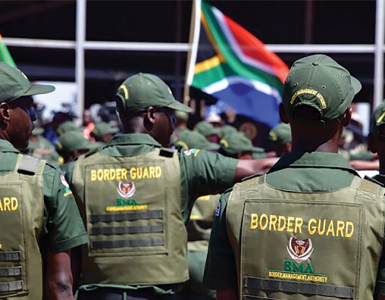
South Africa has every right to have a serious and honest conversation about undocumented immigration, border security and the pressures placed on public services, law enforcement and local communities. What it does not need is lazy, misleading and politically loaded framing that deliberately distorts that conversation.
In recent months, marches and protests against undocumented immigration in parts of South Africa have been quickly and casually labelled in some quarters as “anti-immigrant” or proof of a supposedly deep-seated national xenophobia. This broad-brush narrative may make for easy propaganda and social media outrage, but it does little to illuminate the real issues at the heart of the matter.
Let us be clear: Weekly SA Mirror does not condone violence, intimidation or attacks against immigrants — whether documented or undocumented. No grievance, however legitimate, should be pursued through lawlessness or mob action. Innocent people should never be targeted because of nationality or origin. But rejecting violence does not mean surrendering the right to discuss illegal immigration honestly.
There is a fundamental difference between hostility toward foreigners as people and public frustration over the failure of the state to manage borders, enforce immigration laws and maintain order. To deliberately blur that distinction is simply not helpful — but narrative manipulation.
South Africa is home to hundreds of thousands of immigrants, many of whom have lived, worked and contributed to society for decades. Many have integrated seamlessly into communities, built businesses, raised families and become part of the social fabric of this country without conflict. South Africans live alongside legal immigrants every day, often with mutual respect and coexistence.
To suggest that public concern over undocumented migration automatically translates into hatred of foreigners is dishonest and simplistic.
Across the world, sovereign nations enforce border controls, deport undocumented migrants and police immigration laws. The United States does it. European countries do it. Many African states do it — often far more aggressively. Yet somehow, when South Africans raise concerns about border management and illegal immigration, the conversation is too often framed as evidence of national moral failure.
Why the double standard?
A country has the right — indeed the duty — to know who enters its borders, who remains within them and whether its laws are being upheld. That is not xenophobia. That is governance.
More importantly, we all have a collective responsibility to debate this issue with candour and clarity — not to weaponise labels that inflame tensions and stigmatise an entire nation.
South Africa must reject violence. But it must also reject misinformation masquerading as moral clarity. Words matter. Definitions matter. Facts matter even more. To call every protest over illegal immigration “anti-immigrant” is not only inaccurate — it risks shutting down a legitimate debate that any democracy should be mature enough to have.