 WeeklySA_Admin
TRANSITION: Private higher education institution Rosebank College has rebranded as Rosebank International as it expands across Africa and advances its bid for full university status in South Africa amid growing calls for greater recognition of accredited private institutions…
By WSAM Reporter
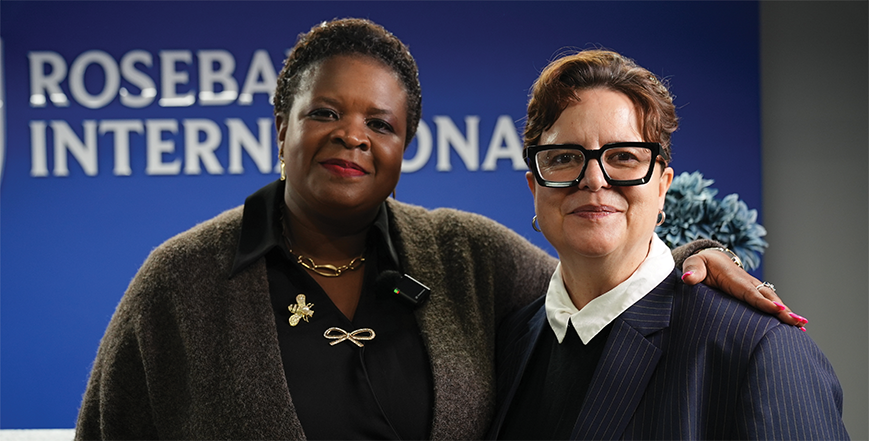
Rosebank College has unveiled a new identity as Rosebank International, marking the next phase in its journey towards full university status and signalling its growing footprint as a pan-African higher education institution.
The rebranding reflects the institution’s expansion beyond South Africa, including its academic presence in Ghana, while positioning Rosebank International for its planned transition to full university status in South Africa.
Founded in 1909, the institution now serves more than 43 000 students across South Africa and is broadening its postgraduate academic offering, including the introduction of its first Master’s degree programmes in 2026 and planned PhD programmes in 2027.
Professor Linda Meyer, managing director of Rosebank International and president of Rosebank International University College Ghana, said the move is ultimately about equipping students for meaningful participation in the economy and the world of work.
“Education is about expanding pathways into the workplace for students, ensuring graduates are work-ready and able to contribute both locally and globally,” Meyer said.
The move comes as South Africa’s higher education landscape undergoes policy shifts that could allow qualifying private higher education institutions to apply to use the title “university”, helping to address what many in the sector see as a long-standing recognition gap. Rosebank International said accredited private institutions already operate under the same quality assurance and accreditation standards as public universities, yet do not enjoy equivalent institutional status.
With public universities unable to absorb a large share of qualifying applicants, private higher education institutions are increasingly seen as playing an important role in expanding access through alternative study models, including part-time, online, distance and stackable qualifications.
The institution stressed that university status is not simply a branding exercise, but depends on meeting rigorous requirements in academic depth, governance, programme accreditation, research development, institutional capacity and student outcomes.
Pan-African expansion
Rosebank International’s rebranding also reflects its broader continental ambitions. The institution opened Rosebank International University College in Accra, Ghana, last year, creating a platform for academic collaboration, student exchange and cross-border engagement.
The Ghana expansion highlights different recognition pathways available to private higher education institutions across Africa, with the Ghana campus operating as a university college while the South African institution continues its pursuit of university status. Meyer said the broader ambition was to help build African academic capacity and produce graduates equipped to address the continent’s economic and social challenges.
“For too long, African students have been told that world-class education exists somewhere else.
We believe Africa must build institutions that can stand confidently in the global knowledge economy while remaining deeply connected to the realities, needs and aspirations of our continent,” she said. Rosebank International said the transition marks an institutional milestone while reinforcing its broader goal of expanding access to accredited higher education and strengthening African scholarship, research and innovation.