 WeeklySA_Admin
ACCOUNTABILITY: Missiles fall, children die, and the architects of war speak calmly from polished podiums. As violence is repackaged as ‘order’ and ‘security’, the world drifts deeper into a quiet acceptance of catastrophe — where the powerful act with impunity and the innocent pay with their lives…
By Themba Khumalo
I woke up with no desire to curse the world. I woke believing that somewhere beneath the roar of fighter jets and the murmur of press briefings, there was still a pulse of decency left in human beings.
I woke up believing that somehow, the human instinct to protect would finally overpower the instinct to destroy. But belief does not last long when it is force-fed images of children ripped open by metal manufactured continents away. Hope thins. It frays. Hope starts to feel childish, even embarrassing, like insisting on light while standing inside a burning house.
Belief does not gently fade; it is smashed to pieces by children coughing up dust where answers should be. By limbs flung aside like snapped dolls, abandoned without a second thought.
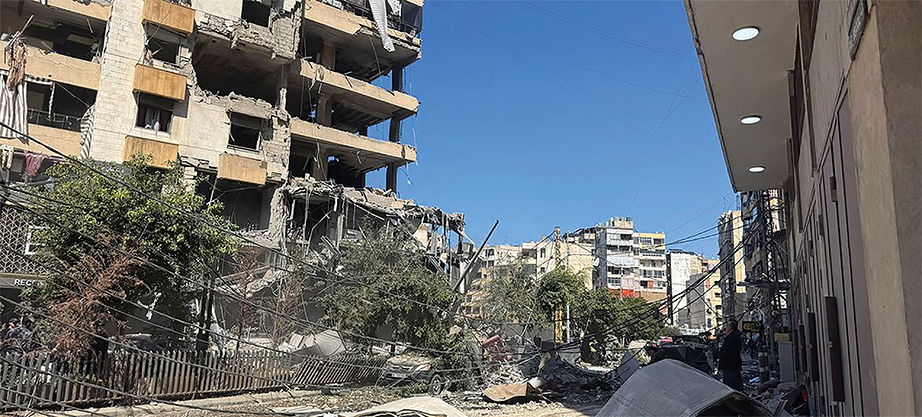
Smoke clawing its way into the sky — not drifting, not floating, but running, as if even the air knows it has stayed too long in a greedy and heartless space. The planet itself seems to recoil, ashamed, trying to pull its breath away from bullies who confuse domination with power and murder with order.
When the present turns more evil, and violence speaks with authority, sanity looks for something that once spoke back. I played Heal the World, by Michael Jackson, who did not mistake the world for gentle, but refused to let brutality be the only sound it made.
The song did not comfort me. The lyrics felt were once naïve — like childhood dreams cast in lullabies. Now they sound like a prayer whispered into a room full of guns, like a hymn drowned out by the click of triggers.
The song asks a question the world keeps refusing to answer: Do we care enough? Or do we only care when caring is convenient — when it costs nothing, when it does not interrupt the machinery of profit and power?
We keep saying the world is broken and needs fixing. However, we never agree on what “fixing” means. We talk about stability, about order, about peace — yet every second that dream thickens into something darker. We have the resources to end hunger and the knowledge to close the obscene gulf between filthy wealth and brutal poverty.
Instead, bullies with bombs swagger across the skies flexing atomic muscle and raining death from the sky. They call it ‘peace’. They call it ‘restoring order’. They wrap destruction in the language of responsibility, as if rubble and blood could ever be part of any normal world. But there is no order in a child’s body pulled from rubble. There is no peace in a school turned into a grave.
Bullies strike from heights where screams cannot reach them. They drop death like paperwork and baptise it as order. But there is no order in a mother clawing through rubble with bleeding hands, calling a name that will never answer.
Malala Yousafzai, Nobel Peace Prize laureate, wrote on her X account: “They were girls who went to school to learn, with hopes and dreams for their future. Today, their lives were brutally cut short. Justice and accountability must follow. All states and parties must uphold their obligations under international law to protect civilians and safeguard schools.”
While American and Israeli jets carved a path of destruction through Iranian cities, innocence was pulverised beneath the weight of their so-called ‘precision’ strikes. By the end of the day, more than a hundred of them were dead. Later, officials stood behind polished podiums and fed the world the same empty words.
What kind of world order needs the blood of children to keep functioning?
We are told to brace for escalation — as though escalation were an act of God, not a choice made by human beings who will never smell the smoke or hear the screaming.
The day before the bombs fell, diplomacy was alive. Iran’s foreign minister was in Geneva, agreeing in principle to zero uranium stockpiling. Peace was not a fantasy. It was close enough to touch.
This was not a failure of diplomacy. Diplomacy was executed — shot in the head and dumped in a ditch, while its killers spoke solemnly about necessity.
We have seen this before. Always an imminent threat. Always urgency. Always just enough fear to make murder sound reasonable. In 2003, the lies came with theatre — vials, speeches, solemn faces. This time, a post and an ultimatum were enough. The performance has thinned because it no longer needs to persuade. Ordinary people have been written out of the equation.
A war launched with no consideration for life, no accountability, no shame. Just confidence that the suffering will land elsewhere.
It lands first on the children, taking the full weight of decisions made in distant rooms, their lives crushed before they had learned how to live them properly. It spills into families in kitchens where chairs will remain empty, into nights where sleep will no longer come without bargaining with memory.
It travels outward, quietly but relentlessly, to workers across the Global South, where the price of bread and fuel will rise like an unannounced punishment for a crime they did not commit. And it settles, as it always does, on Africans who had no voice in this war — people who were not consulted, not counted, not considered — yet who will carry its economic wounds in their pockets, their stomachs, and their futures long after the bombs have stopped falling.
We are no longer racing toward catastrophe but settling into it. A permanent, low-grade barbarism. Endless violence that costs its authors almost nothing. A world that absorbs atrocity, degrades quietly, and carries on.
And somewhere, Michael Jackson is still singing about healing the world — his voice hovering like a fragile, trembling bandage over a wound we keep tearing open, again and again, with deliberate hands.
* The writer, Themba Khumalo, is a renowned columnist, political commentator and former editor
Comment
New Vaccine Needs Public Trust To Succeed
The possibility of a universal respiratory vaccine — one that could protect against colds, flu, COVID-19 and even future pandemic viruses — represents one of the most intriguing scientific developments to emerge in recent years. If successful, such a breakthrough could fundamentally change the way humanity prepares for global health crises.
For developing nations in particular, the promise is profound.
The COVID-19 pandemic exposed the deep inequalities that exist in global health systems. While wealthier countries secured large quantities of vaccines early, many nations in Africa, Asia and Latin America were forced to wait months for adequate supplies. By the time vaccines arrived in meaningful quantities, several waves of infection had already swept through vulnerable populations.
That experience left an imprint that goes beyond public health. It also shaped public perception. For many people in the Global South, the pandemic highlighted uncomfortable questions about fairness, access and the influence of powerful pharmaceutical companies and governments in determining who receives life-saving medicines first. These concerns were further complicated by the flood of misinformation that circulated during the pandemic, particularly on social media platforms where conspiracy theories about vaccines spread rapidly.
The result has been a phenomenon now widely recognised by public-health experts: vaccine hesitancy. Hesitancy does not necessarily mean outright rejection of science. Often it reflects uncertainty, mistrust, or frustration with institutions that people feel have failed them in the past. In many cases, communities simply want greater transparency about how vaccines are developed, tested and distributed.
This is why the development of a potential universal respiratory vaccine, promising as it may be, will face challenges that extend beyond laboratories and clinical trials.
Scientific innovation alone will not guarantee public acceptance. Building confidence in new vaccines will require openness about safety data, honest communication about risks and benefits, and a global commitment to equitable access. If new medical breakthroughs once again become concentrated in the hands of a few wealthy countries, scepticism will only deepen.
There is also an opportunity here.The lessons of COVID-19 have shown that public trust is not a luxury in global health — it is a necessity. Governments, scientists and international health organisations must recognise that credibility is earned through transparency and fairness, not simply through scientific authority.
If the universal vaccine currently under development eventually proves safe and effective, it could become a powerful tool in humanity’s defence against future pandemics.
But science can only go so far on its own. For breakthroughs to truly save lives, they must travel the final and most difficult distance — the distance between scientific discovery and public trust.