 WeeklySA_Admin
SOUNDTRACK: From electrifying international performances to moving tributes to South African legends, the 27th Standard Bank Joy of Jazz brought generations together for two nights of music, memory and connection…
By Jacob Mawela
The music travelled across continents, but its heartbeat remained unmistakably South African.
Over two memorable evenings at the Sandton Convention Centre, the 27th Standard Bank Joy of Jazz brought together international stars, homegrown masters and emerging musicians in a celebration that gave Heritage Month a stirring soundtrack.
Held on September 25 and 26, the festival featured more than 50 local and international artists across four stages. Its appeal lay both in the breadth of its programme and in the encounters it created: between musical traditions, between performers and audiences, and between the pioneers of South African jazz and those building on their legacy.
Tributes to Kippie Moeketsi, Hugh Masekela and Busi Mhlongo anchored the programme in that rich inheritance. Khaya Mahlangu honoured Moeketsi, Thandiswa Mazwai paid tribute to Masekela, while Buhlebendalo Mda, Zawadi YaMungu and Xolisa Dlamini celebrated Mhlongo.
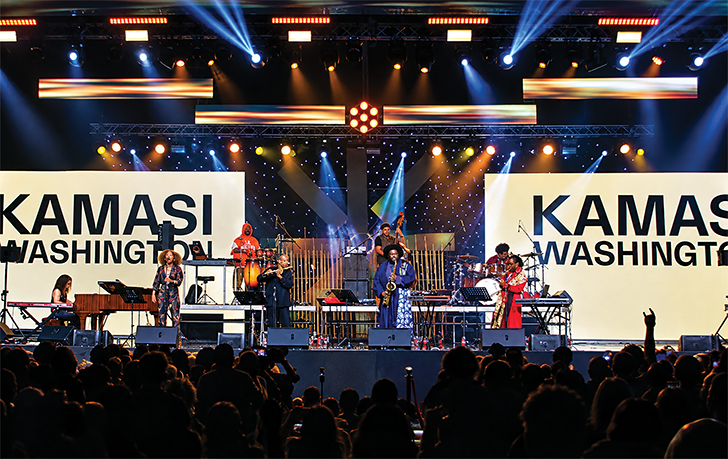
Alongside these performances, Gabi Motuba and Ndumiso Manana shared the festival spotlight with a formidable international line-up. Among the visiting artists were Benin’s Angélique Kidjo, American saxophonist Kamasi Washington, Lebanese-French trumpeter Ibrahim Maalouf, Canadian-South African singer Lorraine Klaasen, Cape Verdean vocalist Carmen Souza and the Anglo-American neo-soul duo Floetry.
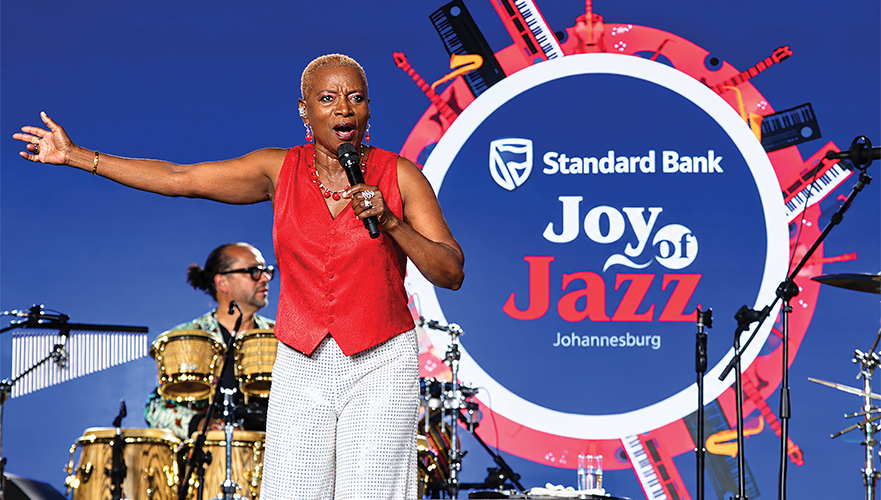
Maalouf’s collaboration with the Trumpets of Michel-Ange delivered one of the festival’s most exuberant performances. The ensemble’s energy drew an enthusiastic response, fulfilling the anticipation surrounding a show the organisers had promoted as an opportunity to make musical magic in Johannesburg. On the Conga Stage, Kidjo demonstrated her enduring ability to command an audience. Among those watching were former president Thabo Mbeki and his wife, Zanele.
Her performance gained a distinctly South African resonance through appearances by the Soweto Gospel Choir and Vusi Mahlasela. A rendition of Miriam Makeba’s Pata Pata further strengthened the connection between the visiting star and the musical heritage being celebrated around her.
If Kidjo’s set showed the power of a seasoned international performer, Mahlangu’s tribute to Moeketsi affirmed the vitality of South Africa’s own jazz elders.
Opening Saturday’s programme on the Dinaledi Stage, the veteran saxophonist performed with an ensemble of young South African musicians in a set titled Kippie Moeketsi 101 Centennial Jazz Tribute.
The performance offered a moving acknowledgement from one saxophonist to another. It also recalled Mahlangu’s tribute at the Market Theatre in 2025, marking the centenary of Moeketsi’s birth.
With younger players sharing the stage, the tribute became a living expression of musical continuity. Joy of Jazz was as much a celebration of those who laid the foundations as a showcase for the musicians carrying their legacy forward.
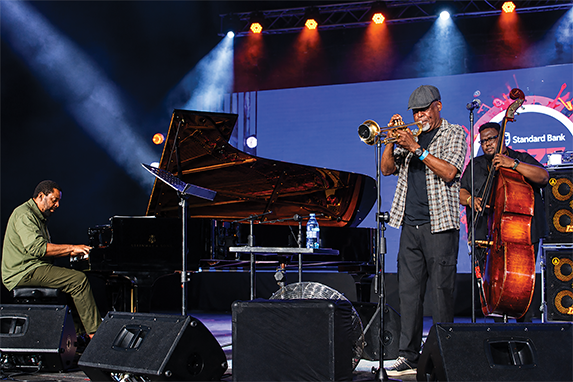
That spirit also shaped trumpeter and flugelhorn player Sydney Mavundla’s early Saturday evening performance on the Conga Stage.
Joined by pianist Afrika Mkhize, double bassist Amaeshi Ikechi and drummer Sphelelo Mazibuko, Mavundla drew on his 2024 album, Dirge for Our Fathers.
Dedicated to the fathers and elders who mentored musicians and helped shape South African and global jazz, the set brought a reflective quality to the evening. Its warmth and emotional depth eased an appreciative audience into the second night’s programme.
Elsewhere, festivalgoers moved between floors and stages, choosing among overlapping performances. On the Mbira Stage, Buhlebendalo Mda, known for her work with The Soil, joined Zawadi YaMungu and Xolisa Dlamini in honouring Busi Mhlongo.
The tribute placed Mhlongo’s legacy within a festival whose musical reach extended beyond conventional jazz boundaries, embracing the voices and traditions that continue to enrich the genre.
Radio personalities helped guide audiences through the programme, with Nothemba Madumo on the Dinaledi Stage, Nonn Botha on Conga, Bridget Masinga on Diphala, and Ntombi Phiri and Paul Mnisi on Mbira.
By the early hours of Sunday, as Mazwai and Washington concluded their sets on the Mbira and Dinaledi stages respectively, the festival had delivered another expansive celebration of live music.
Beyond the performances, the venue buzzed with activity. Hospitality areas, radio broadcasts, a jazz vinyl kiosk, food and beverage stalls and merchandise sellers formed part of the wider festival experience.
The programme also reached beyond the two main evenings. Associated events included Jazz for Young People, the Ignite Her Soul luncheon celebrating women in South African music, the Jazz Wise Youth Music Business Workshop and the Free the Jazz Concert on the Sandton City rooftop on Heritage Day.
These activities broadened the festival’s role, creating space for young musicians, music business conversations and audiences outside the main concert programme.
In a statement, headline sponsor Standard Bank said the festival had grown from 1,800 attendees in 2000 to more than 25 000 festivalgoers annually. Those figures describe its longer-term growth rather than a confirmed attendance total for this year’s edition.
For T-Musicman chief executive and festival producer Mantwa Chinoamadi, its purpose was “about creating moments of connection across generations, cultures and geographies”.
Across two nights of exuberance, reflection and remembrance, that connection found its fullest expression in the music.