 WeeklySA_Admin
GROWTH: Yolisa Kepe is taking her fruit concentrates, pantry goods and botanical skincare from craft markets to the retail shelf, with plans to create jobs and grow demand for local produce…
By WSAM Reporter
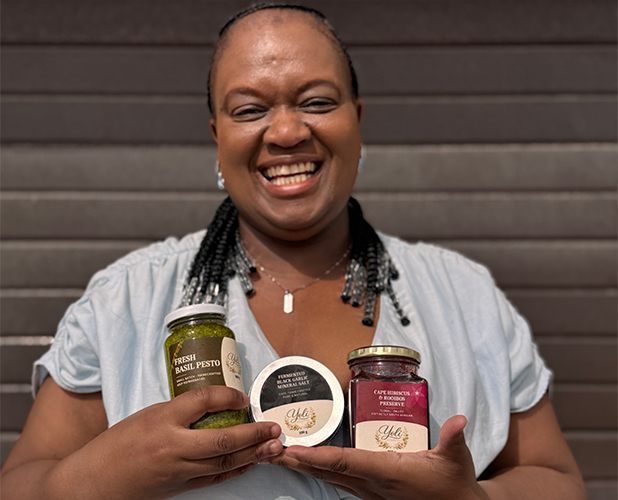
Cape Town entrepreneur Yolisa Kepe sells fruit juice concentrates, cordials and body butters at food and craft markets and through WhatsApp and TikTok. A year after starting her business, the 38-year-old is preparing for her next step: getting those products onto retail shelves and into hospitality businesses.
Kepe has built two brands around locally sourced ingredients. Sbahle sells pure fruit juice concentrates, while Yoli Botanicals offers cordials, preserves and seasonings alongside body butters, masks, serums and haircare products. She uses ingredients such as baobab, buchu, marula and rooibos, as well as fresh fruit, vegetables and herbs.
Her business model is to add value to local produce through processing, packaging and branding. As sales grow, she wants the business to buy more from local farmers and suppliers and create jobs. That ambition, she says, comes from growing up in Khayelitsha and seeing how unemployment narrowed people’s choices.
“I have seen first-hand the challenges that many people face, particularly unemployment and limited economic opportunities,” she said“This has contributed to my desire to build something of my own that could eventually become bigger than me and create opportunities for others.”
I want to build a business that can contribute to economic development by creating jobs and supporting local suppliers and farmers…
Kepe recently graduated from Stellenbosch Business School’s Small Business Academy, a nine-month programme that combines training in areas such as financial management, marketing and business planning with practical workshops and mentoring.
She said the programme helped her decide how to position her products and structure the business as it grows.
One result was the decision to establish Yoli Botanicals as a separate brand from Sbahle.
“One of the biggest lessons has been understanding that entrepreneurship requires more than passion,” she said. “You need structure, strategy and informed decision-making.”
Kepe currently sells mainly to individuals and families. She plans to expand online sales and supply retailers and hospitality businesses across South Africa, with other African markets a longer-term goal.
Building skills
Professor Armand Bam, who heads the academy, said the Standard Bank-sponsored programme was designed to help entrepreneurs turn their technical skills into businesses they could run and sustain.
Mentorship and business development support continue after graduation through the academy’s Growth Initiative.
Stellenbosch Business School says the academy has reached more than 460 entrepreneurs across the Western, Eastern and Northern Cape over 14 years. Its ongoing research indicates that more than 80% of participants are still trading and becoming more profitable, while more than 90% have added full-time jobs.
Kepe’s advice to aspiring entrepreneurs is to start with what they have and seek help early. “Don’t be afraid to start small,” she said. “Know that you also don’t have to figure everything out alone. Seek mentorship, education and support.”
The programme targets entrepreneurs and small businesses in disadvantaged areas, with classes of about 25 participants each in the Western Cape and Eastern Cape provinces annually.
The programme includes training and practical workshops in business essentials, marketing, financial management, IT and presentation skills, and business plan development, with pro bono mentoring by Stellenbosch Business School alumni.
Successful participants obtain an NQF Level 6 certificate from Stellenbosch University.
Participants are admitted after a strict selection process, including an aptitude test and an interview. Apart from a minimal initial commitment fee paid by participants, the programme is fully sponsored