 WeeklySA_Admin
NEGLECT: Overcrowded, mud brick school with close to 100 learners per class in Thohoyandou and boasting 95 percent matric pass-rate last year, has waited for years for education authorities to upgrade the building…
By Thembi Siaga and WSAM Reporter
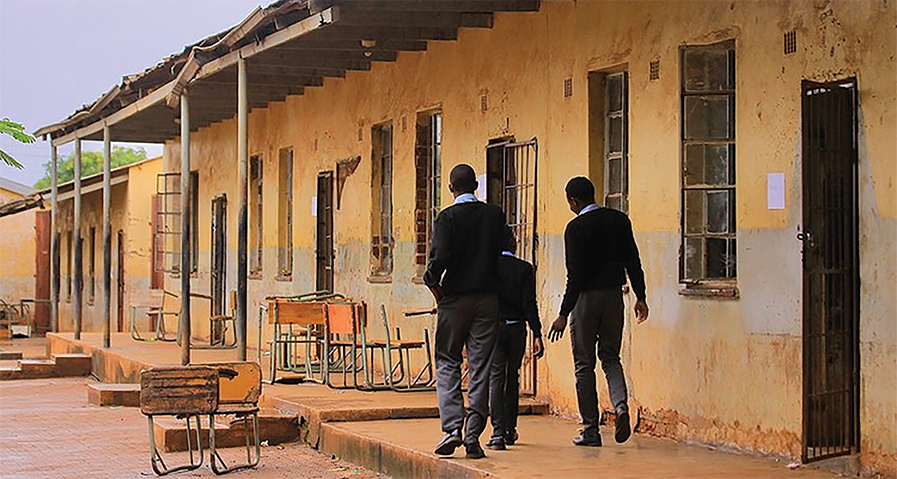
More than 2 000 learners at Lwamondo Secondary School in Thohoyandou are being taught in run-down classrooms originally built by parents in 1958 with mud bricks.
Many of the school’s 20 classrooms are cracked, without windows and the roofs are leaking, making learning miserable during rainy seasons.
In 1968, parents fired mud bricks to strengthen the structures. They built eight classrooms and added more over time with donations from local businesspeople.
Grade 8 classrooms are overcrowded, with more than 90 learners per class. Six mobile classrooms, provided in 2020, accommodate Grade 12 learners. Broken desks and chairs add to the daily challenges. Only three classrooms have commercial brick, built with donations. The school does not have a single brick building built by the government. The only properly built facilities from the government are the toilets.
Despite this, Lwamondo achieved a 95 percent matric pass rate for 2025.
Grade 11 learner Ndou Khodani described the classrooms as “unbearable”. He said inhaling dust from the broken ceiling has given his classmates sinus problems.
“These classrooms seem like a death trap for us. The situation is bad. We learn while water is coming in. We learn in fear,” he said.
“The classrooms are a threat to our children,” said Muthupheyi Ramakuwela, deputy chairperson of the school governing body (SGB).
“We have been waiting for more than 10 years for proper buildings.”
The local community has tried to fill the gaps, raising funds and doing repairs themselves.
The SGB is urging the department to advertise a tender for the immediate construction of 32 classrooms and administration blocks as promised years ago.
Limpopo Department of Education spokesperson Mike Maringa blamed the delay on a significant provincial backlog and budgetary limitations.
Maringa said budgets were allocated over the past five years for planning and preparatory work. He said plans for Lwamondo, allocated to the Independent Development Trust, are at an advanced stage, and construction is scheduled for the next financial year. Furniture would also be provided.
He said the department prioritises schools for infrastructure upgrades by considering the need, risk, compliance with norms, overcrowding, and the absence of basic services.
“Lwamondo Secondary School has been assessed against this framework and identified as requiring additional classrooms and associated infrastructure,” said Maringa.
The Independent Development Trust has been engulfed in major corruption scandals, most notably a 2026 bribery sting involving CEO Tebogo Malaka, who resigned ahead of a disciplinary hearing. Investigations by AmaBhungane revealed multimillion-rand contracts awarded to family members, tender fraud, and exploitation of EPWP workers.
Poor Cape school infrastructure
Meanwhile, Basic Education Minister Siviwe Gwarube has urged the Eastern Cape Education Department to utilise allocated funds to improve school infrastructure in rural schools in the province. She made the plea earlier today while visiting Fezeka Primary School in Peddie, in the Amathole District, as part of the Department’s Back to School Campaign.
She says improved infrastructure will bridge the gap between rural and urban schools.
“It’s important that whatever the Treasury allocates to us is spent effectively, and every single additional grant must be spent accordingly. We are almost at the end of the financial year. We recently had a meeting of the Council of Education Ministers, which includes all the MECs, the 9 MECs, and I implored them to ensure that each and every one of them makes sure their grants are spent and spent well.
What we don’t want to see is physical dumping. We want to see effective planning. We want to see the infrastructure backlog being eradicated.”
R129 billion needed
At a briefing before the National Council of Provinces (NCOP) last year, in Cape Town, Gwarube painted a gloomy picture of the current state of national school infrastructure, saying:
“Far too many learners still face daily risks to their health and safety because of inadequate school infrastructure. No child should have to use a dilapidated or dangerous toilet, sit on the floor without a desk, or study in a crumbling school building that poses a threat to their well-being,” said the Minister. She informed the NCOP that an estimated R129 billion is required to address the critical infrastructure backlog currently affecting schools across the country”.
The backlog includes the eradication of unsafe pit latrines, the replacement of mud schools and unsafe structures, and the provision of essential infrastructure such as desks, proper sanitation, classrooms, and fencing to ensure that all learners have a safe and conducive learning environment, Gwarube added. – GroundUp/additional reporting by SABC News