 WeeklySA_Admin
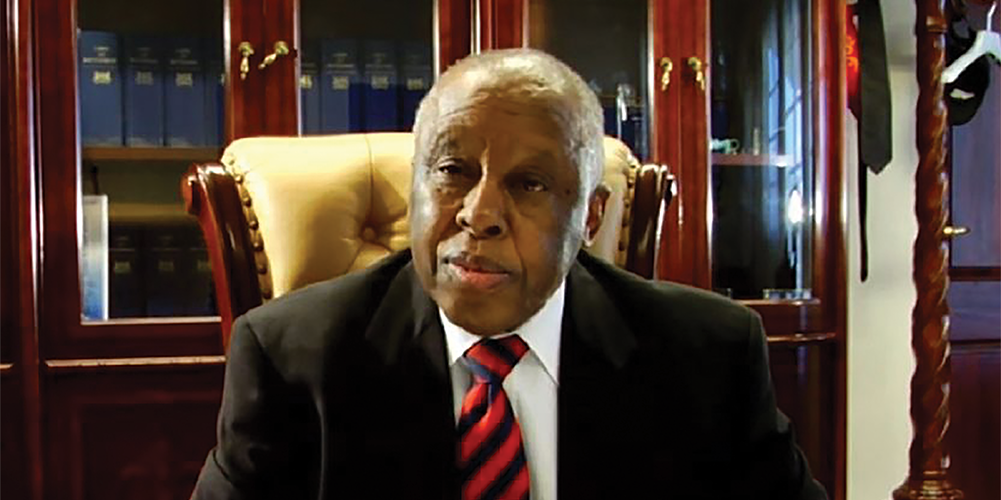
DISCIPLINED: Former Botswana president Festus Mogae, celebrated for transforming Botswana into a model of stability, economic discipline and democratic governance while leading one of Africa’s boldest fights against HIV/Aids, has died at the age of 86…
By Lehlohonolo Lehana
Botswana and the African continent are mourning the passing of former president Festus Mogae, a leader widely admired for his integrity, economic stewardship and decisive response to the HIV/Aids crisis that once threatened the future of his country. He died at the age of 86 after a period of ill health.
Current Botswana President Duma Boko confirmed Mogae’s death and declared three days of national mourning in honour of a man many regard as one of Africa’s finest democratic leaders.
For many across the continent, Mogae represented a rare brand of African leadership — modest, disciplined and deeply committed to public service.
Even in retirement, he often joked that the only thing he missed about being president was travelling in the presidential helicopter.
Behind the humour was a leader who helped establish Botswana as one of Africa’s most stable democracies and strongest economies.
Born in Serowe on August 21 1939, Mogae came from humble beginnings. His father was a headman of the Batalaote clan, and the family survived through farming and livestock rearing.
His educational journey began late because his parents could not afford to send him to school earlier. Mogae only started formal schooling at the age of 11.
That delayed start did little to slow his rise.
After completing secondary school at Moeng College, he pursued further studies in Britain, obtaining A-Level qualifications in London before studying at University College Oxford and later earning a Master’s Degree in Development Economics from the University of Sussex. Those who knew him often described him as intellectually gifted, calm under pressure and quietly determined.
Mogae entered Botswana’s civil service shortly after the country gained independence in 1966. He joined the Ministry of Finance and Development Planning in 1968 and quickly became one of the key architects of Botswana’s economic transformation. At a time when many African economies struggled with instability and debt, Botswana steadily built a reputation for fiscal discipline, accountable governance and sustained growth driven largely by diamond revenues.
Mogae’s expertise earned him international recognition. In 1976, he joined the International Monetary Fund in Washington DC as Executive Director for Anglophone Africa.
He later returned home to serve as Governor of the Bank of Botswana and Permanent Secretary to then-president Quett Masire before entering politics under the ruling Botswana Democratic Party (BDP). In 1998, Mogae succeeded Masire as Botswana’s third president, inheriting a country regarded as one of Africa’s success stories but facing mounting social and health pressures.
His presidency would ultimately become defined by the HIV/Aids epidemic.
At the time, Botswana had one of the highest HIV infection rates in the world. Rather than denying the scale of the crisis — as some governments elsewhere on the continent were accused of doing — Mogae confronted it directly.
In a landmark address to the United Nations General Assembly in 2001, he described HIV/Aids as a national emergency threatening the survival of Botswana’s people. Under his leadership, Botswana launched one of Africa’s most ambitious antiretroviral treatment programmes, dramatically expanding access to life-saving medication and reducing infection and mortality rates.
He also pushed strongly for measures aimed at preventing mother-to-child transmission and continued advocating for HIV/Aids treatment even after leaving office.
Observers say his willingness to speak openly about the epidemic helped change attitudes toward HIV/Aids in Africa and encouraged greater international cooperation. Despite the health crisis, Mogae maintained Botswana’s reputation for economic stability and democratic governance.
He championed policies aimed at tackling poverty and unemployment while continuing Botswana’s long-term development strategy known as Vision 2016.
Perhaps one of the defining moments of his presidency came not during his years in office, but when he chose to leave. In 2007, Mogae announced he would step down at the end of his constitutional term, and in April 2008, he peacefully handed power to his vice-president, Ian Khama.
At a time when some African leaders were accused of extending their rule or altering constitutions to remain in power, Mogae’s smooth exit strengthened Botswana’s democratic credentials and earned him international respect.
Later that year, he was awarded the prestigious Ibrahim Prize for Achievement in African Leadership, recognising exceptional African leaders who demonstrate good governance and leave office democratically. Former United Nations secretary-general Kofi Annan praised Mogae’s “outstanding leadership” in guiding Botswana through one of the darkest periods in its modern history.
French President Nicolas Sarkozy also honoured him with the Grand Cross of the Légion d’honneur for what he described as exemplary leadership and democratic governance.
Even after retirement, Mogae remained active in continental and global affairs. He joined the advisory board of TeachAids in 2010 and continued participating in development, governance and peace-building initiatives across Africa.
He also served as a trustee of the Rhodes Trust and became a Foreign Honorary Member of the American Academy of Arts and Sciences.
Throughout his life, Mogae consistently rejected what he described as “Afro-pessimism” — the tendency to portray Africa only through failure and crisis. Instead, he believed the continent was steadily progressing through democracy, economic reform and stronger institutions.
He is survived by his wife Barbara and their three daughters — Nametso, Chedza and Boikaego.
For Botswana, Mogae leaves behind the legacy of a leader who governed with restraint, intellect and humility. For Africa, he leaves a reminder that principled leadership and peaceful democratic transitions remain possible. – Fullview/Additional reporting by Len Maseko