 WeeklySA_Admin
PRAGMATISM: South Africans have seen this movie before: a business-friendly saviour, applauded by markets, who stabilises elites while inequality hardens and productive transformation stalls…
By Ido Lekota
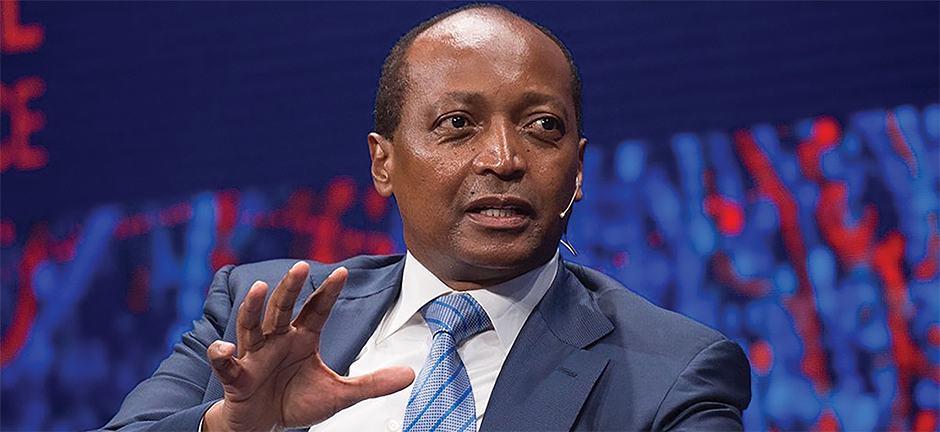
Billionaire Patrice Motsepe’s mooted presidential bid arrives wrapped in a familiar promise: competence over chaos, markets over mismanagement, reassurance over rupture. South Africans have seen this script before.
When Cyril Ramaphosa replaced Jacob Zuma, the bar was lowered so dramatically that sounding reasonable was mistaken for governing well. What followed was not renewal but managed decline — stability for elites, stagnation for everyone else.
Motsepe’s ascent risks repeating this pattern, not because he lacks intelligence or resources, but because the country has been conditioned to confuse extractive wealth with transformative leadership.
Like Ramaphosa, Motsepe embodies the pro-market technocrat favoured by corporate leaders weary of ANC patronage and economic stagnation. His vast mining wealth and ANC insider status position him as a stabilising force amid crises—load-shedding, unemployment above 33%, and 1% GDP growth—promising investor-friendly reforms and anti-corruption rhetoric.
Yet history warns of peril. Ramaphosa, once hailed as Mandela’s heir apparent and investors’ top pick for his commerce savvy, saw “Ramaphoria” morph into austerity, slow land reform, and persistent inequality. Ordinary citizens remain disillusioned as elites thrive.
Motsepe’s presidency risks repeating this pattern, prioritising boardroom gains over transformative policies for the poor, widening the gulf between ANC tycoons and township realities.
In essence, the bar was lowered when Ramaphosa replaced Zuma. This raises concerns about ordinary South Africans’ support for Motsepe’s candidacy, which exemplifies the “Golem Effect” a self-fulfilling prophecy where chronically low expectations—born of decades of unfulfilled promises—lead communities to accept inadequate solutions.
Golem Effect
Far from mere desperation, this stems from the elite’s perversion of the “patriotic bourgeoisie” ideal, concentrating wealth in extractive sectors while neglecting productive transformation.
The Golem Effect—originates from the folklore clay giant animated by rabbis but doomed to rampage destructively—manifests when repeated failures lower aspirations.
In South Africa, apartheid’s legacy set the stage: Black labour fuelled white prosperity, yet ownership remained exclusionary.
Post-1994, the ANC’s Freedom Charter vision—”the people shall share in the country’s wealth”—promised redress. Instead, unemployment over 33% in 2026, youth joblessness nearing 60%, and Gini coefficients exceeding 0.63 have bred resignation, reframing mining billionaires as national saviours. Motsepe’s African Rainbow Minerals (ARM) employs thousands in Rustenburg—why not the Union Buildings?
Unfortunately, this scenario ignores how extractives perpetuate dependency on volatile commodities, not sustainable growth.
Thabo Mbeki’s late-1990s “patriotic bourgeoisie” concept aimed to forge a Black capitalist class committed to national development. BEE and Mining Charters mandated 26% Black ownership by 2014 as a bridge to inclusion. Motsepe exemplified early success, scaling ARM from 1997 AngloGold mines into a multibillion-rand empire in platinum, coal, and iron ore. Ramaphosa mirrored this via Shanduka’s Lonmin and MTN stakes. The theory: reinvest in manufacturing, agriculture, services—diversifying beyond the minerals-energy complex.
Reality diverged sharply. Elite capture turned the ideal parasitic. BEE concentrated wealth among 100-200 connected families via opaque trusts recycling benefits upward. ARM’s Glencore partnerships extract value—platinum exports exceed R160 billion annually—yet contribute little to downstream battery manufacturing.
Philanthropy like Motsepe’s “2013 Giving Pledge” burnishes images but substitutes for structural investment: clinics and bursaries aid symptoms, not factories employing millions. Manufacturing shrank to 13% GDP; imports dominate; inequality rivals pre-1994. Marikana 2012—34 miners killed under Ramaphosa’s Lonmin influence—exposed “patriots” aligning with capital over labour.
This capture thrives on Golem dynamics: elites push “gratitude for morsels” narratives; masses battered by load-shedding and grant queues internalise diminished horizons. Motsepe succession whispers amplify it—supporters project balance-sheet competence, ignoring industrial policy silence. COVID-19 and 2026 stagnation deepened quixotic hope yielding resigned pragmatism.
Meanwhile, globally SA lags economically with its contemporaries such as Vietnam’s manufacturing FDI hitting 25% of GDP; and Ethiopia’s industrial parks exporting R16 billion worth of textiles yearly.
Breaking this vicious cycle demands deliberate policy interventions including:
Amending BEE codes to prioritise productive sectors; offering 15-year tax holidays and subsidised utilities for Special Economic Zone in apparel, Electric Vehicles, and agro-processing, while mandating 50% local content. Channelling IDC funds into credit guarantees, mirroring Indonesia’s nickel downstreaming that captured 30% more value. IDC conducting BEE compliance audits and clawing back funds from non-performers.
Ramaphoria
Forging public-private-philanthropy hybrids – whereby philanthropy shifts from handouts to catalytic risk capital: For example Motsepe Foundation pilots could fund SME linkages in KZN co-ops, scaling Rwanda-style tea models that doubled incomes. Enforcing accountability on presidential candidates to disclose productive investments, not just philanthropy.
What are the chances these reforms would happen under Motsepe – whose wealth stems from extractive policies he helped shape?
If South Africa once again elevates a mining billionaire as its last rational option, it will not be because alternatives do not exist, but because expectations have been systematically crushed. The danger of a Motsepe presidency is not personal failure; it is structural continuity — the entrenchment of an economy that extracts, exports, and excludes while presenting stability as progress.
When a society learns to expect less, it begins to reward less. That is the true legacy of Ramaphoria — and the real warning embedded in the Golem Effect.
* Ido Lekota is a political commentator, former political editor