 WeeklySA_Admin
MILESTONE: From a leap of faith in 2006 to two decades of hustling across borrowed cellars, Painted Wolf’s journey is a story of risk, resilience and the relationships that made survival possible…
By Len Maseko
Boutique producer Painted Wolf Wines has marked its 20th harvest with a farewell to its long-time Simondium base, signalling a strategic shift in operations as the business consolidates production in Stellenbosch.
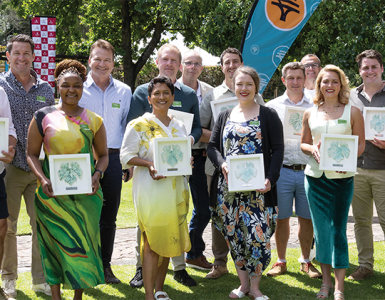
The milestone was celebrated at the company’s “Den” tasting room, located on the historic Donkerhoek farm, where founders and supporters gathered to reflect on a two-decade journey defined as much by improvisation and partnerships as by winemaking on April 18.
Take the risk, build the relationships, and keep moving — even when it means letting go of something you fought hard to build…
Founder Jeremy Borg said the anniversary offered a moment of “unfiltered gratitude” for the people and places that sustained the business from its earliest days.
Painted Wolf Wines was conceived in 2006 while Borg was working in the United Kingdom, inspired by a conservation story on the reintroduction of painted wolves in KwaZulu-Natal. He returned to South Africa the same year, leaving a senior corporate role to launch the venture with personal savings and support from a small group of investors.
The company’s first grapes were harvested in January 2007. But the start was far from smooth.
With no permanent cellar secured, the fledgling operation faced an immediate logistical challenge. “We had the grapes, the equipment and the vision — but nowhere to make the wine,” Borg recalled.
A breakthrough came through a personal connection. Mark and Ros Groeneveld offered the use of a modest, underutilised cellar on Donkerhoek farm. The space became the company’s first production base, hosting what Borg described as a hands-on, community-driven inaugural vintage, with friends and family assisting in the process.
That arrangement laid the foundation for a long-standing relationship between Painted Wolf and the Groeneveld family, even as the business outgrew the facility within two years.
Over the next two decades, Painted Wolf operated across multiple sites, producing wine in at least 10 different locations and storing stock in several others — an unconventional model that Borg said ultimately strengthened the company’s adaptability and knowledge base.
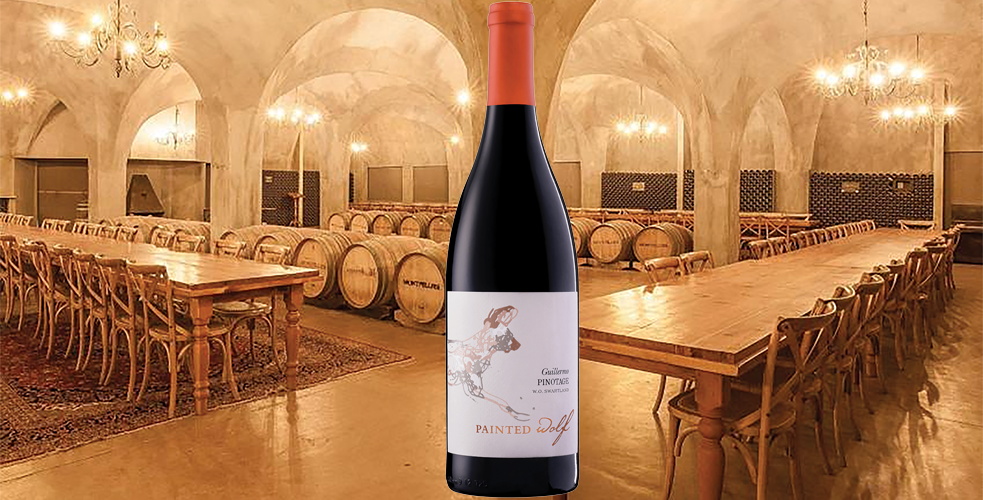
The connection to Donkerhoek endured. The former Drakenstein Co-operative cellar on the farm — once abandoned after closing in the 1990s — was later acquired and revitalised by its new owners. In 2021, Painted Wolf established its “Den” tasting room in the refurbished space and resumed limited on-site production.
However, a new partnership with Jordan in Stellenbosch has prompted a shift towards centralised production. Borg said the move reflects a broader effort to streamline operations and improve efficiency.
As part of that transition, the Den facility will close at the end of May 2026, bringing to an end a 20-year association with the Groeneveld family.
Borg paid tribute to Mark and Ros Groeneveld for their role in the company’s development, describing their support as “foundational” to Painted Wolf’s survival and growth.
While the closure marks the end of a chapter, Borg indicated that the company’s next phase will build on the same principles that carried it through its formative years — resilience, collaboration and a willingness to adapt. “For us, this has always been about more than just making wine,” he said. “It’s about the people who made it possible”.