 WeeklySA_Admin
SCRUTINY: From unvetted airport security chief to anti-corruption power broker, O’Sullivan’s rise reflects not renewal in South Africa’s justice system — but the deep institutional fractures still haunting the democracy…
By Ido Lekota
FROM his improbable ascent in South Africa – including being appointed unqualified airport security chief to self-styled corruption crusader – Paul O’Sullivan is symbolic of deep fissures in a nation desperate for credible institutions.
In a country reeling from state capture scandals and endless political infighting, O’Sullivan’s unchecked influence as a political power broker undermines the very quest for justice he claims to champion. As public trust evaporates amid corruption probes, economic stagnation, and institutional paralysis, O’Sullivan emerges not as a saviour but as a symptom of deeper malaise: a foreign operative thriving in the shadows of a democracy still grappling with its apartheid scars.
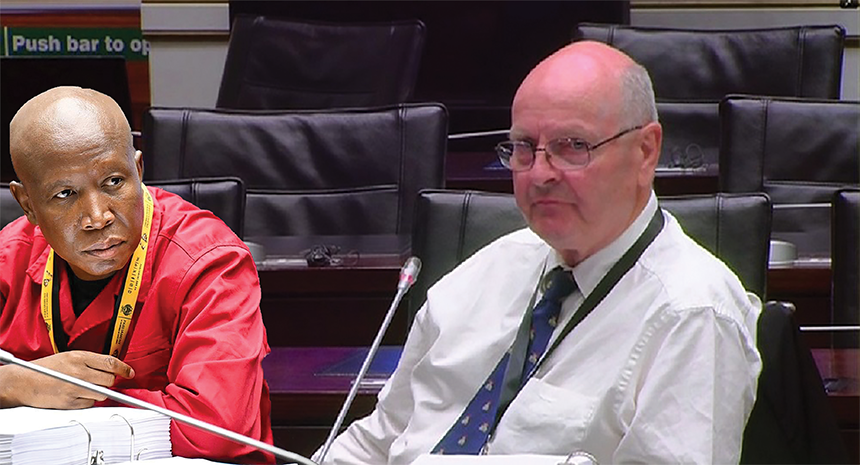
O’Sullivan’s tenure as group executive for aviation security at Airports Company South Africa (ACSA) -beginning in 2001 – stands as a stark anomaly in national security protocols. Tasked with safeguard 10 major airports – designated national keypoints vulnerable to terrorism and smuggling – he assumed the role without any formal security clearance – fact he openly confirmed during recent ad hoc parliamentary hearings.
This was no mere oversight; in the heightened post-9/11 global climate, where aviation security became an existential priority, South Africa’s gateways to the world were entrusted to a man whose background invited scrutiny rather than reassurance.
Appointed at the behest of high-profile figures including Transport Minister Dullah Omar and ACSA chairperson Mashudu Ramano, O’Sullivan bypassed standard vetting processes that would scrutinise foreign ties, criminal history, and loyalty oaths.
His prior experience amounted to stints as a police reservist and a role in a multinational border team at OR Tambo International Airport, yet these paled against the qualifications demanded for such a pivotal position. This handpicked elevation reeks of political expediency, where ideological alignments or personal favours trumped competence
The arrangement unraveled when Police Commissioner Jackie Selebi, under O’Sullivan’s forensic scrutiny for alleged organised crime links, demanded formal vetting in 2002. O’Sullivan objected, alleging bias in the process—a move that led to his contract’s abrupt termination after roughly a year, marking a pivot from official roles to independent investigations.
This episode fuelled narratives of aversion to accountability, as he leveraged the fallout to burnish his image as an anti-corruption maverick, ultimately contributing to Selebi’s 2010 conviction and fall from grace.
Unshackled from bureaucracy, O’Sullivan pursued a rogues’ gallery: Glenn Agliotti’s Oilgate fraud, state capture enablers, and rogue police units. Operating through private investigations, media leaks, and direct lobbying, he claims to have weathered over 10 assassination bids, framing his persistence as patriotic zeal. Allies, including elements in Cyril Ramaphosa’s orbit, hail these exposes as vital amid NPA inertia. Yet, critics portray a vigilante unbound by oversight, whose dossiers—often leaked prematurely—prejudiced trials and sow chaos in an already beleaguered justice system.
Speculation of O’Sullivan as an MI6 operative swirls from his pre-1990 British service, triple citizenship (Irish, British, South African), and reticence on apartheid-era activities.
In 2025-2026 parliamentary firestorms, figures like Cedrick Nkabinde and KZN Police Commissioner Nhlanhla Mkhwanazi accused him of “state capture 2.0”: emailing directives to scuttle SAPS appointments, reroute IPID probes, and puppeteer NPA decisions without mandate.
O’Sullivan rebuts vehemently, pledging four decades of South African loyalty, denying foreign paymasters, and withholding early biography details for “family safety.” His opacity, however, fuels paranoia in a polity haunted by foreign-meddling narratives, from Cold War proxies to modern geopolitical jockeying.
In South Africa’s ravaged justice landscape—scarred by Zuma’s state capture, 2026 economic woes (stagnant GDP, 33% unemployment), and institutional distrust—O’Sullivan’s influence amplifies paralysis. Allies like Ramaphosa laud his exposes, yet parliamentary testimony paints him as a shadowy broker, eroding faith in SAPS and NPA amid endless infighting. His ascent symbolises how post-apartheid elite pacts prioritised expedience over rigour, perpetuating apartheid-era opacity where unelected foreigners thrive amid black South Africans’ disillusionment.
This dynamic undermines the quest for justice: while O’Sullivan’s dockets pierced corruption veils, his unvetted power brokers prompt public cynicism, questioning if saviours or symptoms dominate a fractured democracy.
For ordinary South Africans, O’Sullivan’s shenanigans crystallise a justice system that feels rigged against them, perpetuating cycles of disillusionment in a democracy born from struggle, yet hobbled by elite intrigue.
Township residents in Soweto or Khayelitsha, scraping by amid 33% unemployment and load-shedding woes, see O’Sullivan not as a white knight but a privileged outsider—triple-citizen power broker—whose unchecked sway over SAPS, NPA, and IPID probes diverts resources from street-level crimes like housebreaks or gender-based violence.
While he toppled commissioners like Selebi, ordinary dockets languished, fostering perceptions that high-profile “crusades” serve political factions—Ramaphosa allies or anti-Zuma networks—rather than the marginalised majority still bearing apartheid’s economic scars.
Meanwhile, O’Sullivan’s unvetted ACSA tenure and MI6-tinged rumours exacerbate racial divisions wherein, according to Afrobarometer, 77% of Black South Africans distrust the government.
For them this Irish-born operative is emblematic of post-1994 pacts where White privilege trumped transformation, sidelining local talent and fueling “foreign interference” paranoia Economic stagnation – 0.9% GDP growth in 2026 – compounds this; families rationing paraffin amid Eskom failures question why unelected shadows dictate justice when service delivery collapses.
Eventually, O’Sullivan’s ascent signals institutional paralysis: a symptom where state capture’s ghosts yield not renewal but vigilante voids, paralysing probes into everyday graft like tender scams in municipalities.
For the ordinary Mzansians—unemployed or those eking a living in the informal sector or queuing for SASSA grants—this means deferred justice, fractured trust, and a lingering apartheid echo: power brokers thrive while the people’s quest for accountable institutions remains a mirage.
* The writer, Ido Lekota, is a political commentator and independent journalist