 WeeklySA_Admin
SYSTEM: UN Permanent Forum chair Gaynel Curry says recognition must lead to reparations, institutional reform and real power for people of African descent — especially the youth demanding more than symbolic inclusion…
By Own Correspondent
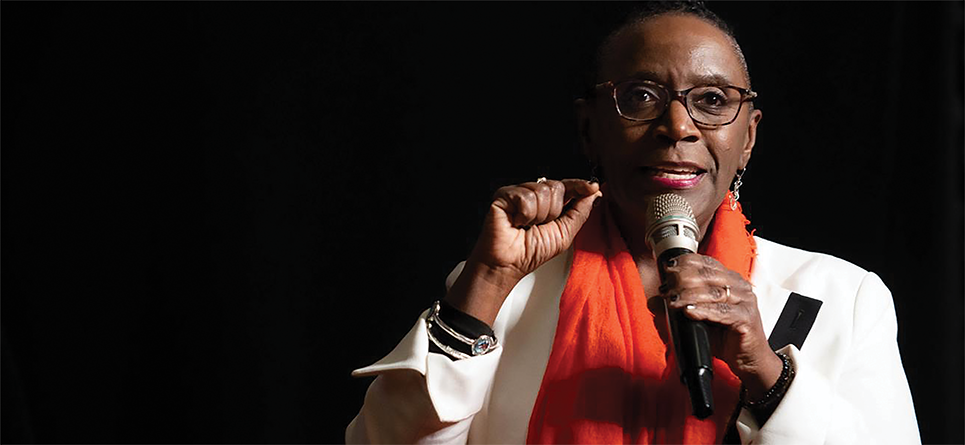
In April 2026, Gaynel Curry of the Bahamas was appointed chair of the fifth session of the United Nations Permanent Forum on People of African Descent.
She spoke to the UN Chronicle about the Second International Decade for People of African Descent, reparatory justice and the action needed to dismantle structural racism.
Why was a Second International Decade for People of African Descent, covering 2025–2034, declared immediately after the first?
In 2013, the UN General Assembly proclaimed the first International Decade for People of African Descent, to run from 2015 to 2024 under the pillars of recognition, justice and development. It later endorsed a programme of activities intended to turn that ambition into action.
One notable achievement was the establishment in 2021 of the Permanent Forum on People of African Descent. The Forum was created to help improve the safety, quality of life and livelihoods of people of African descent, advise the Human Rights Council, and monitor implementation of the Decade’s programme.
Recognition is not an end in itself, but a catalyst for the cohesive action
needed to achieve lasting systemic change…
However, the UN Secretary-General’s final report in 2024 found that implementation had been uneven across countries and regions, and that no country had fully achieved the Decade’s objectives.
The Permanent Forum, other UN anti-racism mechanisms and the UN High Commissioner for Human Rights therefore called for a second decade. Advocacy highlighted the need to confront systemic and structural racism, advance reparatory justice, strengthen inclusion and embed racial equality in development frameworks.
In December 2024, the General Assembly proclaimed the Second International Decade. Its immediate adoption reflected both the urgency of the human rights concerns facing people of African descent and the need to preserve momentum.
Recognition is one of the priorities. What would be the effect of publicly acknowledging racism’s toll and the continuing consequences of past crimes?
Recognition includes equality and non-discrimination, education and awareness, disaggregated data, participation and inclusion. But to be transformative, it must go beyond acknowledging the presence, histories and cultures of people of African descent.
The Second Decade must explicitly recognise the systemic and structural racism they face. That is essential to breaking the culture of denial, understanding inequality as an outcome of historical injustice rather than an accidental anomaly or a series of isolated incidents, and establishing a basis for dismantling systems shaped by enslavement, colonialism and successive discriminatory policies.
Recognition also means affirming that people of African descent sometimes constitute peoples with collective identities, cultural systems, historical continuity and territorial ties predating modern nation states.
In many societies, their presence stems not from voluntary migration but from forced displacement through enslavement, followed by centuries of resistance, survival and collective organisation.
Yet they have often been denied recognition as collective subjects of rights under international law, obscuring the collective dimensions of racial injustice and limiting access to remedies. Recognition is not an end in itself, but a catalyst for the cohesive action needed to achieve lasting systemic change. The Decade must also address emerging concerns, including climate, artificial intelligence and digital justice.
What should reparations for the trafficking and enslavement of African people entail?
Reparations should be a comprehensive justice framework based on restitution, compensation, rehabilitation, satisfaction and guarantees of non-repetition. People of African descent must participate effectively, safely and equally in designing, implementing and evaluating it.
For enslavement, the transatlantic trade in enslaved Africans, apartheid and colonialism, restitution includes returning stolen land and resources, cultural artefacts and human remains.
Compensation should address economically assessable damage: physical and mental harm, lost opportunities and earnings, material and moral damage, and wealth taken following wars for freedom and independence. It also requires targeted investment to close racialised gaps in housing, land ownership, education, employment and health.
Rehabilitation includes accessible, culturally appropriate medical, psychological and social services that address intergenerational trauma and ongoing harms. Satisfaction requires formal apologies from states and public and private institutions that participated in or benefited from enslavement and colonialism, alongside truth-telling, commemoration and educational reform.
Guarantees of non-repetition demand systemic change, including abolishing residual colonial laws and securing equitable representation for Africans and people of African descent in global governance.
How can the Permanent Forum become a stronger catalyst for human rights?
Its institutional capacity and mandate must match the urgency and scale of its mission. It cannot be confined to dialogue; it must be integrated into major international and regional decision-making so that lived experience shapes policy. Its role as a bridge between global institutions and regional actors, including through South–South cooperation, is crucial.
The Forum is contributing to the process of drafting a UN declaration on the human rights of people of African descent and is consulting civil society worldwide. Access must expand, with dedicated resources enabling equitable participation, particularly by young people.
Its mandate should also support reparatory justice in follow-up to the Durban Declaration and Programme of Action, improve engagement with UN entities on data, and enable systematic, transparent monitoring of its recommendations. This requires sustained, predictable funding for both the Forum and its secretariat.
The Forum already works within the UN’s wider anti-racism architecture, coordinating with other human rights mechanisms. Greater authority and resources would allow it to translate that collaboration into measurable progress, while holding institutions and governments accountable for the commitments they make to communities of African descent.
What international work offers the most hope for reducing structural inequality in access to economic resources and opportunities?
UN anti-racism mechanisms have documented how systemic racism shapes unequal economic access and development outcomes. Building on the Durban Declaration, whose 25th anniversary falls this year, we advocate special measures in employment, land, credit and participation, as well as a dedicated Sustainable Development Goal 18 on racial equality.
Coordinated advocacy also helped secure recognition at the 2024 UN biodiversity conference of the role of people of African descent in conserving and sustainably using biodiversity. This can support economic opportunity and community empowerment, while the growing focus on climate and environmental justice adds a vital dimension to economic equity.
Regionally, the African Union designated 2025 the Year of Justice for Africans and People of African Descent Through Reparations and declared 2026–2036 the AU Decade on Reparations. The Caribbean Community’s Ten-Point Plan for Reparatory Justice explicitly connects historical injustice with present economic exclusion.
States have also adopted anti-racism laws, national action plans, monitoring bodies, complaint mechanisms, educational programmes and data initiatives. Together, these efforts signal a promising shift against the structures that reproduce inequality.
What have young people taught you about contemporary racism and the legacy of historical injustice?
Many young people understand how racism operates across institutions and insist that solutions must be equally systemic. Education is central: they identify unequal access, Eurocentric curricula and colonial narratives that erase or distort their histories. They also see inclusive, rights-based education as a way to restore dignity, strengthen identity and develop leadership. They demand not only access, but relevance and truth.
They highlight the gulf between their potential and their opportunities. Despite talent, creativity and qualifications, many face unemployment, precarious work and exclusion from capital, innovation ecosystems and emerging sectors. They see these conditions not as individual failure, but as evidence of structural barriers.
Young people also report being overexposed to violence and under-protected by institutions. Criminalisation, profiling and neglect have weakened trust and sharpened demands for accountability and reform.
They reject symbolic inclusion. They want meaningful participation in which their perspectives shape policy, and visibility in data, public narratives and policymaking.
This generation is ready to confront injustice with clarity, innovation and resolve. The international community must ensure that young people are not merely heard, but empowered as agents of structural change.
What keeps you motivated when the struggle against racial discrimination is openly challenged?
I understand that this work is part of a much longer continuum. Professor Hilary Beckles has said that the 19th century was about emancipation, the 20th about independence and the 21st should be about reparatory justice. The progress achieved so far came from generations who refused to accept injustice. I see my role as taking their work to the next level. – Source: UN Chronicle. Edited for length and clarity.