 WeeklySA_Admin
EMBATTLED: Concourt’s ruling that Parliament acted unconstitutionally when it blocked the Phala Phala impeachment process against President Cyril Ramaphosa raises the stakes, while the Presidency insists he respects the outcome and remains committed to the rule of law…
By WSAM Reporter
President Cyril Ramaphosa is facing renewed political and legal scrutiny after the Constitutional Court ruled that Parliament acted unconstitutionally when it halted impeachment proceedings linked to the Phala Phala scandal.
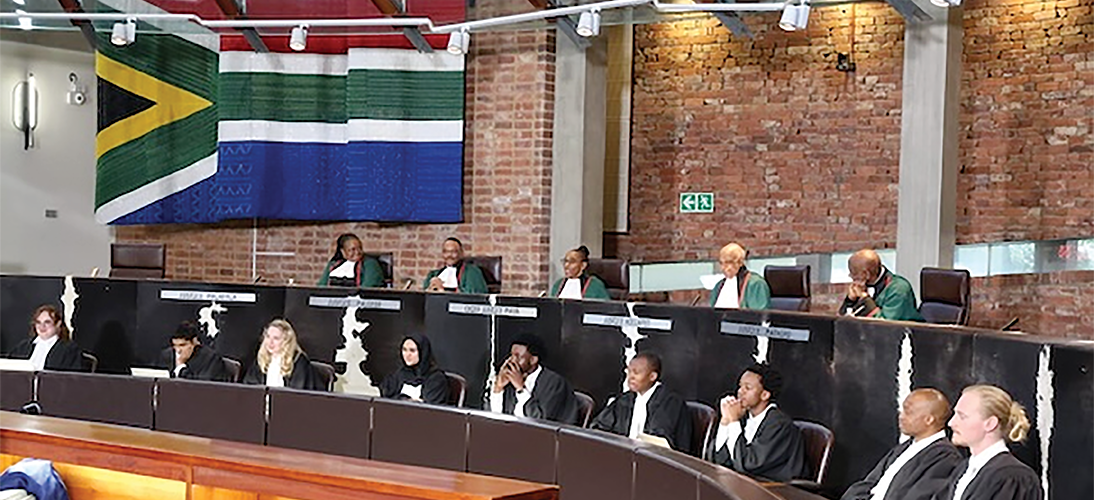
In a landmark judgment delivered on Friday, the apex court declared invalid both Rule 129I of the National Assembly rules and the December 2022 parliamentary vote that prevented the matter from proceeding to a full impeachment inquiry.
The case was brought by the Economic Freedom Fighters and the African Transformation Movement, who argued that Parliament had failed in its constitutional duty to hold the President accountable over allegations arising from the theft of foreign currency from Ramaphosa’s Phala Phala game farm in Limpopo.
The Constitutional Court ruled that the National Assembly’s decision on 13 December 2022 not to refer the independent panel report to an impeachment committee was “inconsistent with the Constitution, invalid and set aside”. The court further ordered that the independent panel’s report now be referred to an impeachment committee established in terms of parliamentary rules.
Chief Justice Mandisa Maya, writing the main judgment, said the matter concerned Parliament’s constitutional obligation to hold the Executive accountable and ensure effective oversight mechanisms.
The controversy stems from a February 2020 burglary at the President’s Phala Phala farm, where large sums of foreign currency were stolen. Former Correctional Services Commissioner Arthur Fraser later alleged that the money had been concealed in furniture and that the subsequent investigation was handled irregularly.
An independent parliamentary panel chaired by former Chief Justice Sandile Ngcobo found in 2022 that there was prima facie evidence suggesting Ramaphosa may have committed serious violations of the Constitution and the law.
Among the panel’s concerns were questions about the origin and storage of the foreign currency, whether the theft was properly reported to police, and whether the President improperly involved state security structures in handling what appeared to be a private matter.
Despite those findings, the ANC-led National Assembly voted against proceeding with an impeachment inquiry in December 2022, effectively shielding Ramaphosa from a deeper parliamentary probe at the time.
Following Friday’s ruling, the Presidency issued a measured response, saying Ramaphosa respected the judgment and remained committed to constitutional democracy.
“President Cyril Ramaphosa respects the Constitutional Court’s judgment and reaffirms his commitment to the Constitution, the independence of the judiciary and the rule of law,” the Presidency said in a statement. The Presidency added that the President had consistently cooperated with all investigations linked to the matter and maintained that “no person is above the law”.
The judgment now places renewed pressure on Parliament to reopen scrutiny of the Phala Phala affair at a politically sensitive time, with the ruling likely to intensify opposition attacks while reviving debate about accountability, executive ethics and the limits of parliamentary majorities in shielding sitting presidents.