
 WeeklySA_Admin
A 2025 research flagged dangerous conditions in which thousands of township and rural travel to school daily — from unroadworthy vehicles, corruption, weak enforcement to ‘driver error’ tragedies…
By Monk Nkomo
South Africa’s school transport system is in a crisis — trapped in a vicious cycle in which hundreds of thousands of black children travel to school daily under conditions shaped not by driver lapses, but by systemic governance failure, a previously unpublicised 2025 research report has warned.
The peer-reviewed study released last year, titled “Safety and security challenges of scholar transport in South Africa: An overview”, concluded that scholar transport remained persistently unsafe because the sector was characterised by structural weaknesses, uneven oversight and policy goals that frequently collapsed at street level.
Yet, despite its stark findings and urgent recommendations, the report remained largely unnoticed beyond academic circles — its warnings effectively unheeded.
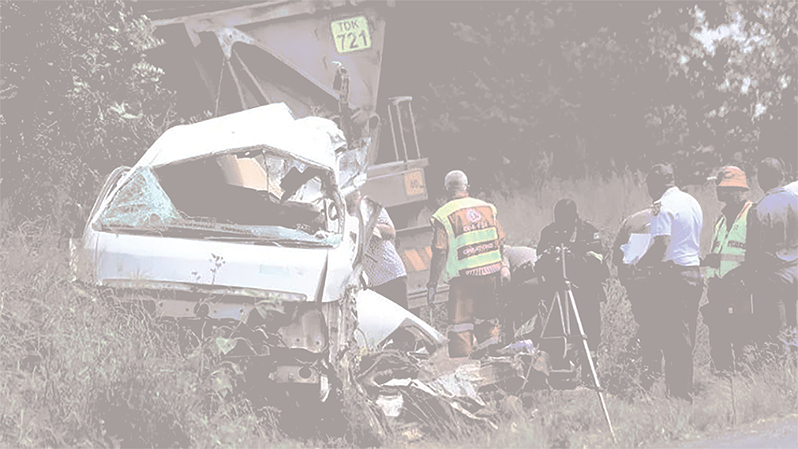
Last week’s scholar transport tragedy in Vanderbijlpark, Gauteng, has reignited public anger after a minibus carrying learners collided with a truck while transporting children to school. Preliminary reports indicated 11 children died at the scene, with subsequent fatalities later raising the toll to 14. The crash has once again placed the spotlight on the risks many learners faced simply in trying to access education.
Statistics revealed that between 2018 and 2022 nearly 800 school children had died in scholar transport -related accidents in South Africa.
The 2025 study — authored by Babra Duri, Tracey J.M. McKay and Ashley Gunter — found “widespread reports” of reckless driving, unroadworthy vehicles, inappropriate vehicle use and frequent road accidents involving scholar transport. Beyond road safety, the review also flagged crime, corruption and mismanagement of funds as recurring features of the system, leaving disadvantaged learners “stranded, vulnerable or worse, dead”.
Using a comprehensive review of academic studies and extensive ‘grey literature’ such as newspaper reports, policy documents and industry sources, the researchers described scholar transport as a sector where policy intent often failed in practice because of weak compliance and poor enforcement.
Their conclusion identified a persistent “implementation gap” — a disconnect between South Africa’s policy aspirations and what learners experienced daily — marked by legislative inadequacies, weak monitoring, limited institutional capacity and inconsistent accountability across provinces.
“The warning from researchers is clear: without closing the implementation gap — without treating enforcement, integrity, vehicle safety, infrastructure and accountability as one joined-up mission — South Africa will keep mourning children who were simply trying to get to school,” the review added.
The paper traced the scholar transport crisis to apartheid spatial planning and continued urban sprawl, noting that many township families still relied on long daily commutes to reach better-resourced schools in suburban areas. In this context, the minibus taxi industry dominated the scholar transport market, particularly in communities underserved by reliable public transport.
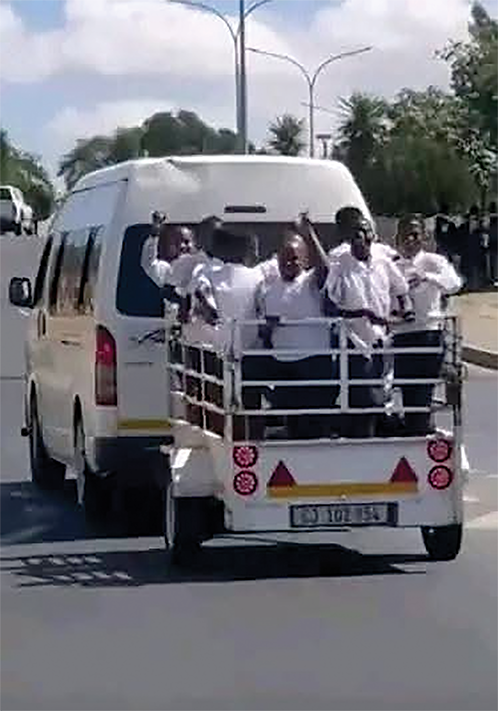
While South Africa’s National Learner Transport Policy and related legal frameworks outlined safety standards for vehicles and drivers, the study found repeated reports of non-compliance, including overcrowding, unsafe driving practices and poorly maintained vehicles.
The review also raised concern about the poor safety environment around schools, pointing to a lack of basic infrastructure such as visible drop-off zones, pedestrian crossings, traffic calming measures, lighting and signage — particularly in disadvantaged communities. These gaps increased the risk of collisions and disorder during peak pick-up and drop-off periods.
In addition, the study documented the role of corruption and tender irregularities in weakening learner transport services, including allegations of “ghost” service providers and misappropriation of funds earmarked for scholar transport. In some provinces, such failures have reportedly left learners stranded for extended periods, forcing families to improvise transport arrangements or required children to walk long distances.
The researchers called for urgent reforms that would go beyond policy statements, including stronger enforcement against non-compliant operators, improved training and vetting of drivers transporting minors, rigorous vehicle inspections and the adoption of technology such as real-time tracking systems to strengthen oversight.
They also proposed that government should invest in safer transport infrastructure and consider expanded boarding options in high-risk rural contexts to reduce long daily commutes that exposed learners to repeated danger.
President Cyril Ramaphosa, addressing the 2026 Basic Education Sector Lekgotla last week, echoed the call for urgent action on learner transport safety, saying government could not accept that young lives were placed at risk in the pursuit of education. He said scholar transport must be made “safe and reliable”.
Millions of school children especially those travelling from townships, informal settlements and rural communities to better resources, the school began on South African roads where safety was uncertain, regulation uneven and accountability often missing. For many parents, the question remained how many more children must die before the State enforced what was already on the books — and whether South Africa would finally treat learner transport safety as a national priority rather than a recurring tragedy.
Weekly SA Mirror has sent questions to the Department of Basic Education requesting details on inspections, compliance enforcement, safety infrastructure plans and measures to protect learners from both road risk and criminal vulnerability during scholar commutes.
As the country mourns, the 2025 research review stood as a sobering reminder: the danger was not new, the warnings were written and the cost of inaction was measured in young lives.
Statistics have shown that Gauteng and KwaZulu- Natal consistently had the highest numbers of road accidents and fatalities.
As at the end of August 2017, at least 10 learners had died and about 113 injured in taxi and bakkie collisions in several areas in KZN. In Gauteng, at least 20 pupils were injured when a scholar transport minibus overturned in July last year.
Other incidents involving learners who died or were injured in scholar transport crashes were mostly in KZN.
• Five learners were killed in Ntuzuma northern KwaZulu in January last year;
• 70 pupils were injured on the R603 on May 12 2025;
• Ten learners were injured in Durban North on June 19 2025;
• On July 26 2025, a total 12 learners were injured in KZN North Coast;
• Four school children died in Dalton on August 4 2025;
• On August 14, a total 15 learners were injured in Nquthu;
• One learner was killed and six injured in Eshowe on August 15 2025; and
• A Grade R pupil was killed by a scholar transport bus in Limpopo in October last year.
Multiple accidents were also reported in Gauteng and other provinces early this year with authorities clamping down on illegal and unroadworthy scholar transport vehicles. Meanwhile, 60 vehicles impounded. Invalid permits, overloading and bad driver behaviour. That is what the Department of Transport uncovered during a blitz operation yesterday to assess scholar transport in Lenasia, south of Johannesburg, according to an e
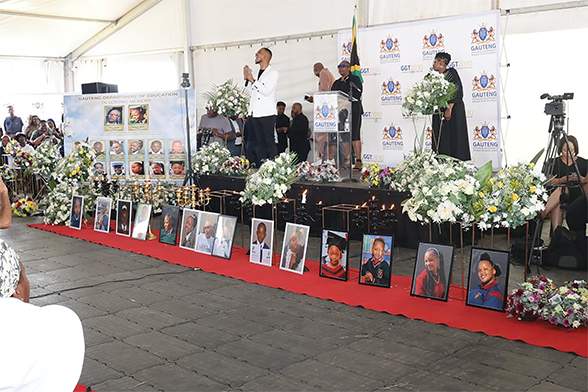
Vaal School Transport Crash Victims Mourned
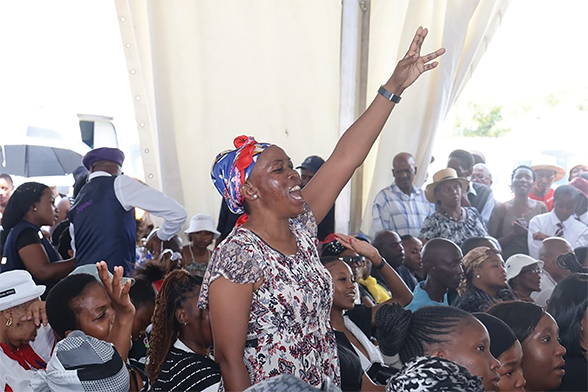
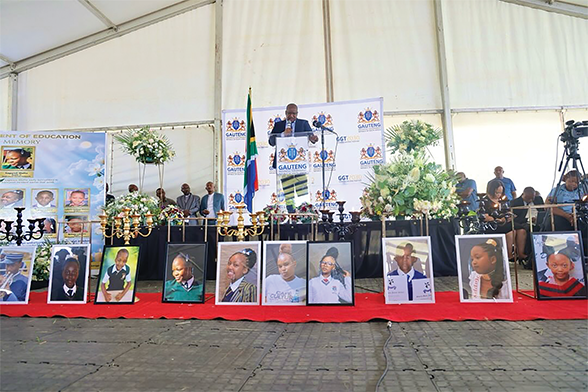
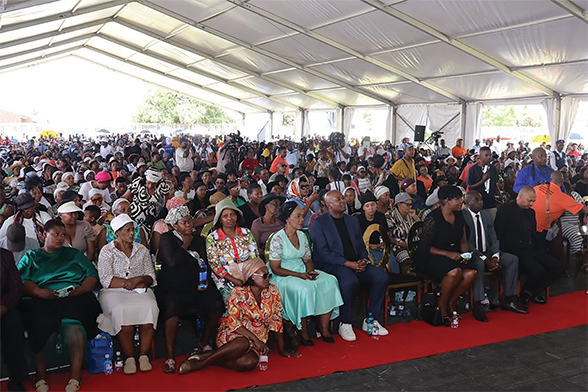
A memorial service for the learners, who lost their lives in a tragic scholar transport incident that took place on 19 January in Vanderbijlpark, was filled with grief, tears and sombre speeches. The emotion-charged service, held at 📍Saul Tsotetsi Sports Grounds in Sebokeng, was attended by education authorities, families of the accident victims as well as members of the local community. Photos: Gauteng Department of Education/Facebook.
Minister pushes for dashcams for school minibus taxis
By Monk Nkomo
The blood of the 14 children who perished in the horror crash in Vanderbijlpark last Monday, cried out for justice and justice they shall get, said Gauteng MEC for Education, Matome Chiloane.
‘’ The culture of impunity by reckless drivers who care less about the lives of our children, is over. The wheels of justice have begun to turn because together with the department of transport and other law enforcement agencies, we have implemented immediate rigorous measures to stamp out this recklessness on our roads.’’
Transport Minister, Barbara Creecy also announced plans to implement dashcams for the industry. She said the South African National Taxi Council (Santaco) had already consented to this rollout aimed at improving driver behaviour.
She also called for stricter consequences for arrested non-compliant drivers.
“The existing laws already require that scholar transport be clearly marked. In due course, there are other forms of technology we will introduce. We are concerned about the safety of vehicles used to take children to school. Many of the vehicles lacked proper permits and were not roadworthy, raising the alarm about the potential safety risks during transportation’’.
Matome appealed to parents to protect their children and make sure they boarded roadworthy vehicles driven by responsible drivers. ‘’ Your child’s safety is a right – not a bargain.’’
He warned errant drivers that the era of recklessness on the road was over because parents placed their children in those vehicles entrusting the drivers with the most precious asset – children.
‘’ Parents do not expect that trust to be betrayed’’, Matome said.
WHAT PARENTS MUST CHECK BEFORE THEIR KIDS ARE COLLECTED
• Vehicle type: Is it a proper passenger vehicle (not a bakkie or makeshift arrangement)?
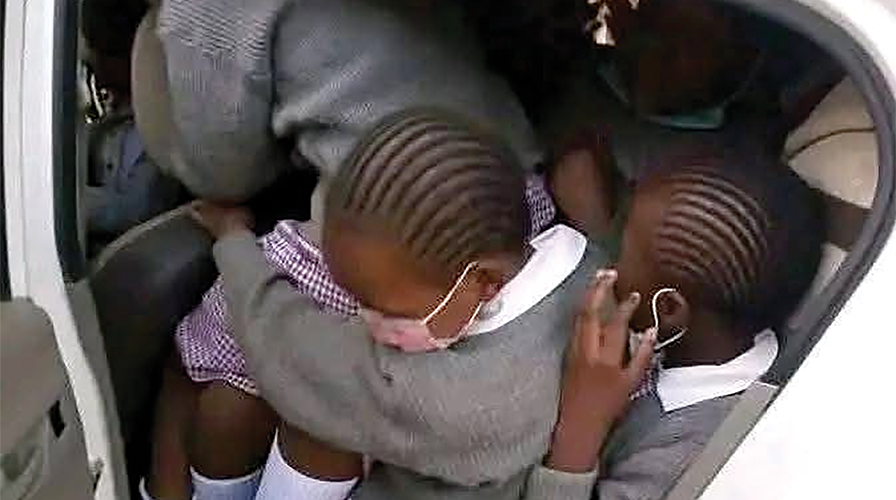
• Overloading: Is the vehicle clearly overcrowded, with children standing or sitting on laps?
• Doors and windows: Do doors close properly? Are windows intact (no sharp edges/broken glass)?
• Seatbelts: Are seatbelts present and usable? If present, insist your child uses one.
• Tyres: Are tyres visibly worn smooth or damaged?
• General condition: Look for obvious red flags: smoke, leaks, loose panels, severe dents.
• Driver and operating behaviour:
• Sober and alert: Does the driver appear sober and in control?
• Speeding culture: Ask your child afterward: “Do they speed? Do they overtake dangerously?”
• Phone use: Does the driver use a phone while driving?
• Pick-up discipline: Is the vehicle consistently late or “rushing” to make up time?
• Route safety and handover:
• Safe pick-up point: Is the pick-up/drop-off in a safe, visible area (not a dark corner or busy roadway)?
• Buddy system: If possible, ensure your child is not alone at pick-up or drop-off.
• Emergency contact: Your child should know at least two phone numbers and where to go if stranded.
• Paperwork and accountability (ask once, keep on record):
• identity: Full name and ID number (or copy of ID), and a recent photo if possible.
• Vehicle details: Registration number and make or model.
• Operator details: Business name, address or area, phone numbers.
• Fee agreement: A written agreement (even WhatsApp) covering payment, holidays, refunds and what happens if transport fails.
If something feels wrong:
• Take a photo of the vehicle and number plate.
• Log the concern immediately with the school and (where applicable) the local traffic department or RTMC hotline or provincial learner transport office.
• Coordinate with other parents — issues are harder to dismiss when reported collectively.