 WeeklySA_Admin
GOVERNANCE: Finance Minister Enoch Godongwana’s dismissal of GPAA chief Kedibone Madiehe adds to a wave of leadership upheaval that has engulfed SAA, PIC, IDT and Road Accident Fund…
By Lehlohonolo Lehana and Len Maseko
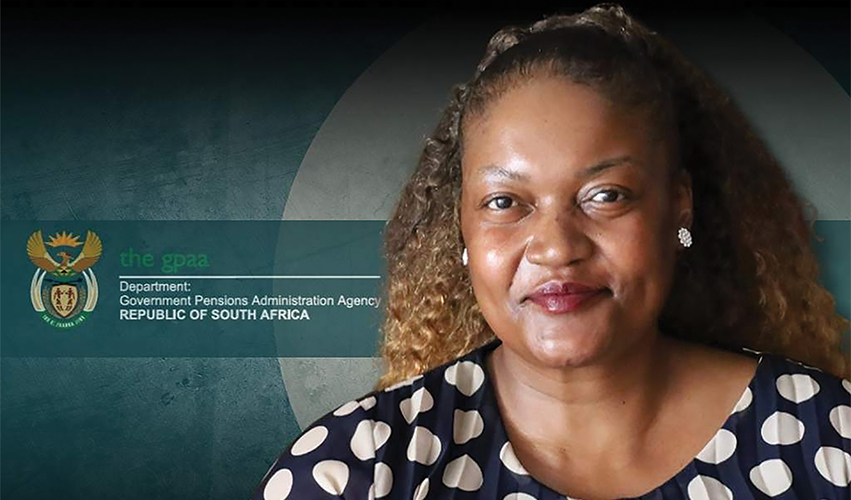
Finance Minister Enoch Godongwana’s dismissal of Government Pensions Administration Agency chief executive Kedibone Madiehe has added another name to the growing list of senior executives removed from duty at some of South Africa’s most important public institutions.
Madiehe was dismissed after a disciplinary hearing found that she had breached public-finance and procurement rules.
Her removal follows a rolling wave of leadership upheaval that has affected the GPAA, South African Airways (SAA), the Public Investment Corporation (PIC), the Independent Development Trust (IDT) and the Road Accident Fund (RAF).
The instability has revived concerns about weak boards, irregular procurement, costly suspensions, prolonged investigations and the state’s growing reliance on acting executives.
National Treasury said Madiehe’s disciplinary proceedings followed forensic investigations by three independent firms into allegations of governance irregularities and financial misconduct at the GPAA.
Removing an executive may demonstrate accountability, but the repeated cycle of suspensions and acting appointments points to deeper failures in
boards, procurement controls and political oversight…
The agency administers pension benefits on behalf of the Government Employees Pension Fund and other public-sector funds, placing billions of rand and the livelihoods of retired public servants under its stewardship.
Madiehe had been on precautionary suspension since August 2025 over alleged misconduct involving high-value procurement transactions.
Her disciplinary hearing, chaired by a retired High Court judge, began on February 2. Both Madiehe and the GPAA were legally represented.
A guilty finding was delivered on August 24, followed by the sanction of dismissal on September 7.
“A decision of this nature, and the sanction that accompanies it, is never taken lightly. However, the evidence from the investigation and the seriousness of the transgressions required a proportionate sanction. Trust is earned through accountability,” Godongwana said.
GPAA deputy director-general for corporate services Job Stadi Mngomezulu will remain acting chief executive while a permanent replacement is recruited.
Godongwana has instructed the agency’s acting leadership to prioritise governance reforms and measures aimed at restoring confidence in its operations.
Mngomezulu has more than two decades of experience at National Treasury and the GPAA, having served in financial-management, risk and corporate-services positions.
SAA’s revolving door
Madiehe’s dismissal comes less than a month after SAA placed acting group chief executive Matshela Seshibe on special leave with immediate effect, pending what the airline described only as an “internal process”.
Seshibe had occupied the position for about four months following the resignation of group chief executive John Lamola in April.
SAA appointed chief legal officer Koekie Mbeki as acting group chief executive, leaving the national carrier under its third chief executive in a matter of months. The airline did not disclose detailed allegations against Seshibe. It said the decision reflected its commitment to governance, accountability, integrity and leadership while protecting the interests of SAA and its stakeholders.
Reports linked the internal process to alleged irregularities at Air Chefs, SAA’s catering subsidiary, which Seshibe previously headed. The allegations have not been tested in a disciplinary hearing, and special leave does not amount to a finding of guilt.
The leadership disruption comes as SAA seeks to rebuild its operations after years of losses, state bailouts, business rescue and the collapse of the proposed strategic-equity partnership with the Takatso Consortium.
PIC suspension overturned
At the PIC, which manages more than R3 trillion in investments, chief executive Patrick Dlamini was suspended in July following a whistle-blower complaint.
Dlamini had been in the position for little more than a year when the PIC board placed him on precautionary suspension pending an investigation.
But the Gauteng High Court in Pretoria subsequently declared the board’s decision invalid and ordered that he be allowed to return to work.
The court intervention made the PIC case markedly different from Madiehe’s dismissal. While the GPAA process culminated in a disciplinary finding, Dlamini successfully challenged the procedure used to remove him.
The PIC board later complied with the ruling and reinstated him.
The turmoil also reached the top of the board when Deputy Finance Minister David Masondo resigned as PIC chairperson in July, amid growing scrutiny of the institution’s governance. Two other directors reportedly resigned during the same period.
The PIC is the largest investor on the Johannesburg Stock Exchange and manages most of its assets on behalf of the Government Employees Pension Fund.
Leadership instability at the corporation therefore has implications for the retirement savings of public servants and the broader economy.
The latest controversy came six years after a judicial commission of inquiry identified weaknesses in the PIC’s oversight, accountability and investment decision-making.
IDT chief resigns
At the IDT, former chief executive Tebogo Malaka resigned effective January 31, 2026, rather than return to work to face disciplinary proceedings.
Malaka had been suspended in August 2025 following a series of controversies, including questions over an R836-million oxygen-plant tender and allegations that she and an IDT spokesperson attempted to offer a journalist R60,000 to suppress an investigation. She denied knowledge of the alleged attempted payment.
Public Works and Infrastructure Minister Dean Macpherson said her resignation did not prevent law-enforcement agencies from continuing investigations into alleged wrongdoing at the entity.
The IDT, which implements public infrastructure projects on behalf of government departments, had previously faced questions about tenders awarded to companies connected to people close to senior officials.
Malaka’s departure created another acting-leadership arrangement while the organisation attempted to restore credibility and stabilise its finances and governance systems.
RAF battle drags on
The upheaval at the RAF began in May 2025, slightly outside a strict 12-month count but part of the same recent pattern of contested removals at public entities.
Chief executive Collins Letsoalo was initially placed on special leave pending Special Investigating Unit investigations. He was later formally suspended following a dispute that included his failure to appear before Parliament’s Standing Committee on Public Accounts.
The SIU investigation included scrutiny of a reported R79-million lease tender for the RAF’s Johannesburg offices.
Letsoalo approached the High Court to challenge his removal, but the court found that the board’s suspension decision was lawful, rational and reasonable. His application for leave to appeal was subsequently dismissed.
The dispute continued into 2026, with Parliament moving towards laying a criminal complaint over his refusal to appear before Scopa.
As with other precautionary suspensions, the action against Letsoalo was not itself a finding that he was guilty of the allegations under investigation.
NSFAS: a warning from the recent past
The National Student Financial Aid Scheme does not have a chief executive currently suspended or dismissed within the strict September 2025-to-September 2026 period. However, its recent leadership history illustrates the same pattern of governance breakdown, executive removals and prolonged reliance on temporary leadership.
Former chief executive Andile Nongogo was placed on special leave in August 2023 and dismissed in October that year following findings relating to the appointment of companies contracted to distribute student allowances.
The scheme was later placed under administration, while repeated payment failures, procurement disputes, resignations and board instability continued to affect students.
Waseem Carrim, previously the scheme’s chief financial officer and acting chief executive, was appointed permanent CEO in March 2025.
Although NSFAS has since claimed progress in stabilising its operations, its experience remains a warning of how leadership and procurement failures can directly disrupt services to millions of beneficiaries.
Accountability or continuing instability?
Taken together, the cases show at least five major public institutions caught in leadership upheaval since May 2025, although the circumstances and outcomes differ significantly.
Madiehe was dismissed after a completed disciplinary hearing. Malaka resigned before disciplinary proceedings were concluded. Seshibe remains on special leave pending an internal process. Letsoalo’s suspension was upheld by a court, while Dlamini returned to the PIC after a court invalidated his suspension.
The distinction is important: suspension or special leave is a precautionary measure and should not automatically be treated as proof of wrongdoing.
However, the frequency of the upheavals raises a broader governance question. Removing executives may demonstrate consequence management, but repeated suspensions and acting appointments can also point to deeper weaknesses in boards, procurement controls and political oversight.
For pensioners, students, motorists, airline passengers and communities waiting for public infrastructure, leadership turmoil is not an abstract boardroom matter. It can delay decisions, weaken accountability and undermine the delivery of essential services.
Madiehe’s dismissal may mark the conclusion of one disciplinary process. For the wider public sector, however, the test will be whether consequence management is followed by stable leadership, stronger controls and fewer opportunities for public money to be abused.