 WeeklySA_Admin
BENEFICIATION: Investment platform and joint working group would seek finance, technology and buyers for South African processing and manufacturing projects…
By Own Correspondent
South Africa has proposed a joint investment platform and working group with the United States to turn interest in critical minerals into processing, manufacturing and infrastructure projects.
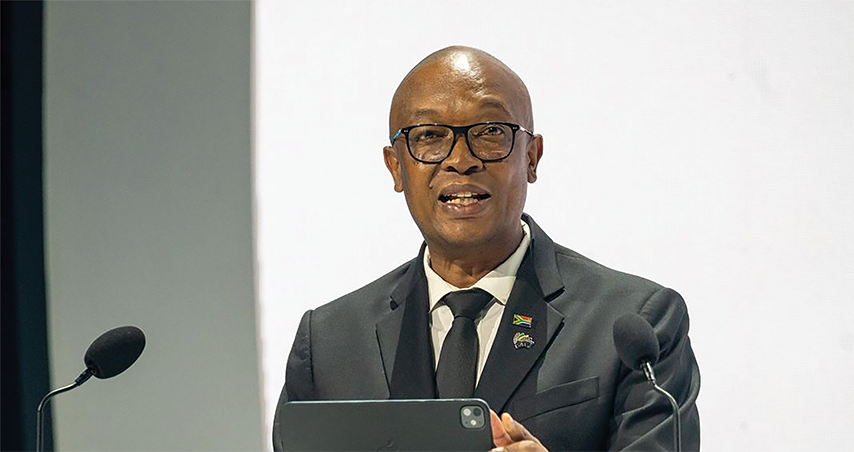
Trade, Industry and Competition Minister Parks Tau outlined the proposals at a Critical Minerals Roundtable hosted by Brand South Africa and Standard Bank on the sidelines of the United Nations General Assembly in New York on Thursday.
Tau said a Critical Minerals Investment Platform could bring South African projects together with US finance, technology, industrial demand and long-term purchase commitments. A separate South Africa–USA Critical Minerals Working Group would identify priorities and track progress towards investment agreements.
“Our intention is that the work should begin immediately and should not become another dialogue mechanism without implementation. We need clear priorities, responsible institutions, timelines and measurable outcomes,” he said.
The proposals remain at the discussion stage. Tau did not announce funding commitments, signed agreements or a timetable for establishing either mechanism.
At the centre of his pitch is South Africa’s ambition to earn more from its mineral resources by refining and processing them locally, and by making materials and components for growing industries.
“We do not want to define the relationship simply as one in which South Africa extracts and exports raw materials,” Tau said. “We want to build value chains that include mining, refining, processing, advanced materials, component manufacturing and, where commercially viable, downstream production.”
South Africa’s Critical Minerals and Metals Strategy, approved by Cabinet in 2025, places local processing, infrastructure, research and strategic partnerships at the centre of that ambition.
Tau pointed to the country’s platinum group metals, manganese, chromium and vanadium, as well as opportunities involving rare earth elements, titanium and zirconium. Possible products include battery materials, vanadium electrolytes for large-scale energy storage, components for the hydrogen economy, green iron and steel, ferroalloys and specialised metals.
The minister argued that the two countries’ needs could complement each other. The US is seeking more secure and varied mineral supplies, while South Africa needs investment, technology, skills, access to markets and buyers willing to commit to long-term orders.
He called for co-investment, with US companies participating in processing and manufacturing rather than treating South Africa solely as a source of raw materials. Projects, he said, must be commercially viable and capable of attracting finance.
Under the proposed investment platform, priority projects could be assessed for development support, co-funding and investment. South African institutions, including the Industrial Development Corporation and other development finance institutions, could work with US institutions such as the Development Finance Corporation and EXIM Bank, alongside private investors and industrial companies.
The aim would be to help projects move from technical assessment and preparation through financing and construction to production and export. Long-term agreements to buy their output could give lenders and investors greater confidence in a project’s future revenue.
The proposed working group would identify priority minerals and products, match South African projects with US demand, examine financing and technology needs, and address obstacles to market access. Tau said it should measure progress towards investment and purchase agreements.
He also presented South Africa as a potential hub for regional mineral processing. Cobalt from the Democratic Republic of Congo, copper from Zambia, lithium from Zimbabwe and graphite from Mozambique could support value chains that extend across Southern Africa.
South Africa could contribute industrial infrastructure, processing capacity, logistics and financial services, Tau said. Regional cooperation, supported by access to markets through the African Continental Free Trade Area, could help African countries retain more value from their resources.
That ambition depends on more than mineral deposits. Tau identified energy, transport, logistics, water and other infrastructure as important to developing regional industries.
“We want to move from conversations about opportunity to discussions about specific projects, specific investors, specific technologies, specific offtake requirements and specific financing solutions,” he told the roundtable.
Representatives from business, finance and development institutions attended the event, including Standard Bank, the Industrial Development Corporation, the Development Bank of Southern Africa, Eskom and Africa Rainbow Minerals. Standard Bank chief executive Sim Tshabalala presented on financing critical minerals projects in Africa.
Tau said the proposed partnership could strengthen supply chains while creating jobs, developing skills and positioning South Africa in emerging global industries. Its test will be whether the proposed mechanisms produce funded projects and manufacturing capacity. – SAnews.gov.za