
 WeeklySA_Admin
ANXIETY: Pre-dawn waking may feel unsettling, but researchers say shifting sleep cycles, body temperature and cortisol can make sleep more fragile—although persistent disruption could signal an underlying health problem.
ByOwn Correspondent
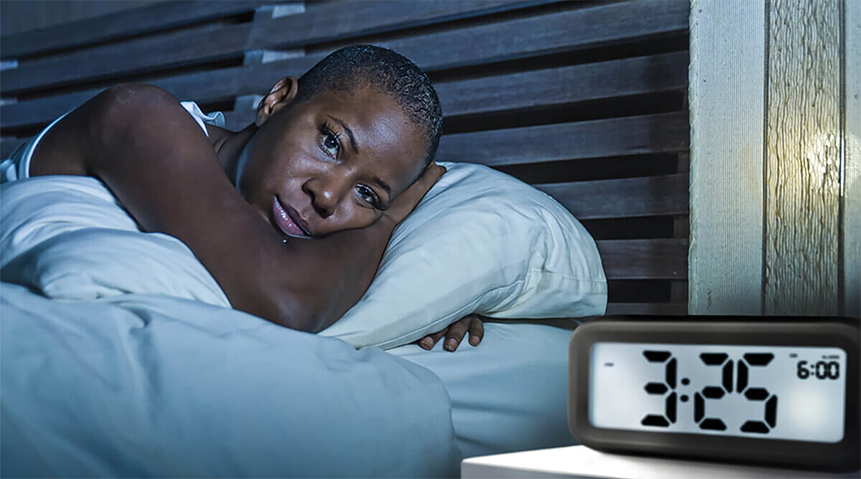
That recurring middle-of-the-night wake-up may feel like a sign that something is off. Yet researchers say it can also be a surprisingly ordinary result of what happens in the body before dawn.
It has sparked a larger debate over whether our ancestors once treated nighttime wakefulness as normal.
Is There Actually Something Special About Waking Up At 3am?
Not one specific clock minute, no. Sleep isn’t a flat, uniform state across the night, and the second half is structurally more fragile than the first.
According to a sleep physiology overview hosted by the National Institutes of Health’s NCBI Bookshelf, deep slow-wave sleep dominates earlier in the night while REM sleep’s share of each cycle grows later on, and brief arousals cluster around transitions into and out of REM.
In young, healthy sleepers those arousals are usually minor enough to go unremembered.
As that buffer weakens with age or stress, the same ordinary transition is more likely to fully wake someone, which is why a 3am eye-opening moment can feel oddly specific even though the mechanism is about sleep-cycle structure, not a fixed hour.
What Do Body Temperature And Cortisol Have To Do With It?
Two circadian signals are also moving overnight. Core body temperature reaches its daily low point, or nadir, in the early morning. It’s generally cited as occurring around 4 to 6am in a circadian rhythms overview compiled by the CDC.
Around the same window, cortisol, the hormone most tied to alertness, begins climbing toward the sharp rise researchers call the cortisol awakening response, detailed in expert consensus guidelines published in Psychoneuroendocrinology in 2016.
Neither rhythm is precisely timed to 3am; the exact hour depends on chronotype and sleep schedule. But for people on conventional hours, those overlapping shifts often land in the pre-dawn window, nudging sleep lighter right when it’s already more fragile.
Could This Be An Old, Deeply Normal Human Pattern?
There’s a genuinely interesting, if contested, historical thread here. Virginia Tech historian Roger Ekirch documented more than 500 pre-industrial references to a “first sleep” and “second sleep” bridged by an hour or more of wakefulness, a pattern that largely disappeared after artificial lighting spread.
In the early 1990s, NIMH researcher Thomas Wehr tested whether this had a biological basis: 16 participants, mostly men in their 20s and 30s, were confined to 14 hours of darkness nightly for a month, mimicking a natural winter night.
By the fourth week, as reported by Scientific American, participants had settled into two roughly four-hour sleep bouts separated by one to three hours of quiet wakefulness.
That finding hasn’t gone unchallenged. A 2023 reassessment in the peer-reviewed journal Medical History argued that the historical and scientific evidence for segmented sleep as the dominant pre-industrial pattern is more selective than commonly presented.
The paper notes a 2013 study that put campers under natural light and firelight for two weeks without reproducing Wehr’s biphasic pattern.
A 2010 European survey published in The Journal of Psychosomatic Research found 31.2% of adults already report waking at least three nights a week.
The report suggests that broken sleep is simply common, not evidence of a lost ancestral rhythm. The honest summary: middle-of-the-night waking has a plausible, unproven biological precedent, but isn’t settled science.
What Should You Actually Do About It?
Sleep specialists consistently give unglamorous, practical advice: don’t check the clock or a phone screen, since light exposure suppresses melatonin and makes it harder to drift back off. Keep the room dark and skip bright lights for a bathroom trip.
If the pattern comes with daytime fatigue, loud snoring, gasping, or racing thoughts, it’s worth mentioning to a doctor, since those can point to sleep apnea, anxiety, or another treatable condition rather than ordinary sleep architecture doing what it normally does. – Study Finds
HEALTH Briefs
Cancer: breast milk offers hope
Scientists at the University of Manchester are investigating whether breast milk could help detect breast cancer earlier in women during or after pregnancy. The BRACELET-BM study aims to explore whether cancer-related DNA in breast milk could eventually provide an early warning of disease, potentially before detection through blood tests or scans.
Pregnancy-related breast cancer can be difficult to diagnose because changes in the breast during pregnancy and breastfeeding may complicate detection. It is often diagnosed at a later stage, when outcomes are poorer.
Led by Dr Niki Flaum, alongside Dr Florent Mouliere and Professor Sacha Howell, the study will initially recruit 40 breastfeeding women: 25 at general population risk and 15 with a family history placing them at higher risk.
Participants will donate breast milk and blood samples and complete questionnaires and interviews. Researchers will examine collection, processing and storage methods, including whether samples can be frozen in a home freezer. They will also investigate whether collection time or infections in mothers or babies affect results.
An international study published in September 2023 showed that tumour DNA could be detected in breast milk. However, suitable methods for using this finding in routine screening remain under investigation. Among the first donors is Hannah Brennan, 31, a midwife and mother of three whose grandmother died from breast cancer. Flaum said breast milk could offer a noninvasive window into changes within the breast. The research is an early step towards a possible screening tool; it has not established breast milk testing as effective. – Science X
VAPING MAY WEAKEN LUNG DEFENCES
Brief exposure damaged human lung tissue in laboratory tests, with some effects persisting after exposure ended. Even brief exposure to e-cigarette vapour may damage delicate lung tissue and weaken its defences against respiratory viruses, a laboratory study suggests.
Researchers at National Jewish Health examined human cells and tissue from the distal lung, the region where oxygen enters the bloodstream. Their findings were published in JCI Insight.
Within 24 hours, vapour exposure damaged the lung’s protective barrier, triggered cellular stress, disrupted the clearance of damaged cell components, slowed growth and repair, and increased cell death. Some signs of stress remained 10 days after a five-day exposure period ended. Researchers also observed persistent changes in barrier function, tissue remodelling and immune responses involved in fighting viruses. When exposed tissue was subsequently infected with SARS-CoV-2, prior vapour exposure increased viral burden and suppressed several antiviral genes.
Senior author Dr Irina Petrache said the findings suggest that short-term vaping can initiate injury deep within the lungs, with some effects continuing after exposure stops. However, these were preclinical experiments, not studies of people. The findings require confirmation in human research and do not establish permanent lung damage.
Researchers warned that repeated exposure could potentially sustain injury, disrupt normal repair and contribute to chronic lung disease over time. – Science X
Sleep kidney risk in Diabetes
People with type 2 diabetes who regularly sleep longer may face a higher risk of developing or worsening diabetic kidney disease, according to a study published in the Journal of the Endocrine Society. However, researchers caution that the findings do not prove longer sleep causes kidney damage and should not be interpreted as advice to cut back on sleep.
The study followed 678 Japanese people with type 2 diabetes for approximately six years. Researchers found an association between longer habitual sleep duration and the onset or progression of diabetic nephropathy, also known as diabetic kidney disease.
The association was particularly evident among older adults and participants who already had signs of kidney damage, including reduced kidney function or microalbuminuria — small amounts of the protein albumin in the urine.
Diabetic kidney disease results from long-term damage caused by diabetes. It affects approximately 30% to 40% of people with diabetes and can progress to kidney failure. It is also associated with an increased risk of cardiovascular disease. Study author Dr Tomoya Mita, of Juntendo University Graduate School of Medicine in Tokyo, said sleep patterns could offer a useful clue to identifying people whose kidney health warrants closer attention.
Because sleep is a routine part of daily life, longer sleep duration may be an easily observed marker of underlying health vulnerability, he explained. Mita stressed that the study was observational, meaning it could identify an association but could not establish that longer sleep directly caused kidney disease.
The findings therefore point to sleep duration as a possible indicator of risk, rather than a reason for people with diabetes to reduce their sleep.
The research involved teams from Juntendo University Graduate School of Medicine, Naka Kinen Clinic and the University of Tsukuba in Japan. It was funded by the Manpei Suzuki Diabetes Foundation. – Newswise