 WeeklySA_Admin
REALITY: While South Africa’s biggest screen awards honoured excellence and legacy, filmmakers used the moment to spotlight a deeper crisis — the shrinking space for local storytelling.
By Priscilla Malinga
The 19th South African Film and Television Awards (SAFTAs) delivered glamour, celebration, and powerful storytelling this past weekend at Gallagher Estate in Midrand. But beneath the applause and accolades, a more sobering reality emerged — one of resilience in an industry under pressure.
Hosted by Anele Mgudlwa and Simphiwe “Alphi” Mkhwanazi, with vibrant support from red carpet hosts Pamela Mntanga and Katleho “Kat” Sinivasan, and craft ceremony hosts Elana Afrika-Bredenkamp and Moshe Ndiki, the event marked a milestone moment for the country’s screen industry.
Held under the theme “One Story. One Industry. One Future. – Celebrating South Africa’s Screen Legacy, Together,” SAFTAs 19 paid tribute to 50 years of local television storytelling — a legacy shaped by creativity, struggle, and cultural expression.
Yet, as the industry gathered to celebrate, voices from within it raised concerns about its future.
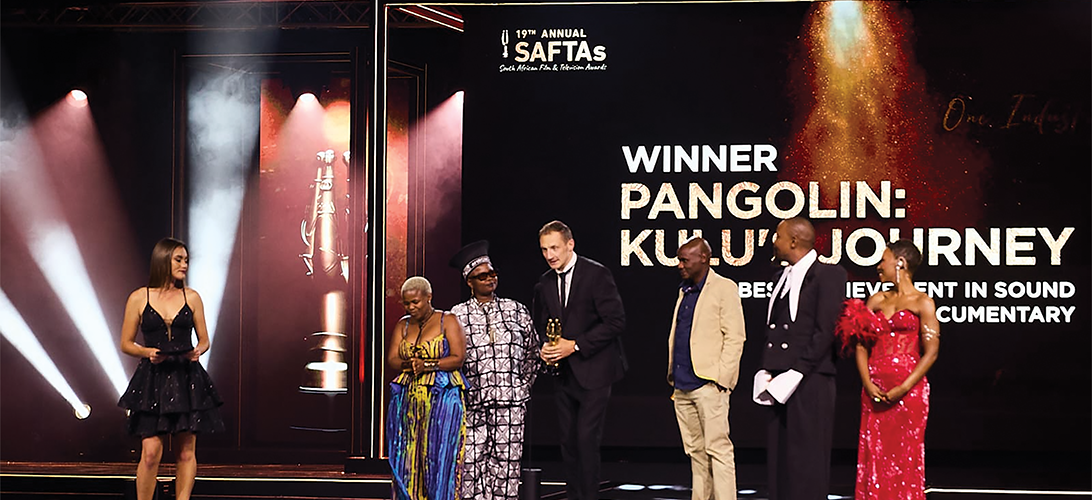
Among the standout productions was Netflix’s Pangolin: Kulu’s Journey, directed by Academy and BAFTA award-winner Pippa Ehrlich. The documentary secured three nominations and walked away with two wins:
• The project drew praise not only for its technical excellence but also for the dedication behind it.
• Filmmaker Tshililo Waha Muzila, who contributed as a scriptwriter, language adviser, and director of the impact film, reflected on the team’s achievement with humility.
“It shows that we are a formidable team. The work that went into following Khwara the pangolin for months was incredibly demanding, but it paid off.” Despite the celebratory mood, Waha Muzila’s remarks pointed to a deeper issue confronting the industry — the decline in opportunities for local content creation.
“It’s an affirmation, but it also saddens me that we no longer have the means to produce more local content for the public broadcaster,” he said.
“I just wish the SABC can find its feet again, because as black creatives, it remains one of our key platforms to tell authentic stories.”
His words echoed a growing concern among creatives: that while South African stories continue to gain global recognition, local support structures are weakening.
Waha Muzila is currently working on a feature documentary, Negrito del Congo, which premiered earlier this month at the Joburg Film Festival and has already attracted international attention.
Shot across Spain, Senegal, and South Africa, the film explores migration through a deeply personal lens. “It’s a deeply personal film,” he explained, “where I hike Spain’s Camino de Santiago wearing an orange life jacket — a symbol honouring African migrants who lost their lives trying to cross into Europe.”
The documentary has been selected for competition locally and will also screen at the Migrant Matters Film Festival in Stockholm, reinforcing the global relevance of African storytelling.
Resilience of the Industry
For many in the industry, the SAFTAs are not just about awards — they are about survival, persistence, and purpose.
“What keeps me going is the resilience of our people to keep telling stories against all odds,” Waha Muzila said. “With limited resources and support, creatives understand something many don’t — that arts and culture are central to our ecosystem and have played a vital role in securing the freedoms we enjoy today.”
While SAFTAs 19 celebrated excellence and legacy, it also served as a moment of reflection.
The South African screen industry stands at a crossroads — rich in talent and globally recognised, yet facing structural challenges at home.
The question now is whether the industry’s future will match the promise celebrated on stage.